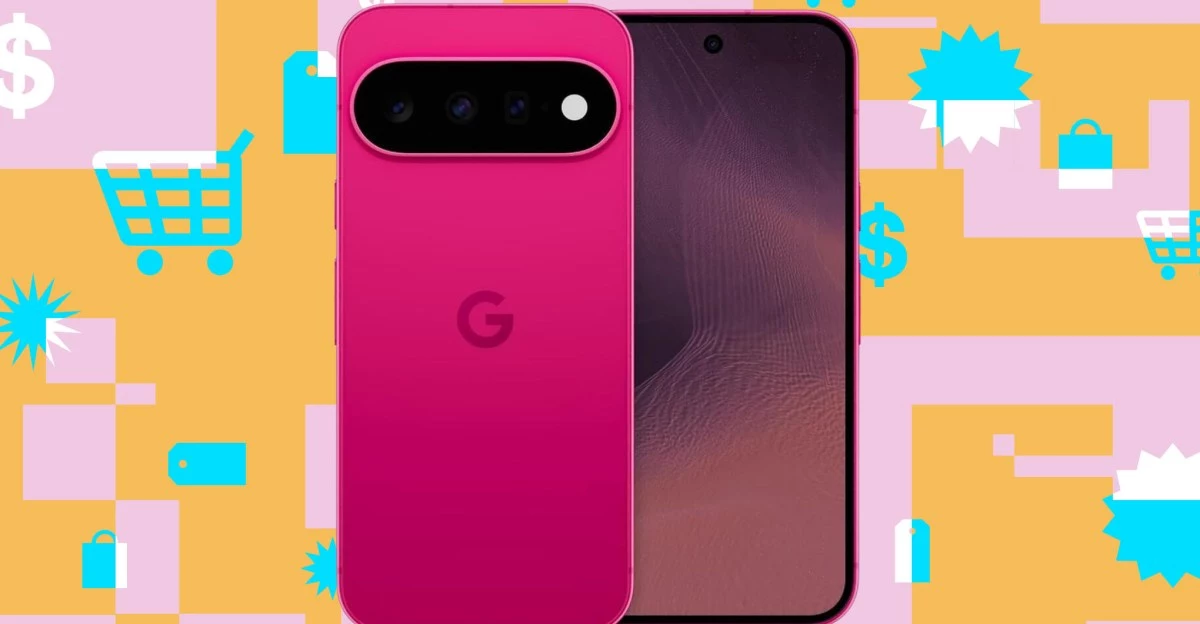

Amazon’s stacked Pixel 11 discounts signal a new phase of retailer-led smartphone competition
Amazon’s time-limited promotion on Google’s Pixel 11 series—centered on an extra $150-off coupon code (PIXEL11) that stacks with existing bundles—reads less like a routine sale and more like a deliberate demand shock engineered at the channel level. The headline numbers are attention-grabbing: the Pixel 11 drops from $899 to $749, paired with a $100 gift card, while the Pixel 11 Pro and Pixel 11 Pro XL unlock up to $250 in ancillary credits, including Pixel Watch 5 credit in certain bundles.
What makes this campaign notable is not merely the depth of the discount, but the *mechanics* of the offer. Stacked couponing is a modern retail instrument—highly measurable, quickly adjustable, and capable of targeting price-sensitive buyers without permanently repricing the product. For Google, whose Pixel line competes in a smartphone market still dominated by Apple and Samsung, this kind of promotion compresses the effective price gap at precisely the moment consumers are most willing to switch: when the perceived value of “flagship” hardware is increasingly tied to software experiences rather than raw specifications.
Key elements shaping the competitive impact include:
- Stacked incentives (coupon + gift card + wearable credit) that raise perceived value beyond the phone’s sticker price
- Time-limited urgency, which accelerates conversion and helps clear channel inventory ahead of future launches
- Retailer co-investment, suggesting Amazon sees strategic upside in being a demand generator, not just a fulfillment layer
In a mature smartphone category, the most consequential question is no longer “How good is the hardware?” but “How effectively can brands and retailers orchestrate value, ecosystem, and timing to move buyers off the fence?”
Pixel’s AI-first camera strategy meets a market where computational photography is the baseline
Google’s Pixel identity has long been anchored in camera performance and software intelligence, and the Pixel 11 narrative continues that trajectory with enhanced image sensors and AI-driven features such as “Magic Capture,” which emphasizes post-capture flexibility—extracting stills and clips and refining outputs after the moment has passed. This is emblematic of where premium smartphones are headed: experience-first differentiation powered by on-device AI.
The strategic subtext is clear. As computational photography becomes table stakes, differentiation shifts to:
- Speed and quality of on-device inference (latency, privacy posture, offline capability)
- Creative tooling that reduces friction between capture and share-ready output
- Consistency across conditions, where software increasingly compensates for physics
For Google, the Pixel 11 discounts may be less about defending a single product cycle and more about expanding the installed base for AI-enabled experiences that can later be monetized through services. Each incremental Pixel user is a potential long-term customer for cloud storage, media subscriptions, and health analytics—areas where recurring revenue can outlast the one-time margin of a handset sale.
This is also why bundling matters. A phone that ships with a wearable credit is not just a deal; it’s an ecosystem invitation. The more devices a user adopts, the more “sticky” the platform becomes—through shared data, unified notifications, health tracking continuity, and cross-device personalization.
Bundles, wearables, and accessories: the ecosystem playbook extends beyond the handset
The Pixel Watch pairing embedded in these promotions reflects a broader industry pattern: hardware as a gateway to services. Wearables are uniquely valuable because they increase daily engagement frequency and expand the types of data a platform can responsibly process—fitness, sleep, activity patterns—creating more touchpoints for subscription upsell and retention.
At the same time, the surrounding deal environment—spanning gaming and mobile accessories—underscores how consumer tech demand is fragmenting into specialized “lifestyle adjacencies.” Promotions highlighted alongside the Pixel campaign include:
- Doom: The Dark Ages at its lowest observed Steam price ($19.87)
- Best Buy’s Scuf Valor Pro controller at $113.99
- Amazon’s 25,000 mAh USB-C power bank at $62.99
This cross-category markdown pattern matters because it reflects how consumers now build personal tech stacks: a flagship phone plus performance peripherals, plus power and connectivity accessories that support always-on usage. For retailers, this is margin strategy as much as merchandising—smartphones can be traffic drivers, while accessories and add-ons can lift basket size and profitability.
For OEMs, it’s a reminder that the “smartphone market” is no longer a single product arena. It’s an ecosystem battlefield where:
- Controllers and gaming content reinforce entertainment use cases
- High-capacity power banks support mobile-first work and travel behavior
- Wearables deepen daily engagement and service attachment
The business logic: value sensitivity, inventory timing, and the race to monetize services
The macro backdrop—cooler inflation but persistent price sensitivity and higher financing costs—has trained consumers to wait for promotional windows. Deep discounts can therefore be both a remedy and a risk: they stimulate demand now, but they also condition buyers to delay purchases until the next stacked offer appears. That reality forces OEMs and retailers into more sophisticated lifecycle planning, where promotions become a calibrated lever rather than an emergency brake.
From a market-structure perspective, Google’s Pixel line remains a challenger in a saturated premium segment. Aggressive pricing can narrow short-term barriers to trial, but durable share gains typically require:
- Feature leadership that remains visible after the discount ends
- Seamless ecosystem integration that reduces switching propensity
- Services monetization that offsets compressed hardware margins
Retailers, meanwhile, are evolving into data-rich demand engines. Dynamic couponing and bundle experimentation allow platforms like Amazon—and category specialists like Best Buy—to test price elasticity, segment audiences, and optimize repeat purchase behavior. The next frontier will be how OEMs and retailers negotiate data-sharing frameworks that respect privacy while still enabling better personalization and offer design.
Taken together, Amazon’s Pixel 11 campaign and the surrounding accessory markdowns illustrate a consumer tech market where the winning formula is increasingly orchestral: price incentives to trigger adoption, ecosystem bundles to deepen attachment, and services to monetize the relationship long after the checkout page closes.

 By
By
 By
By
 By
By

 By
By
 By
By
 By
By