


A week of targeted discounts reveals how tech and media firms are rewriting the rules of value
Across gaming, smartphones, PC hardware, and physical media, the latest wave of promotions looks less like broad-based “sale season” behavior and more like precision pricing—discounts deployed where they can shape consumer behavior, clear inventory, or deepen ecosystem dependence.
Four deals illustrate the pattern:
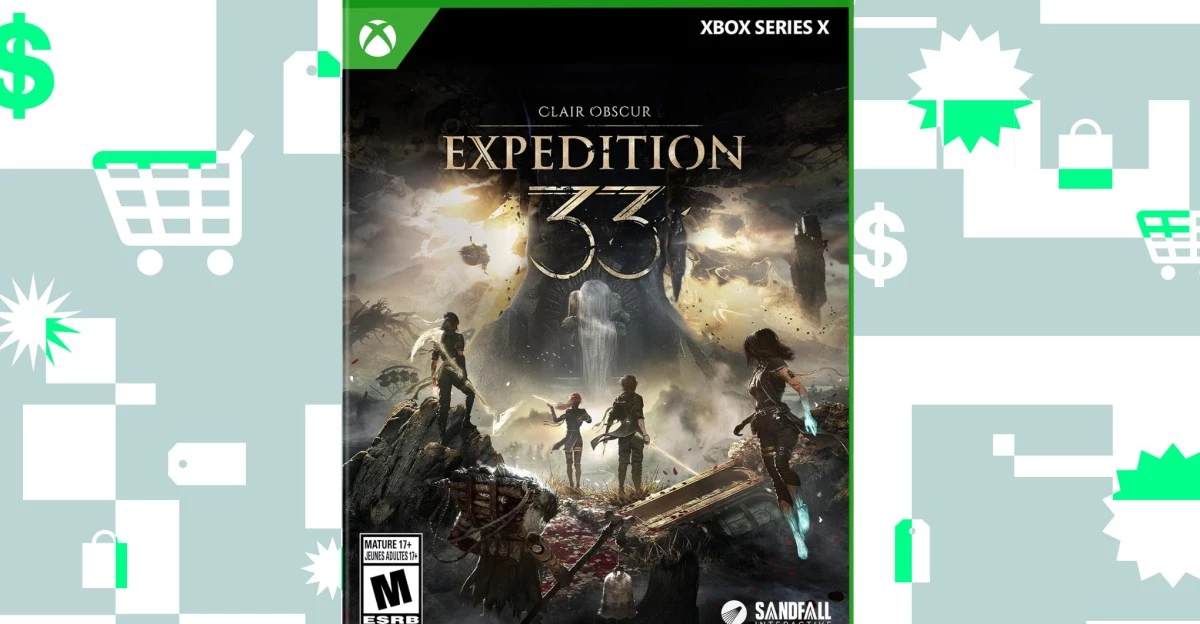
- Console and PC gaming: *Clair Obscur: Expedition 33* drops to US$33.17 on Xbox Series X and about US$35.49 via Steam code, while PlayStation 5 pricing holds at MSRP.
- Mobile bundling: Google Pixel 11 (256 GB) pre-orders bundle a Pixel Watch 5, effectively reducing the watch from US$399 to US$269; the Pixel 11 Pro bundle implies an even larger net watch discount (~US$250).
- Gaming laptop markdowns: Gigabyte A16 (Core i7-13620H, RTX 5070, 32 GB DDR5, 1 TB SSD, 1200p/165 Hz) is discounted US$600 to US$1,249, with upgrade paths for RAM and storage.
- 4K Blu-ray promotions: Gruv’s weekend pricing highlights The Matrix Deja Vu 4K set at US$34.99 and HBO’s Chernobyl 4K at US$14.99, plus 15% off for first-time buyers (FIRSTGRUV15).
Seen together, these moves map to a market where discretionary spending is cautious, supply chains have normalized, and companies are increasingly forced to compete on total customer lifetime value, not just one-time transactions.
Platform-specific game pricing signals a new era of audience microsegmentation
The selective discounting of *Clair Obscur: Expedition 33* is a case study in platform arbitration—the practice of tuning price and promotion by storefront to maximize adoption where it matters most.
Holding the PS5 price at MSRP while discounting on Xbox suggests a deliberate attempt to:
- Accelerate player acquisition on Microsoft’s platform, where promotional placement and marketing partnerships can materially change sales velocity.
- Preserve premium positioning on PlayStation, protecting perceived value and reducing the risk of training that audience to wait for discounts.
- Capture PC enthusiasts with a tight Steam-code discount that acknowledges PC buyers’ price sensitivity while still respecting the genre’s “premium RPG” positioning.
This is less about fairness across platforms and more about ROI by channel. Publishers and studios increasingly treat each storefront as a distinct market with its own elasticity, promotional tooling, and audience behavior. The implication for the industry is clear: uniform pricing is giving way to dynamic, segmented pricing, and consumers will see more “why is it cheaper over there?” moments—especially as digital storefronts become the primary battleground for discovery.
Google’s Pixel 11 + Pixel Watch 5 bundle is a direct bet on ecosystem lock-in economics
Google’s Pixel 11 bundling strategy reads like a deliberate escalation in the smartphone-wearable race. By effectively subsidizing the Pixel Watch 5 through phone margins—bringing the watch’s effective price down to US$269 in the base bundle—Google is using a familiar playbook: reduce friction to multi-device ownership, then monetize engagement over time.
The tiered structure (Pixel 11 vs Pixel 11 Pro) also functions as an upgrade lever:
- The Pro bundle’s larger implied watch discount nudges buyers toward higher-margin phone SKUs.
- The watch becomes an “instant ecosystem anchor,” increasing the likelihood that users adopt Google services spanning health tracking, payments, location, and notifications.
Yet bundling only works long-term if the software experience sustains the relationship. Apple’s advantage has historically been less about hardware discounts and more about tight cross-device integration and habit formation. For Google, the strategic pressure point is to ensure Pixel Watch owners feel tangible daily value—potentially through deeper health insights, better device handoff, and service packaging that doesn’t feel like an afterthought.
For the broader wearables market, this kind of subsidy can compress margins and force competitors to respond with:
- More aggressive bundles (phones + watches + earbuds)
- Service-led differentiation (fitness coaching, safety features, premium health analytics)
- Longer-term financing and trade-in incentives to reduce upfront sticker shock
Gaming laptop price cuts and 4K Blu-ray deals show two different responses to consumer caution
Gigabyte’s US$600 markdown on the A16 gaming laptop points to a hardware market still digesting post-pandemic realities: demand normalization, channel inventory pressure, and the constant shadow of “next-gen” announcements. A configuration featuring an RTX 5070-class GPU, 32 GB DDR5, and a 165 Hz display at US$1,249 is not just a deal—it’s a signal that OEMs are willing to re-anchor consumer price expectations to keep volume moving.
That’s a risky but sometimes necessary trade:
- It clears inventory and stabilizes channel relationships.
- It can also normalize discount dependency, making full-price launches harder to sustain.
Meanwhile, Gruv’s 4K Blu-ray promotions underscore a different kind of resilience: physical media as premium ownership. Even in a streaming-dominant era, collectors and cinephiles continue to pay for:
- Higher bitrates and consistent quality versus streaming compression
- Tangible ownership insulated from licensing churn and DRM constraints
- Box sets and limited editions that turn IP into a collectible asset
The first-time buyer code (FIRSTGRUV15) reflects a modern reality for niche retailers: growth comes from e-commerce acquisition tactics layered onto enthusiast demand. Physical media isn’t mass-market momentum—it’s a durable, high-intent segment that content owners can still monetize through smart windowing and curated releases.
What ties these categories together is a shared strategic logic: in a market shaped by cautious discretionary spending and intensified platform competition, the winners will be those who treat discounts not as blunt instruments, but as precision tools—used to acquire the right customers, on the right platform, with a credible path from one-time purchase to long-term engagement.


 By
By
 By
By

 By
By
 By
By

 By
By







