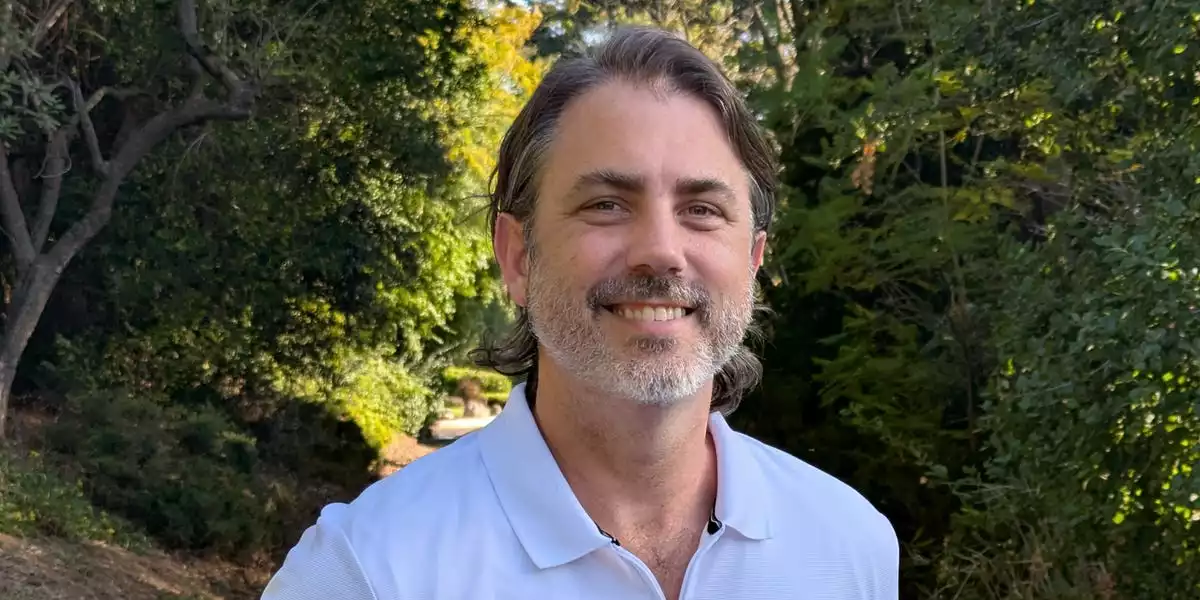

From Wall Street deal rooms to platform-led property portfolios
Michael and Elizabeth Chang’s move from elite mergers-and-acquisitions careers at Citi and Merrill Lynch into a family-centered short-term rental business captures a defining feature of the modern economy: digital platforms increasingly function as alternative career infrastructure. Where investment banking once offered the clearest path to outsized earnings and status, marketplaces like Airbnb now enable a different kind of leverage—one built on distributed assets, operational systems, and brand reputation rather than corporate hierarchy.
After a decade in high-stakes finance, Michael Chang’s 2018 departure was not a sudden leap so much as a calculated reallocation of risk and reward. The Changs scaled to eight properties, including a strategic acquisition in Tennessee that reflects a sophisticated understanding of tax exposure and cost-of-capital dynamics. Their trajectory is emblematic of a broader cohort of high-skilled professionals who are applying institutional-grade discipline—financial modeling, scenario planning, and portfolio construction—to consumer-facing platform businesses.
Yet the story is not simply about leaving one income stream for another. It is also about redefining professional ambition: shifting from the prestige of deal size to the durability of time, autonomy, and family presence. That recalibration—especially among high performers—has become a recurring theme in post-pandemic labor markets, where the meaning of “success” is being renegotiated in real time.
The mechanics of platform entrepreneurship: scale, systems, and dependency risk
Airbnb’s two-sided marketplace has long been framed as a democratizing force in hospitality, allowing individuals to compete with hotel chains by monetizing underutilized real estate. The Chang case shows how that democratization evolves at scale: once an operator moves beyond one or two listings, the business begins to resemble a distributed micro-hospitality company, requiring process rigor and technology-enabled execution.
Key operational capabilities implied by their growth include:
- Dynamic pricing and revenue management to respond to seasonality, local events, and demand shocks
- Remote operations (cleaning coordination, maintenance workflows, vendor management) across multiple properties
- Guest experience design that drives reviews, repeat bookings, and platform visibility
- Standardization—turning ad hoc hosting into repeatable playbooks that can be replicated across markets
But platform-enabled entrepreneurship comes with a structural trade-off: platform dependency. Algorithmic ranking changes, policy revisions, fee adjustments, and local regulatory shifts can materially alter unit economics overnight. For operators, this creates a new category of concentration risk—less about a single employer and more about a single marketplace.
This is where the Changs’ later move into education and advisory—launching “STR like the Best” in 2023 and mentoring 100+ clients—reads as more than a side project. It represents a classic strategy in platform economies: convert operational know-how into a second, more defensible revenue line. Advisory products are not immune to market cycles, but they are typically less exposed to the same algorithmic volatility that governs booking flow.
COVID-19 as a stress test—and the rise of geographic and tax arbitrage
The pandemic served as an unusually sharp audit of the short-term rental model. Booking collapses, travel restrictions, and consumer uncertainty exposed vulnerabilities in occupancy-dependent income streams. At the same time, the recovery in leisure travel—and the persistence of hybrid work—validated the category’s resilience for operators who could adapt quickly.
The Chang narrative highlights two macro lessons that sophisticated investors increasingly internalize:
- Resilience requires flexibility in use cases. Operators who could pivot—toward longer stays, mid-term “work-from-anywhere” guests, or enhanced cleaning protocols—were better positioned to bridge demand gaps.
- Geographic diversification is not optional at scale. Concentration in one tourism corridor or regulatory jurisdiction can amplify downside risk. Expanding across markets becomes a form of hedging, not just growth.
Their Tennessee acquisition is particularly telling. It signals an investor mindset shaped by more than aesthetics or personal preference; it reflects jurisdictional strategy—where tax regimes, acquisition costs, and regulatory posture can materially influence returns. This kind of geographic and tax arbitrage is becoming a playbook for experienced short-term rental operators, especially as some high-demand cities tighten licensing and enforcement.
For business leaders watching this space, the implication is clear: short-term rentals are no longer a purely lifestyle-driven asset class. They are increasingly managed like mini operating companies, where regulatory intelligence, capital structure, and market selection can matter as much as interior design.
What the Chang model signals for talent strategy, PropTech, and the advisory economy
Beyond real estate, the Changs’ transition speaks to a wider cultural and corporate shift: high-performing talent is experimenting with “portfolio careers”—mixing traditional credentials with platform-native entrepreneurship. Michael Chang’s Cornell MBA and Wall Street training did not become irrelevant; they became portable. Financial discipline, risk assessment, and execution under pressure translate cleanly into platform businesses where margins are won through systems, not slogans.
For employers, this raises uncomfortable but actionable questions. If ambitious professionals can incubate scalable ventures outside the firm, companies may need to compete not only on compensation, but on life design—flexibility, autonomy, and long-term sustainability. Forward-looking organizations are already exploring models that echo this reality: internal venture studios, entrepreneur-in-residence tracks, and more permissive approaches to side ventures that retain talent while channeling innovation.
Meanwhile, the Changs’ education offering underscores the momentum of the advisory and creator-led learning economy, where practitioners monetize expertise through coaching, cohorts, and playbooks. In a market crowded with short-term rental content, credibility increasingly comes from lived operational experience—especially experience forged through downturns like COVID-19.
The deeper takeaway is that platform capitalism is maturing. The next phase is less about discovering Airbnb and more about building durable businesses around it—diversifying channels, professionalizing operations, and turning expertise into intellectual property. The Changs’ story sits squarely at that intersection, where career reinvention meets disciplined execution, and where legacy is measured not only in financial outcomes, but in the architecture of a life intentionally rebuilt.

 By
By
 By
By
 By
By
 By
By
 By
By

 By
By