
A nearby “super-Earth” reshapes the shortlist for habitable-world science
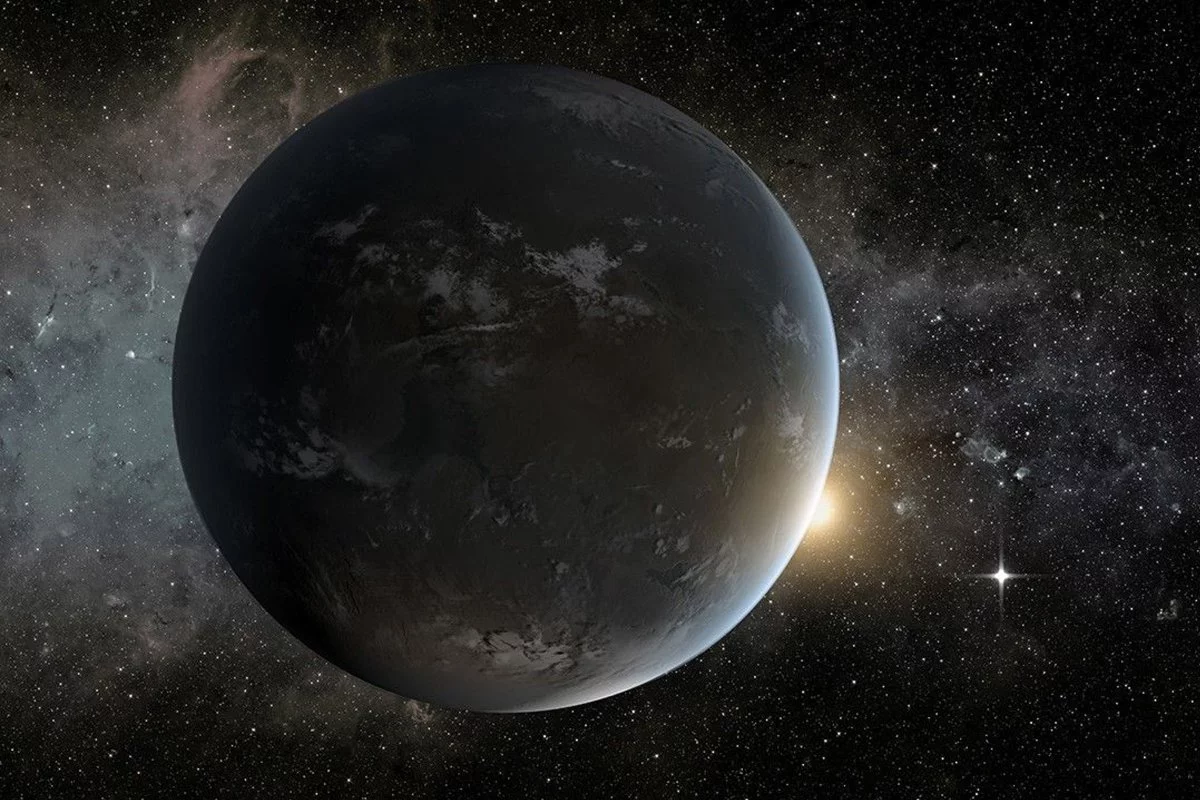
The University of California, Irvine team’s revised assessment of GJ 3378b—an exoplanet roughly 25 light-years away, orbiting a red dwarf within its habitable zone—is more than a routine correction. By moving the planet’s estimated mass from about five Earth masses down to roughly two, the research materially changes how scientists and strategists interpret its physical nature and its potential to host conditions compatible with life.
At five Earth masses, many models lean toward a world that could retain a thick, high-pressure atmosphere—possibly hydrogen-rich—raising the odds of a runaway greenhouse effect or a surface environment hostile to liquid water. At two Earth masses, GJ 3378b sits closer to the boundary where a planet can plausibly remain rocky with an atmosphere that is thin enough to allow temperate surface conditions, depending on composition and stellar environment. This is the zone where the term “potentially habitable super-Earth” becomes more than marketing shorthand and starts to look like a credible scientific category.
Yet the recalibration does not resolve the central unknowns that define habitability around red dwarfs. The planet’s prospects still hinge on factors that remain unmeasured or uncertain, including:
- Atmospheric composition and pressure (CO₂-dominant, nitrogen-rich, hydrogen-rich, or something else)
- Magnetic and atmospheric shielding against frequent stellar flares and particle radiation
- The climatic consequences of likely tidal locking, where one hemisphere faces the star permanently
For business and technology audiences, the key point is that this is not simply a “new habitable planet” headline. It is a demonstration of how quickly the exoplanet field is moving from detection to characterization, and how that shift drives innovation across instruments, data systems, and space infrastructure.
Precision astronomy as an engine for next-generation sensing and photonics
The GJ 3378b revision underscores the growing sophistication of radial-velocity spectroscopy and related techniques used to infer planetary mass from subtle stellar “wobbles.” Around red dwarfs—stars that can be magnetically active and spectrally complex—separating a planet’s signal from stellar noise is notoriously difficult. That the estimate moved so substantially is not a sign of failure; it is evidence that the measurement stack is improving and that the community is learning to correct for confounding stellar behavior.
This maturation has direct implications for the technology pipeline. The push to characterize small, temperate exoplanets is accelerating demand for:
- Ultra-stable spectrometers and calibration systems (including laser frequency combs)
- Near-infrared adaptive optics tuned for red dwarf observation
- Photonic filtering and precision optics that suppress noise and isolate faint signals
- Thermal and mechanical stability engineering that keeps instruments steady over long baselines
These are not niche capabilities. They map cleanly onto terrestrial markets where stability, sensitivity, and signal discrimination are monetizable advantages—such as telecommunications, remote sensing, and defense-grade imaging. The same design constraints that help detect a planet around a volatile star also improve the performance envelope of sensors used for Earth observation, navigation, and secure communications.
Looking ahead, the strategic significance rises as next-generation facilities and mission concepts—often framed around the Extremely Large Telescope (ELT) class, the Giant Magellan Telescope (GMT), and potential JWST successors—aim to move from “is it there?” to “what is it made of?” The closer GJ 3378b is to a truly rocky, temperate profile, the more it becomes a compelling target for atmospheric spectroscopy, including searches for broad chemical signatures that could indicate geologic activity or, more speculatively, biological processes.
AI-driven signal separation becomes the hidden battleground in exoplanet discovery
If instrumentation is the visible frontier, analytics is the decisive one. Red dwarfs are attractive because their habitable zones are close-in, making planets easier to detect. But those same stars generate variability—spots, flares, rotational modulation—that can masquerade as planetary signals. Disentangling these effects increasingly requires machine learning and advanced statistical frameworks trained on large stellar datasets.
The GJ 3378b mass revision highlights a broader trend: exoplanet science is becoming a proving ground for high-stakes inference under noisy, non-stationary conditions. That is a familiar problem class in industry, and the transferability is immediate. Techniques developed to separate stellar activity from planetary signatures can strengthen:
- Anomaly detection in cybersecurity and fraud prevention
- Pattern recognition in industrial IoT monitoring and predictive maintenance
- Real-time decision support in complex, data-saturated environments
- Risk modeling in finance where signals are weak and confounders are pervasive
For organizations building AI systems, exoplanet workflows offer a valuable template: rigorous uncertainty quantification, careful bias control, and the integration of physics-based priors with data-driven models. In a world increasingly shaped by AI governance and model accountability, astronomy’s culture of reproducibility and error budgeting may become as influential as its algorithms.
Investment, industrial spillovers, and the geopolitics of scientific leadership
As GJ 3378b moves into the “high-priority nearby target” category, it strengthens the commercial narrative around space science as a platform for innovation rather than a discretionary expense. The search for habitable worlds functions as a rare form of global public good—politically resonant, scientifically ambitious, and capable of justifying long-horizon capital investment in enabling infrastructure.
That investment logic tends to concentrate in a few areas:
- Space telescope platforms and modular architectures designed for servicing and upgrades
- Radiation-hardened electronics and space-qualified materials
- Precision manufacturing for optics, vacuum systems, and ultra-stable lasers
- Data platforms that support cross-mission interoperability and long-term archives
The spillover markets are substantial. Components built to detect faint atmospheric signatures can be commercialized into semiconductor lithography, quantum computing hardware, and biomedical imaging—industries where incremental gains in stability and sensitivity translate into outsized economic value.
Geopolitically, leadership in exoplanet discovery and characterization is increasingly a form of soft power—a demonstration of scientific capacity, industrial depth, and systems engineering excellence. The U.S., EU, China, and emerging space nations are all incentivized to shape the norms around:
- Data-sharing agreements and access to flagship observatories
- Export controls on dual-use photonics and sensing components
- Space-traffic management and deep-space communications infrastructure
- Intellectual property regimes that govern instrument design and analytics pipelines
Public-private models—visible in programs such as NASA’s Artemis ecosystem and commercial payload partnerships—offer a plausible blueprint for exoplanet-focused observatories as well: public capital de-risks foundational infrastructure, while private operators accelerate iteration, operations, and data services.
GJ 3378b’s revised mass does not confirm habitability, and it does not guarantee an Earth-like atmosphere. What it does is elevate a nearby world into a more plausible class of targets—tightening the feedback loop between discovery, characterization, and the industrial capabilities required to do both. In that sense, the planet’s most immediate impact may be felt less in the skies than in the labs, factories, and data centers that will define the next decade of space-enabled technology.

 By
By
 By
By
 By
By

 By
By


 By
By