
A taste test that doubles as a strategy signal for Krispy Kreme’s product engine
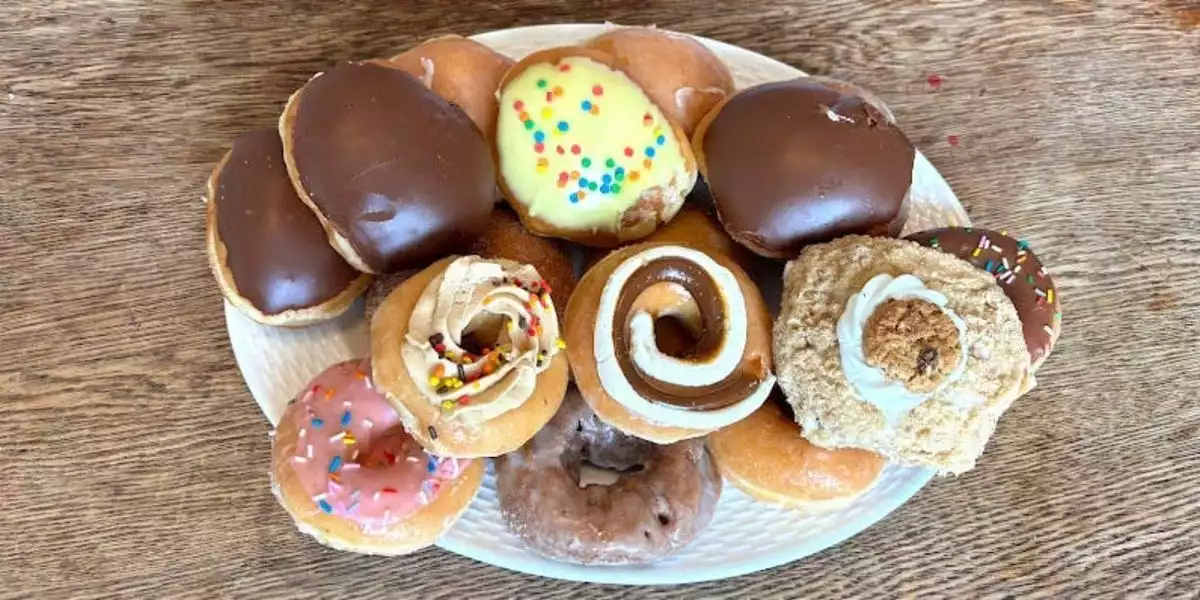
A blind taste test spanning 14 Krispy Kreme doughnut variants—from seasonal experiments to filled classics—reads like more than a consumer curiosity. It functions as a compact case study in how modern quick-service restaurant (QSR) brands balance innovation velocity with the gravitational pull of a heritage flagship.
Across the lineup, seasonal and novelty formats often aimed for “more”: more toppings, more fillings, more textures, more sweetness, more visual drama. Yet the reported reactions were uneven, with several limited-time offerings perceived as overly sweet, texturally busy, or artificial-tasting. By contrast, the Original Glazed emerged as the unanimous favorite—praised for freshness, simplicity, and a reliably balanced flavor profile.
For Krispy Kreme, the implication is not that innovation is failing. It’s that innovation is being judged against a benchmark that is unusually strong: a product that has become synonymous with the brand itself. In portfolio terms, the Original Glazed is not merely a top seller; it is a brand equity anchor that sets consumer expectations for what “Krispy Kreme” should taste like.
When portfolio expansion meets the limits of sensory tolerance
The test’s most striking theme is the potential for diminishing returns when multiple sensory elements are layered into a single SKU. Seasonal formats—maple-buttercream, oatmeal-Kreme-pie, strawberry, pumpkin-spice, salted-caramel-cheesecake, spiced-apple—appear designed to win attention in a crowded digital marketplace where limited-time drops generate social sharing and foot traffic. But the same design logic can backfire when:
- Sweetness stacks (glaze + filling + topping) compress the flavor range into a single note
- Texture complexity (crumbs, streusel, sprinkles, crust-like layers) interrupts the core dough experience
- Flavor authenticity becomes questionable, especially when “seasonal” cues read as synthetic rather than ingredient-forward
This is a familiar arc across consumer packaged goods (CPG) and QSR: a period of SKU proliferation intended to drive trial, followed by a corrective phase of SKU rationalization when operational drag and consumer fatigue rise. The taste test suggests that more than half of the variants struggled to outperform the baseline satisfaction delivered by the original—an important signal because the flagship is not competing on novelty. It is competing on repeatability, the attribute that most reliably converts trial into habit.
There is also a segmentation nuance embedded in the reactions. Novelty formats—cake-batter, sprinkles, and other playful builds—appear to resonate more with children, while adult palates reportedly penalized excessive sweetness. That divide matters because it points to a strategic choice: whether to treat novelty as a broad-market growth lever or as a targeted micro-segment product best deployed through digital channels and occasion-based marketing.
The economics of ingredients and the operational cost of “high-mix” menus
Behind every limited-time doughnut is a supply chain and a production line that must absorb complexity. In an environment shaped by commodity inflation—notably sugar, dairy, and wheat—specialty ingredients and decorative components can become margin-sensitive. Over-engineered products tend to introduce:
- More SKUs in inventory, increasing waste risk and forecasting error
- Higher labor and training burden, especially for assembly-heavy toppings and fillings
- Greater throughput variability, as seasonal runs disrupt standardized production rhythms
By comparison, the Original Glazed is operationally elegant. Fewer ingredients, fewer changeovers, and a simpler assembly path typically translate into higher gross profit per unit and more consistent quality at scale. That matters because consistency is not just a manufacturing metric; it is a brand promise. If a consumer’s best experience is the original, then any new product must clear a higher bar—not only in taste, but in the ability to be produced uniformly across locations.
This is where manufacturing technology becomes strategic rather than merely industrial. Automation in proofing, glazing, and filling, supported by inline vision systems and IoT-enabled process controls, can reduce variability and help seasonal products approach flagship consistency. But automation also requires capital expenditure discipline: high-mix, low-volume seasonal items can be the least compatible with expensive, optimized lines unless the brand has a clear plan for modularity and rapid changeovers.
Data-driven flavor engineering: turning taste reactions into repeatable growth
A single-session blind taste test offers valuable sensory feedback, but it also highlights a limitation: immediate impressions do not always predict repeat purchase behavior. The next competitive frontier for QSR innovation is the integration of taste, sales, and behavioral data into a continuous decision loop—where product development is guided not only by what people say in a moment, but by what they buy over time.
For Krispy Kreme and peers, the most durable playbook may be a tiered innovation architecture that protects the core while keeping the brand culturally present:
- Core classics (heritage SKUs like the Original Glazed) as the reliability engine
- Selective seasonal drops with stricter balance criteria and clearer ingredient authenticity
- Limited-edition collaborations designed for buzz, but governed by sunset rules and margin thresholds
The test also surfaces a broader food-tech reality: consumers are increasingly sensitive to sweetness intensity and artificial flavor cues. That creates an opening for natural flavor encapsulation, enzymatic sugar-reduction techniques, and other methods that preserve indulgence while improving perceived balance. Paired with AI-driven preference modeling—trained on sensory attributes, loyalty data, and geospatial sales patterns—brands can raise the “hit rate” of innovation and reduce R&D waste.
The enduring lesson is not that the future belongs to fewer products. It’s that the future belongs to brands that can innovate without losing the sensory clarity that made them famous. When a decades-old glazed ring outperforms a laboratory of seasonal creativity, it’s a reminder that in QSR, the most advanced strategy often starts with protecting what already works—then using data, discipline, and operational excellence to ensure the next new thing earns its place beside it.

 By
By
 By
By
 By
By


 By
By