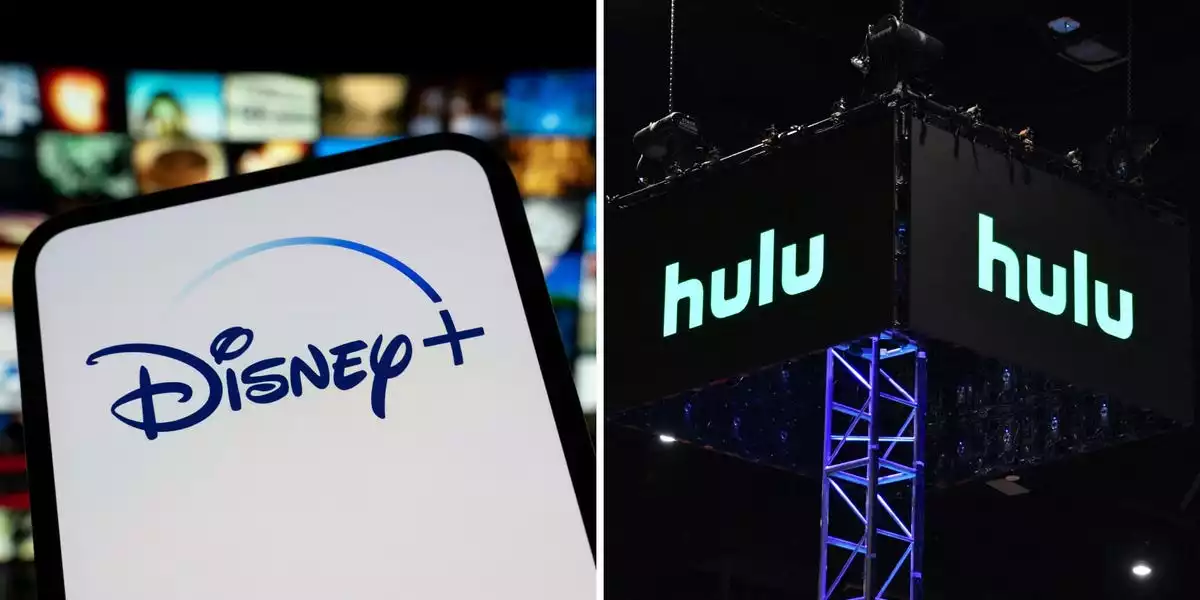

Disney’s “super-app” bet: turning Disney+ and Hulu into a single consumer gateway
Disney’s decision to fully integrate Hulu into the Disney+ application is more than a packaging change—it is a strategic redefinition of what Disney’s direct-to-consumer (DTC) business is meant to be. After years of heavy upfront investment in content and global streaming infrastructure, Disney’s streaming unit has crossed a crucial threshold: it is now operating as a meaningful profit center, posting $582 million in streaming profits last quarter. That profitability milestone reframes the integration as an optimization move—designed to compound gains—rather than a defensive consolidation.
The logic of a unified Disney+ and Hulu experience is straightforward: reduce friction for consumers, simplify operations for Disney, and unlock a broader monetization surface for advertisers. But the deeper implication is that Disney is increasingly behaving like a platform operator, not merely a content distributor. The “super-app” approach echoes bundling playbooks seen in other digital ecosystems, where a single interface becomes the default entry point for multiple services, increasing engagement and enabling richer data-driven personalization.
Key strategic objectives embedded in the integration include:
- Operational efficiency through shared infrastructure, unified product development, and streamlined support
- A single user experience that reduces app-switching and improves discovery across brands and genres
- A larger, unified data fabric that strengthens personalization and advertising performance
- Cross-selling potential across Disney’s broader ecosystem (including sports, commerce, and experiences)
Notably, Disney has not updated its subscriber totals beyond the previously disclosed 196 million, but it has signaled resilience where it matters most: retention has remained strong even after price increases, suggesting that the combined value proposition is holding up under consumer scrutiny.
Profitability meets product reinvention: why leadership and org design matter now
Disney’s streaming pivot is occurring alongside a leadership and organizational recalibration intended to accelerate innovation. Under CEO Josh D’Amaro, the company has elevated a set of executives spanning creative, product, and technology—an explicit attempt to close the historical gap between storytelling and software iteration. The appointment of Dana Walden as Chief Creative Officer, alongside co-presidents Adam Smith and Joe Earley, signals a governance model built to deliver both: premium franchises and fast-moving platform features.
This matters because streaming competition is no longer won solely on content volume. It is increasingly determined by:
- Product velocity (how quickly new features ship and improve engagement)
- Discovery efficiency (how effectively users find something to watch)
- Monetization sophistication (especially advertising yield and pricing strategy)
- Data discipline (measurement, experimentation, and retention analytics)
Disney’s recent performance indicators suggest momentum. The company achieved its highest monthly TV viewership share in nearly three years, a meaningful signal in a market where attention is fragmented and loyalty is expensive. Yet the competitive benchmark remains Netflix, whose scale and international footprint still set the pace. Disney’s advantage lies elsewhere: a uniquely diversified corporate engine—theme parks, consumer products, and sports—that can subsidize experimentation and reduce the strategic risk of platform reinvention.
The integration also reflects a subtle but important shift: Disney’s DTC business is moving from “growth at any cost” toward unit economics discipline, where profitability, churn management, and ARPU optimization become the central operating metrics.
AI-driven advertising and the new streaming arms race for monetization
If the Disney+ and Hulu integration is the consumer-facing headline, the more consequential battle may be happening behind the interface: AI-enabled advertising tooling. As Netflix and others expand ad-supported tiers, streaming is converging on a reality long familiar to television—advertising is not optional; it is foundational. Disney’s emphasis on AI for ad targeting, creative optimization, and dynamic pricing is designed to compete not just on audience size, but on ad yield per viewer.
A unified Disney+ and Hulu environment expands the addressable inventory and—critically—creates a larger pool of engagement signals that can improve model performance. In practical terms, integrating Hulu’s ad-supported strengths into Disney+ can enable:
- Higher CPMs through better targeting and measurement
- Improved relevance that reduces ad fatigue and supports retention
- More efficient yield management, potentially reducing reliance on third-party ad exchanges
- Faster experimentation loops across formats, placements, and creative variants
This is where Disney’s “super-app” strategy becomes inseparable from its AI strategy. The more seamless the platform, the more continuous the data, and the more effective the optimization—provided the company can execute the engineering and governance required to unify identity, preferences, and entitlements across services.
That caveat is not trivial. A consolidated identity graph heightens exposure to regulatory and reputational risk. Disney’s ability to scale AI advertising will depend on careful compliance with evolving privacy regimes such as GDPR, CCPA, and the EU Digital Markets Act, alongside transparent consumer controls that preserve trust.
What to watch next: short-form experimentation, privacy constraints, and the Netflix gap
Disney has signaled interest in short-form video, aligning with broader industry shifts in attention and mobile-first consumption. The strategic question is whether Disney treats short-form as marketing—snackable hooks into franchises—or as a standalone engagement layer that changes the cadence of content production. Either path requires a product mindset: rapid testing, iterative formats, and analytics-driven commissioning.
Three forward indicators will reveal whether Disney’s integration becomes a durable advantage:
- Execution quality of the unified app: discovery, performance, personalization, and reduced churn friction
- Advertising monetization lift: measurable improvement in fill rates, CPMs, and advertiser retention driven by AI tooling
- Pricing power versus fatigue: maintaining low churn while balancing ARPU growth in a cost-conscious consumer environment
Disney’s streaming story is no longer defined by whether it can build a service people subscribe to—it is defined by whether it can operate a platform people stay inside. The Hulu integration, paired with AI-driven monetization and a reorganized creative-tech leadership stack, is a clear declaration that Disney intends to compete in streaming’s next era: one where the winners are not just studios, but systems.
 By
By

 By
By
 By
By
 By
By
 By
By
 By
By