
Europe’s €1 billion Patriot missile push: urgent air-defense capacity meets a new financing playbook
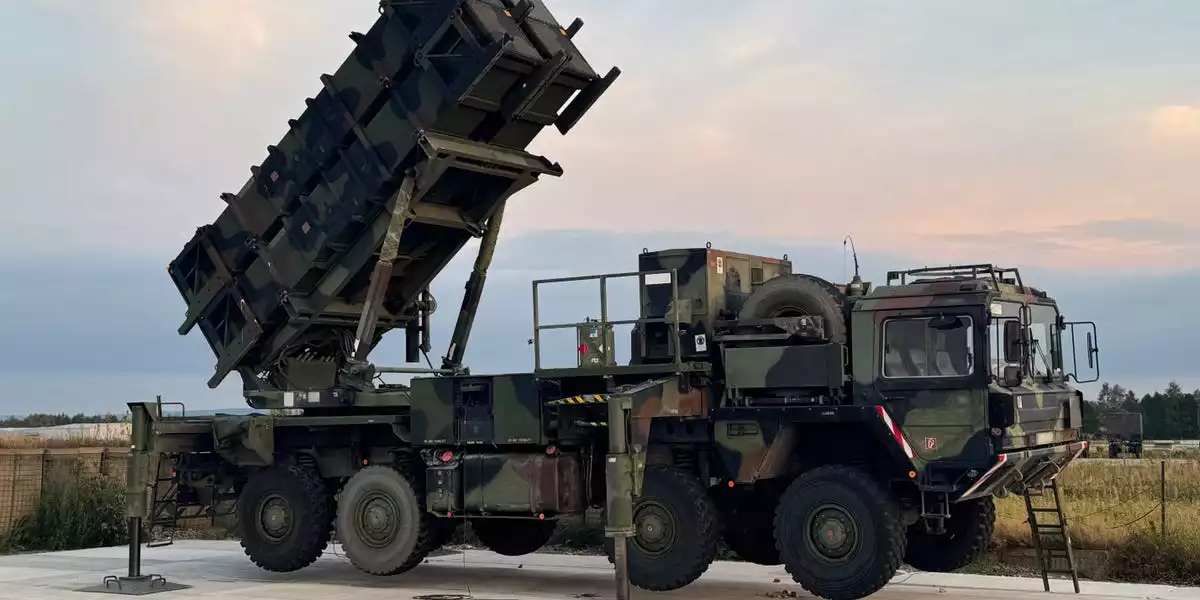
Ukraine’s decision to tap a €1 billion European Union loan to procure roughly 100 additional Patriot air-defense missiles is more than a procurement headline—it is a stress test of Europe’s ability to translate political support into high-end, time-sensitive munitions under battlefield pressure. The move comes as Russia sustains heavy ballistic and cruise-missile barrages, forcing Ukraine to prioritize interceptors that can credibly counter fast, complex threats while managing scarcity.
Notably, this tranche is described as the first direct draw from European stockpiles in 2024, signaling that the war’s air-defense contest is increasingly shaped by what allies can release from inventories now—not only what industry can deliver later. Ukraine’s parallel outreach to roughly 40 partner countries for Patriot systems underscores the reality that launchers, radars, and interceptors form an interdependent ecosystem: missiles alone do not create coverage, and coverage alone does not guarantee endurance.
The financing architecture is equally consequential. Alongside the EU loan, a separate €4.5 billion Germany–Ukraine financing pact signed in April—covering several hundred PAC-2 interceptors and launchers—illustrates how allies are experimenting with credit lines and structured funding to accelerate deliveries without forcing immediate, politically difficult budget tradeoffs. In a conflict where the tempo of strikes can change week to week, the ability to contract quickly and replenish predictably becomes a strategic asset in its own right.
Key elements shaping the near-term trajectory include:
- Immediate stockpile availability in Europe versus longer industrial lead times
- Financing mechanisms that reduce up-front fiscal friction for donors and Ukraine
- Coalition cohesion tools, including Ukraine’s proposed replenishment scheme to replace donated interceptors with future deliveries
The interceptor mix tells a deeper story: layered defense, evolving threats, and doctrine under fire
Ukraine’s reliance on both PAC-2 and PAC-3 variants highlights a pragmatic shift toward a two-tier intercept strategy—one that mirrors how modern integrated air and missile defense is increasingly designed.
- PAC-2 GEM-T is valued for its extended engagement envelope against aircraft and certain missile profiles, offering broad-area defensive utility.
- PAC-3 emphasizes hit-to-kill precision and agility, better aligned with maneuvering targets and the emerging class of hypersonic or quasi-hypersonic threats.
This hybrid approach reflects a battlefield reality: no single interceptor is optimal for every engagement, and commanders must allocate scarce missiles based on threat type, trajectory, and the defended asset’s value. Ukraine’s reported high interception performance—often cited around 90%—is strategically meaningful but also fragile. Sustaining it depends on three factors that are easy to overlook in public debate:
- Radar and sensor fidelity (tracking quality is as decisive as interceptor quantity)
- Network integration across upper- and lower-tier systems (e.g., NASAMS, IRIS-T SLM) to avoid overusing Patriots on lower-end threats
- Fire discipline and inventory management, because each successful intercept still consumes a missile that must be replaced
In this sense, the EU loan is not merely about buying more interceptors; it is about preserving a credible deterrent-by-denial posture—convincing Russia that massed strikes will not reliably achieve operational effects.
Industrial scaling and European licensed production: the Patriot supply chain becomes a strategic theater
On the supply side, the most consequential numbers are not only what Ukraine is buying now, but what the industrial base can sustain later. Raytheon’s plan to ramp PAC-2 GEM-T production to 420 units annually by 2027, alongside Lockheed Martin’s target of more than 600 PAC-3 missiles in the same timeframe, signals a long-cycle reorientation toward munitions throughput—a metric that Western defense planning often underweighted in the post–Cold War era.
Yet Patriot production is not a simple matter of turning on a factory line. The system depends on a dense web of sub-tier suppliers producing:
- Advanced seekers and guidance electronics
- Solid-fuel rocket motors
- Composite airframes and high-tolerance structures
- Quality-controlled components subject to stringent certification regimes
This is where Europe’s industrial ambitions enter the frame. German prime contractors Rheinmetall and MBDA exploring licensed domestic manufacture could, if executed, reduce bottlenecks and create a more resilient regional missile ecosystem. But licensed production is not a quick fix. It typically requires:
- Technology transfer agreements and clear intellectual property boundaries
- Workforce up-skilling and specialized tooling
- Alignment with export-control regimes (including ITAR-governed components where applicable)
- Long-term maintenance, testing, and lifecycle support capacity—not just assembly
If Europe succeeds, the payoff extends beyond Ukraine. A credible European missile production base would strengthen strategic autonomy, reduce vulnerability to transatlantic supply constraints, and potentially reshape NATO’s long-term air-defense posture.
Alliance signaling, replenishment diplomacy, and the emerging market for “munitions finance”
Ukraine’s proposed replenishment scheme—replacing donated interceptors with future deliveries—reads as a tactical procurement detail, but it functions as coalition diplomacy. Donor governments face domestic pressure to maintain readiness; any mechanism that credibly promises inventory restoration helps counter donor fatigue and sustains political consent.
At the same time, the EU loan and Germany’s credit line point to a broader trend: the rise of munitions finance vehicles as a tool of statecraft. Instead of treating missile procurement as a slow, annual-budget process, allies are experimenting with structures that behave more like crisis financing—spreading risk, accelerating contracting, and creating predictable demand signals for industry. This model may travel well beyond Europe, offering a template for partners facing high-end missile threats in other theaters, including the Indo-Pacific.
There is also a quieter industrial implication: scaling Patriot production can stimulate adjacent sectors—propellant chemistry, precision electronics, and high-performance composites—with spillovers into civilian aerospace and dual-use innovation. Even the most defense-specific advances, such as sensor miniaturization and AI-aided target discrimination, can migrate into commercial domains over time, from space situational awareness to environmental monitoring.
What emerges from this moment is a clear message: air defense is no longer just a contest of platforms, but a contest of financing speed, industrial depth, and alliance logistics. Ukraine’s €1 billion Patriot missile procurement is a battlefield necessity today—and a blueprint for how modern coalitions may sustain high-intensity defense tomorrow.

 By
By
 By
By
 By
By
 By
By


 By
By