
A design-led safety paradox reshaping U.S. streets
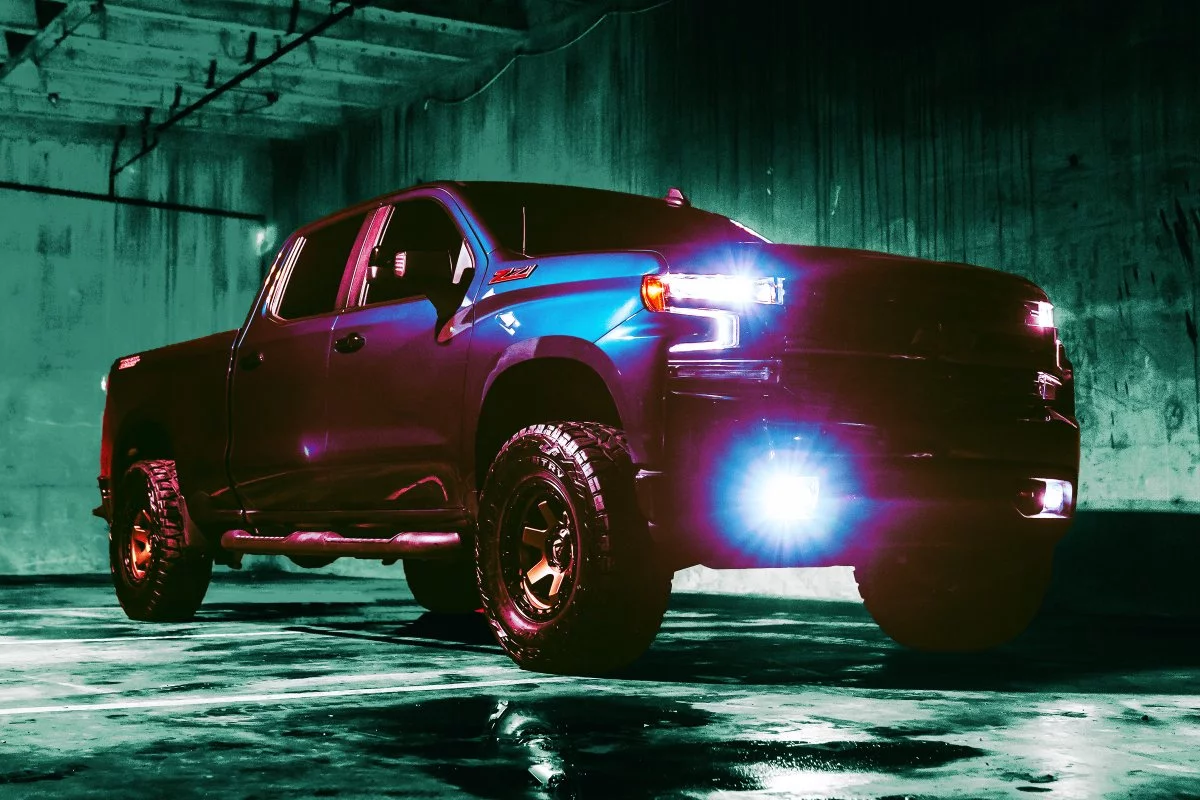
A striking public-safety signal is emerging from the U.S. vehicle fleet: pedestrian fatalities have risen roughly 75% since 2009, a period that maps closely to the mass-market shift from sedans toward oversized pickup trucks and SUVs. The New York Times investigation and supporting expert analysis point to a difficult trade-off at the heart of modern automotive engineering—occupant protection and consumer preference have advanced, while pedestrian survivability has deteriorated.
The mechanism is not abstract. It is architectural. Higher hood lines—often exceeding three feet—wider A-pillars, and taller ride heights change both what drivers can see and what happens when a collision occurs. Analysts estimate that from 2016 to 2024, roughly 3,000 additional pedestrian deaths can be attributed to this evolution in vehicle geometry. The relationship appears quantifiable: each additional inch of hood height correlates with a 2.8% increase in pedestrian fatality risk.
For business leaders, regulators, and mobility technologists, this is no longer a niche safety debate. It is a fleet-level externality with implications for product strategy, insurance pricing, urban policy, and ESG scrutiny—especially as electrification and software-defined vehicles reshape the competitive landscape.
—
Why hood height and blind zones change crash outcomes
The shift from lower-profile sedans to high-front vehicles alters the physics of impact in ways that matter at city speeds. With sedans, pedestrians are more likely to be struck lower on the body, sometimes rolling onto the hood with comparatively more energy absorbed through deformation zones. With taller front ends, the strike point moves upward—closer to a pedestrian’s center of gravity—raising the likelihood of severe torso and head trauma and increasing “launch” dynamics.
Key design factors repeatedly cited by safety experts include:
- Hood height and front-end stiffness
– Taller, more vertical front ends tend to deliver force higher on the body.
– Greater mass and structural rigidity can reduce the vehicle’s deformation, transferring more energy to the pedestrian.
- Visibility trade-offs from A-pillars and seating position
– Wider A-pillars improve roof-crush performance and occupant crash protection, but they also create occlusions at crosswalks and turns.
– Higher seating positions can give drivers a commanding road view while simultaneously enlarging near-field blind spots, particularly for children and shorter adults.
- ADAS performance under occlusion
– Advanced driver-assistance systems (ADAS) depend on camera, radar, and increasingly compute-heavy perception stacks.
– Blind zones and complex urban scenes can undermine detection reliability, especially when sensors are not optimized for the high-hood geometry typical of large trucks and SUVs.
This is where the story becomes as much about technology as it is about sheet metal. The industry has made meaningful progress in automatic emergency braking and pedestrian detection, yet the investigation underscores a gap: the segment most associated with elevated pedestrian risk is not uniformly equipped—or calibrated—with best-in-class vulnerable road user protection.
—
The profit engine behind big vehicles—and the costs now surfacing
The economic logic of the SUV and pickup boom is well understood. Larger vehicles carry higher sticker prices and margins, and they align with consumer demand for perceived safety, utility, and status signaling. Prolonged periods of sub-$3 gasoline, combined with favorable financing, helped normalize size escalation across suburban and even urban markets.
But the external costs are becoming harder to ignore, and they are increasingly legible in financial terms:
- Insurance and liability pressure
– Insurers may refine risk models to account for vehicle profile and hood height, particularly in dense metros where pedestrian exposure is higher.
– Fleets operating large vehicles—delivery, municipal, service—could face rising liability scrutiny, accelerating demand for demonstrable safety tech.
- Regulatory risk and compliance cost
– If federal or state agencies move toward standards that effectively require lower hood profiles or more capable pedestrian-detection systems, OEMs could face redesign cycles that collide with current platform strategies.
- Aftermarket opportunity and supplier growth
– A regulatory or insurance-driven push could expand markets for:
– Pop-up hoods
– External pedestrian airbags
– Under-bonnet energy-absorbing structures
– Aftermarket visibility aids and sensor retrofits
From a capital-markets perspective, pedestrian safety is also evolving into a governance topic. Institutional investors increasingly treat “social risk” as material, and a sustained rise in pedestrian deaths linked to product design can become a reputational and disclosure challenge—particularly for brands that market safety as a core value proposition.
—
The next competitive frontier: software-defined safety for high-ride vehicles
The most consequential strategic question is whether the industry treats this as a compliance problem—or as a platform for differentiation. The current transition toward electrification and software-defined vehicles creates an opening to embed pedestrian protection more deeply into vehicle architecture and compute stacks, especially for trucks and SUVs.
Several pathways are emerging as both technically plausible and commercially relevant:
- Sensor fusion tuned for vulnerable road users
– Better integration of radar + computer vision + LiDAR (where cost-effective) can reduce false negatives in complex urban environments.
– Calibration must reflect the realities of high-hood vehicles: near-field detection, turning scenarios, and crosswalk occlusions.
- Active-avoidance systems designed for heavier front ends
– Automatic emergency braking performance depends on braking distance, tire grip, and system confidence.
– Heavier vehicles—especially EVs with battery mass—may require more aggressive predictive braking and improved low-speed intervention logic.
- Portfolio and platform decisions
– Automakers may need to weigh the near-term profitability of large-vehicle dominance against:
– regulatory tightening,
– urban access constraints (low-speed zones, geofencing),
– and brand risk.
– A revival of smaller urban-focused vehicles or redesigned crossovers with pedestrian-friendly front ends could become strategically attractive rather than nostalgic.
- Public-private “complete streets” alignment
– Partnerships with cities—sensor-equipped crosswalks, low-speed corridors, geofenced limits for heavy vehicles—can reduce fatalities while creating new procurement and mobility-service opportunities.
The underlying message is stark but actionable: vehicle size inflation has produced a measurable pedestrian safety deficit, and the next era of automotive competition may reward companies that can reconcile consumer demand for capability with a demonstrable commitment to protecting the most vulnerable road users. The brands that solve that equation—through design, data, and software—will shape not just market share, but the lived safety of American streets.

 By
By
 By
By
 By
By
 By
By

 By
By