

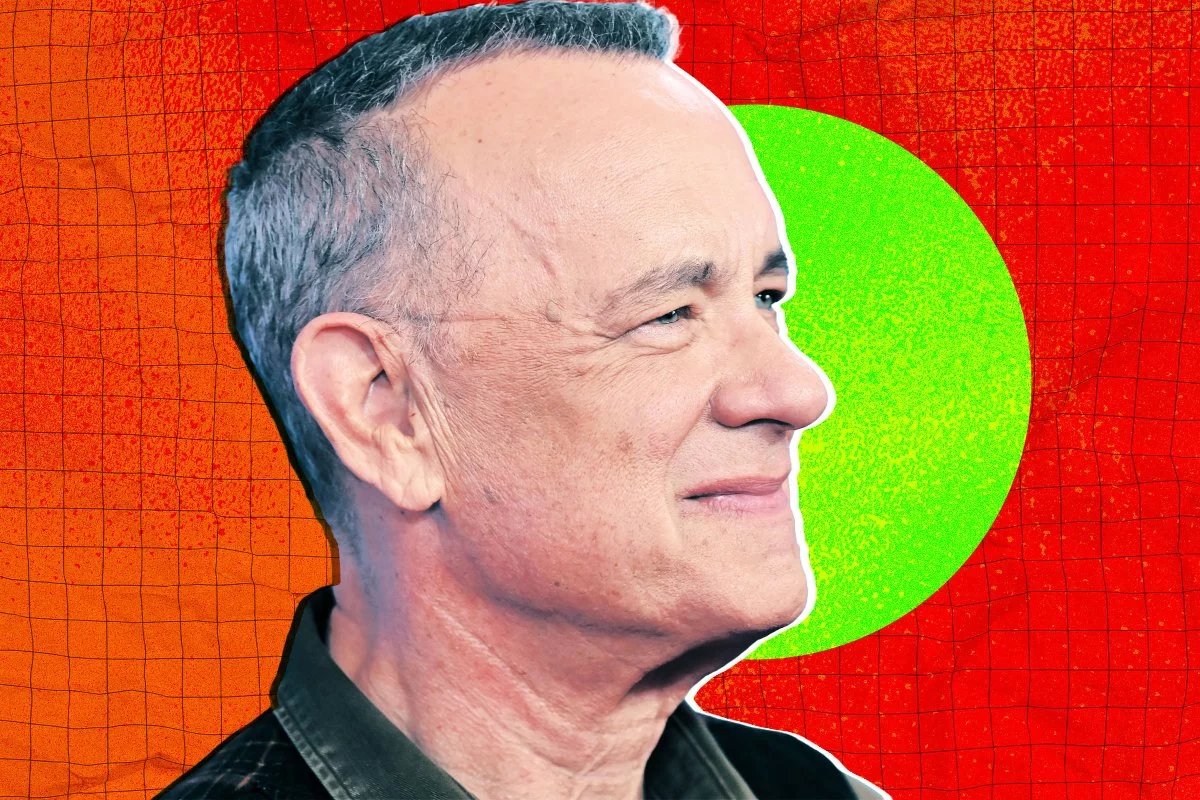

A legacy franchise meets a new kind of sequel pressure: authenticity in the age of synthetic performance
Disney and Pixar’s planned 2026 release of “Toy Story 5” arrives at a moment when sequel economics and creative expectations are being reshaped by artificial intelligence. The franchise is one of modern entertainment’s most durable assets—spanning theatrical releases, Disney+ ecosystem value, theme-park integration, and merchandising flywheels. Yet durability now carries a new question: what, exactly, is being preserved—characters, brand equity, or the human craft that made audiences care in the first place?
Tom Hanks’s public concerns land squarely on that fault line. His warning is not merely about technology replacing labor; it is about technology altering the audience’s relationship to performance. If a voice can be convincingly synthesized, and if a studio can extend a character indefinitely through archived recordings and AI voice cloning, the creative center of gravity shifts from actor-led interpretation to IP-led replication. That shift may be profitable in the short run, but it risks changing the emotional contract that has historically made Pixar storytelling feel intimate rather than industrial.
Hanks’s position is notably nuanced. He has accepted certain AI-enabled techniques—such as on-set de-aging—which suggests the debate is not “AI versus art,” but AI as augmentation versus AI as substitution. The distinction matters: augmentation can preserve human intent; substitution can hollow it out.
Voice cloning, deepfakes, and the new ownership battle over “who” a character is
AI voice synthesis has matured into a production-ready capability. High-fidelity voice cloning can reproduce timbre, cadence, and even stylistic quirks with startling accuracy—an innovation that offers studios operational flexibility and continuity planning. But it also introduces a strategic and ethical dilemma: a voice is not just a sound; it is a signature of identity and authorship.
For a studio stewarding a global brand, the upside is obvious:
- Continuity and scalability for long-running franchises, spin-offs, and interactive experiences
- Faster iteration for localization, marketing assets, and ancillary content
- Risk management against scheduling conflicts or talent unavailability
The downside is equally structural:
- Deepfake fraud and reputational risk, where synthetic audio can be weaponized outside the studio’s control
- Intellectual property and right-of-publicity disputes, especially when voice data becomes a reusable asset
- Erosion of performer agency, if consent becomes a one-time checkbox rather than an ongoing governance model
Hanks’s deeper concern—that audiences may become indifferent to whether a performance is human or machine-generated—speaks to a broader attention-economy reality. When content is abundant, authenticity becomes a differentiator. If consumers begin to suspect that a beloved character’s emotional beats are being “manufactured” rather than performed, the brand may still generate clicks, but it could lose the harder-to-measure asset: trust.
This is where disclosure norms may become decisive. The industry is already circling a potential standard: should viewers be told when a voice is synthesized? Mandatory labeling could protect consumers and performers, but it could also create a two-tier perception—“real” performances versus “synthetic” ones—forcing studios to decide which category they want their flagship franchises to occupy.
The economics of “Toy Story 5”: franchise compounding versus franchise fatigue
From a corporate strategy perspective, Disney’s reliance on proven IP is rational. Established franchises reduce demand uncertainty, support cross-platform monetization, and provide predictable merchandising arcs. “Toy Story” is particularly valuable because it functions as both a film series and a cultural shorthand—instantly recognizable across generations.
But the same compounding logic can become a trap. Franchise fatigue is not just about too many sequels; it’s about sequels that feel like financial instruments rather than creative events. Hanks’s insistence that a new installment must offer fresh thematic depth is, in effect, a warning about brand dilution: if audiences perceive “Toy Story 5” as a monetization exercise—especially one enabled by AI shortcuts—the long-term cost could exceed the short-term gain.
AI intensifies this tension by changing cost structures. If studios can reduce production time through AI-assisted animation, generative storyboarding, or synthetic dialogue, margins may improve. Yet those efficiencies may be offset by second-order effects:
- Harder talent negotiations as voice and likeness rights become contract-critical assets
- Residual and compensation model disruption, inviting union action and legal scrutiny
- Regulatory intervention risk, as policymakers grapple with consent, privacy, and disclosure requirements
In other words, AI can lower the cost of making content, but it can raise the cost of maintaining legitimacy—legitimacy with performers, regulators, and audiences.
The strategic path forward: transparent AI governance and human-led storytelling as competitive advantage
The most durable outcome for Disney and Pixar is unlikely to be “no AI.” It is more plausibly disciplined AI—a model where technology accelerates production while human creators remain the final authors of tone, timing, and emotion. The competitive advantage may come from making that discipline visible through policy, contracts, and creative choices.
Several imperatives stand out for studios navigating this inflection point:
- Codify consent and control: contracts that specify permissible uses of voice and likeness data, with clear limits, renewal terms, and auditability
- Build transparent AI-use standards: internal governance plus public-facing clarity to preempt backlash and reinforce trust
- Use AI to explore, not to imitate: prototype story variants, test pacing, and accelerate iteration—without outsourcing the core emotional logic of scenes
- Protect the “human imprint”: invest in writer-actor collaboration, improvisational development, and performance-led character evolution
For “Toy Story 5,” the central question is not whether AI will be used—some form of it almost certainly will be. The question is whether the film will feel like it was made by people who still believe that a character’s soul is carried through human choices, not merely rendered through computational plausibility. If Pixar can deliver novelty with integrity—using AI as a tool rather than a replacement—it won’t just extend a franchise; it will set a benchmark for how legacy storytelling survives the synthetic era.

 By
By
 By
By
 By
By

 By
By

 By
By








