
Illinois’ 2026 Tornado Surge Rewrites the U.S. Severe-Weather Map
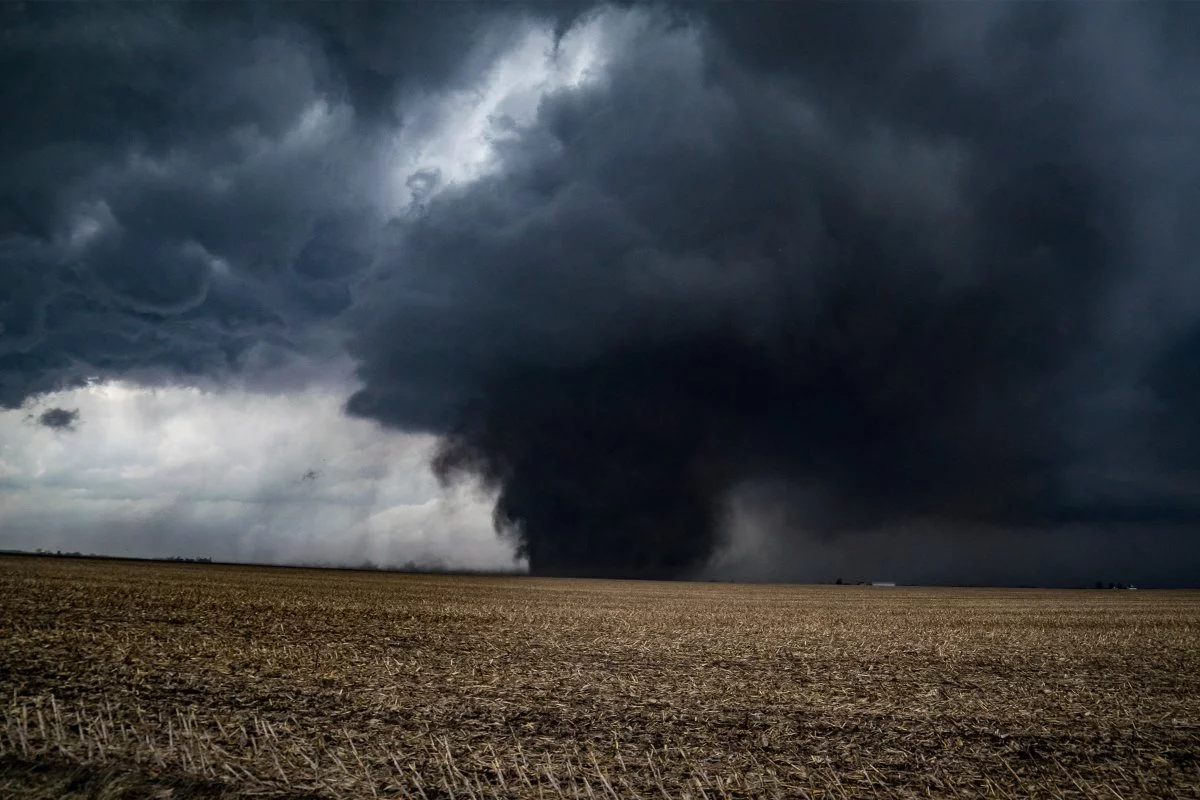
Illinois’ 196 confirmed tornadoes in the first half of 2026—the highest total of any U.S. state and the largest state-level count since 2015—signals more than an anomalous season. It challenges the long-standing “Tornado Alley” mental model that has historically centered risk in the Great Plains, particularly Nebraska, Kansas, Oklahoma, and Texas. The fact that neighboring Indiana (70) and Wisconsin (45) also posted elevated totals reinforces a broader geographic story: the Midwest and the Ohio/Mississippi Valley corridor are increasingly central to U.S. tornado exposure.
Climatological research covering 1985–2019 has already documented an eastward migration of tornado incidence into parts of southern Illinois, Indiana, Kentucky, and Tennessee. What 2026 adds is a stark, business-relevant datapoint: the shift is no longer an abstract trend line. It is now showing up in operational reality—where communities, insurers, manufacturers, utilities, and logistics networks must respond in real time.
For decision-makers, the key takeaway is not that the Plains are “safe”—they are not—but that risk is becoming more distributed, and the Midwest’s built environment and preparedness posture may not yet match the threat profile that is emerging.
The Atmospheric Mechanics Behind a Shifting Tornado Risk Corridor
Meteorologists point to a combination of suppressed storm ingredients in traditional hotspots and enhanced storm ingredients farther east. Tornado formation depends on a volatile alignment of factors—moisture, instability, lift, and wind shear—and the balance of those ingredients appears to be changing across regions.
Key drivers shaping the 2026 pattern include:
- Soil moisture deficits in the Plains: Multi-year drought conditions reduce evapotranspiration, which can limit low-level moisture availability. With less boundary-layer moisture, the atmosphere may be less primed for the kind of intense, rotating thunderstorms that produce tornadoes.
- Enhanced Midwestern thermodynamics: Warmer temperatures and higher humidity across the Ohio and Mississippi Valleys can increase convective available potential energy (CAPE)—fuel for severe storms—while wind profiles can still provide the shear needed for storm rotation.
- Attribution remains scientifically complex: The relationship between anthropogenic warming and tornado frequency is still an area of active research, and direct causality is difficult to prove. Yet the redistribution of favorable storm parameters—where the ingredients increasingly align—fits a broader narrative of climate-driven reconfiguration of hazard zones.
This matters because tornado risk is not only about counts; it is about where tornadoes occur relative to population density, infrastructure concentration, and the maturity of warning and shelter systems. A tornado in a more wooded, topographically varied Midwestern landscape can also pose different detection and response challenges than one crossing open Plains.
Technology and Communications: From Radar Coverage to AI-Driven Warning Systems
As tornado incidence migrates, the technology stack that underpins detection and warning must evolve with it. Traditional Doppler radar networks were built with historic risk geographies in mind, and while they remain essential, the Midwest’s terrain, vegetation, and built density can complicate low-level observations—precisely where tornado signatures are most critical.
A forward-leaning severe-weather technology agenda is likely to emphasize:
- Next-generation sensing networks
– Denser deployments of ground-based sensors (including in-canopy anemometers) to capture near-surface wind fields
– Expanded use of LiDAR and targeted mobile instrumentation to observe mesoscale dynamics
– Unmanned Aerial Systems (UAS) for rapid situational awareness and post-event damage assessment, supporting both emergency management and insurance workflows
- AI-powered forecasting and alerting
– Machine-learning models trained on reanalysis datasets can help identify precursor patterns and improve warning lead times
– Real-time fusion of satellite, radar, and IoT sensor feeds—already being piloted in high-stakes sectors like aerospace and defense—could migrate into civilian warning ecosystems
- Resilient communications infrastructure
– 5G small-cell architectures and edge computing can reduce latency for alerts and enable localized processing when backhaul is degraded
– Coordination among telecom carriers, power utilities, and emergency management agencies becomes a core resilience requirement, not a nice-to-have
The strategic implication is clear: tornado resilience is becoming a data and communications problem as much as a meteorological one. The regions now experiencing heightened risk will need both better sensing and faster, more reliable dissemination of warnings to households, schools, hospitals, and industrial sites.
Economic Fallout and Strategic Repositioning for Business, Finance, and Government
The migration of tornado risk into the Midwest has immediate consequences for insurance pricing, capital markets, infrastructure planning, and site selection—and it will increasingly influence how assets are valued and where supply chains are anchored.
Insurance and risk financing are likely to be among the first sectors to reprice reality:
- Premium volatility may intensify in high-risk ZIP codes, with some carriers tightening underwriting or retreating from concentrated exposures.
- Demand could rise for parametric insurance, where payouts trigger automatically when measurable thresholds (such as wind-speed metrics) are met.
- Capital markets may expand issuance of tornado-linked catastrophe bonds and other insurance-linked securities (ILS), potentially tied to regional vortex indices as investors seek yield in a higher-frequency risk environment.
Infrastructure and supply chain resilience will move from contingency planning to competitive differentiation:
- Manufacturers, warehouse operators, and data center developers will increasingly integrate probabilistic tornado-risk models into site-selection algorithms.
- Tornado disruptions to Midwest rail and road corridors could accelerate inventory pre-positioning, diversified routing, and expanded cross-docking strategies to protect just-in-time delivery commitments.
Agriculture and real estate will face valuation and operating-cost pressure:
- Higher tornado exposure can translate into increased multi-peril crop insurance premiums, nudging adoption of precision agriculture tools that optimize planting and irrigation decisions around severe-weather windows.
- Farmland and residential markets may see growing demand for granular wind-risk scoring and building-envelope resilience assessments, making tornado exposure a more explicit input into appraisal models.
On the public side, the policy agenda is likely to converge on holistic risk governance: stronger public-private collaboration among National Weather Service offices, FEMA regional councils, private meteorological firms, and civic technology providers; updated building codes that incorporate wind-resistance metrics more commonly associated with hurricane zones; and sharper competition for federal resilience funding under frameworks such as the Stafford Act and infrastructure-related appropriations.
Illinois’ 2026 tornado numbers are a headline, but the deeper story is structural: a rebalancing of U.S. severe-weather exposure that will reward the regions and enterprises that treat tornado resilience as a core operating capability—measured in sensor density, warning latency, code enforcement, capital structure, and the speed at which risk intelligence becomes action.

 By
By
 By
By

 By
By


 By
By
 By
By