
A cockpit-era improvisation meets the drone age in Ukraine’s skies
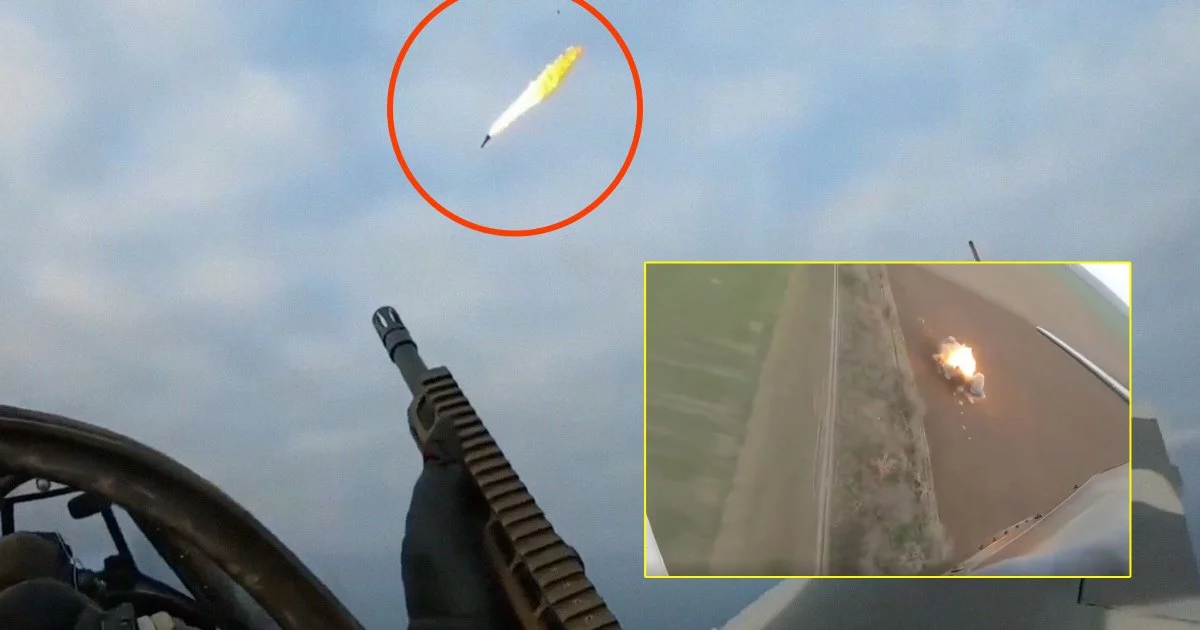
A striking video now circulating from Ukraine shows a scene that feels pulled from a different century: pilots in Soviet-era Yak-52 propeller trainers, canopies open, leaning out to fire at Iranian-origin Shahed drones used by Russian forces. The imagery is visceral—part World War II silhouette lore, part twenty-first-century unmanned warfare—and it captures a core reality of modern conflict: the most consequential innovations are not always the most advanced.
The Yak-52 was never designed as a combat aircraft. It is a civilian aerobatics and training platform—simple, rugged, and comparatively inexpensive to operate. Yet that very simplicity becomes an asset in a battlespace increasingly shaped by low-cost, mass-produced UAVs. Against Shahed drones—often deployed in volume to saturate air defenses—Ukraine’s reported tactic leverages a basic truth of autonomy: many small drones lack meaningful self-protection, and at close range they can be vulnerable to direct fire, improvised interception, and other “good-enough” countermeasures.
At the same time, the video underscores the human cost embedded in such ingenuity. Flying a lightly protected trainer into contested airspace exposes aircrews to ground-based air defenses and other hazards. The tactic’s appeal is not that it is safe; it is that it is available, scalable in a constrained environment, and sometimes effective.
Why the Yak-52 can matter against Shahed drones—despite being “obsolete”
The Yak-52’s relevance is less about nostalgia than about fit-for-purpose economics and physics. Modern fighters and high-end surface-to-air systems are optimized for complex threats, but they are also expensive to operate and finite in number. Shahed drones, by contrast, are designed to be cheap enough to expend. That mismatch creates pressure for defenders to find interception methods that do not burn premium resources on low-cost targets.
Several characteristics make a legacy trainer surprisingly viable in a narrow mission set:
- Low operating cost and availability: A Yak-52 flight hour is far cheaper than a modern fighter sortie, making it easier to sustain frequent patrols when budgets, airframes, and munitions are constrained.
- Low-speed maneuverability at low altitude: Many drones operate in regimes where a slow, agile aircraft can position itself effectively—especially when engagement is visual and close.
- Minimal systems complexity: Fewer advanced avionics can mean fewer maintenance bottlenecks and a smaller logistics footprint—an advantage in wartime conditions where supply chains are stressed.
- A different signature profile: While not “stealth,” a small prop aircraft can present a different detection and engagement problem than a fast jet, potentially complicating some threat responses.
The result is a form of asymmetric counter-UAV warfare: instead of matching drone swarms with equally expensive interceptors, Ukraine appears to be experimenting with layered defense, mixing high-end systems (such as Patriots and Western aircraft) with low-tech, close-in solutions that can be fielded quickly.
The business logic of cost asymmetry: when frugality becomes strategy
The deeper story here is economic. Drone warfare has accelerated a brutal arithmetic: attackers can often impose costs disproportionate to their own spending. A Shahed drone is widely estimated to cost only a few thousand dollars, while intercepting it with advanced missiles or high-end fighter sorties can be far more expensive. Even when interception is successful, the defender may be losing the financial exchange.
This is why the Yak-52 episode resonates beyond the battlefield. It illustrates a broader principle familiar to business and technology leaders: cost asymmetry drives architectural change. When the threat is cheap and repeatable, the defense must become cheaper and repeatable too.
Key economic and operational implications stand out:
- Life-cycle pragmatism over platform purity: Aging airframes bring maintenance burdens—spare parts, specialized skills, fatigue management—but their amortized cost can still be attractive when the mission is narrow and urgent.
- Resilient, localized supply chains: Wartime adaptation often forces maintenance crews to re-engineer components and improvise sourcing, a real-world stress test of distributed manufacturing and rapid prototyping.
- Decentralized innovation under pressure: Command structures that allow frontline experimentation can produce workable solutions faster than centralized procurement cycles—an uncomfortable comparison for large organizations with slow approval gates.
For corporate strategists, the analogy to cybersecurity is hard to miss. Enterprises rarely rely on a single “perfect” control; they build defense-in-depth, combining premium tools with simpler measures, manual testing, and operational discipline. Ukraine’s apparent approach mirrors that logic: heterogeneous defenses that reduce the chance of catastrophic failure when any one layer is saturated.
What this signals for the counter-UAV market, sanctions dynamics, and airspace governance
The episode also points to structural shifts in defense technology and global supply chains. Iran’s drone exports to Russia—despite sanctions pressure—highlight how embargoes can redirect trade into alternative corridors rather than eliminate it. For policymakers and multinational firms, this reinforces a recurring lesson: sanctions regimes can create adaptive networks that are difficult to fully disrupt, especially for dual-use components.
Meanwhile, the drone arms race is widening the market for counter-UAV capabilities across:
- Detection and tracking: radar, electro-optical systems, passive RF sensing, and fused sensor networks
- Interdiction: kinetic options, electronic warfare, spoofing, directed energy, and low-cost interceptors
- Command-and-control integration: software platforms that coordinate layered defenses across military and civilian stakeholders
Finally, the visual of low-speed manned aircraft engaging small drones foreshadows a future problem for civil aviation and regulators: lower-altitude airspace is becoming more contested and congested. Collision avoidance, identification, and rules of engagement will matter not only in war zones but also around critical infrastructure, borders, and major public events.
What the Yak-52 footage ultimately captures is not a romantic throwback, but a modern strategic reality: when threats are cheap, defenses must become creatively economical—and the organizations that endure are often those willing to hybridize old assets with new demands, without mistaking elegance for effectiveness.

 By
By

 By
By

 By
By

 By
By