
A high-profile anomaly that reverberates beyond a single launch
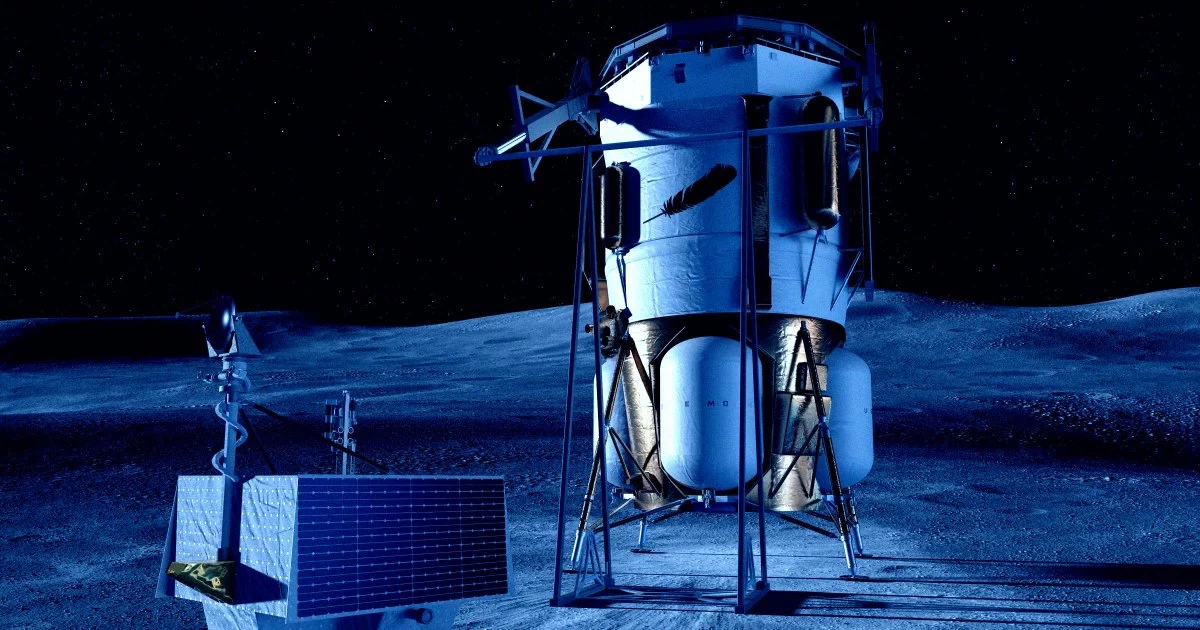
Blue Origin’s New Glenn heavy-lift rocket suffered a consequential setback over the weekend when it failed to place AST SpaceMobile’s communications satellite into its intended orbit. The immediate outcome—an expensive payload reduced to untrackable debris—is only the first-order effect. The broader impact touches nearly every layer of the commercial space stack: mission assurance, insurance pricing, regulatory oversight, investor confidence, and NASA’s Artemis lunar program timelines.
For AST SpaceMobile, the loss is not merely a hardware write-off. It interrupts a business model predicated on deploying and scaling space-based connectivity infrastructure on predictable schedules. For Blue Origin, the incident lands at a particularly sensitive moment: New Glenn has been in development for more than a decade, and its credibility as a repeatable heavy-lift workhorse is central to the company’s role in future national missions—especially as NASA leans on commercial partners to execute increasingly complex lunar logistics.
The Federal Aviation Administration (FAA) has opened what is expected to be a multi-month investigation, a standard but material process that can constrain return-to-flight timing and impose additional validation requirements. In a market where launch cadence is strategy, not just operations, the duration and findings of that investigation will shape near-term competitiveness.
What the failure signals about heavy-lift readiness and systems integration
Heavy-lift launch vehicles are not simply “bigger rockets.” They are systems-of-systems where propulsion, avionics, guidance, software, telemetry, and ground infrastructure must perform as a tightly coupled whole. New Glenn’s architecture—featuring a seven-meter payload fairing and the BE-4 staged-combustion engine—represents a class of engineering that is unforgiving to immaturity in any subsystem, particularly when scaled to operational tempo.
This event underscores a recurring truth in aerospace: orbital insertion is a precision outcome, and the path to it is brittle. A fault in propulsion performance, a guidance or avionics anomaly, or even a telemetry/ground interface breakdown can cascade into mission loss. When that happens, the consequences are not limited to the customer and provider:
- Orbital debris risk rises, increasing collision probability and complicating space traffic management.
- Liability and compliance exposure expands, especially as regulators and insurers tighten expectations around end-to-end mission assurance.
- Confidence in flight heritage—the currency of launch procurement—takes a measurable hit.
The timing is also strategically charged because NASA’s Artemis program relies on a progressive test philosophy: incremental demonstrations leading to higher-stakes operations. Yet the Artemis architecture increasingly depends on commercial heavy-lift systems that are still proving themselves. Compounding the issue, SpaceX’s Starship—the other major pillar of NASA’s dual-provider posture—has also experienced recent failures. The result is not a simple “competition narrative,” but a structural reality: two critical suppliers are simultaneously navigating early-stage reliability curves.
Insurance, capital markets, and the cost of risk in the launch economy
The loss of a high-value payload tends to ripple quickly through space insurance markets. Underwriters price risk based on demonstrated reliability, transparency of failure analysis, and the perceived pace of corrective action. A prominent failure—especially one producing untrackable debris—can harden market sentiment and raise premiums, particularly for:
- First-of-a-kind configurations and early flights of new vehicles
- Missions with complex orbital insertion profiles
- Payloads with limited redundancy or high replacement cost
Higher premiums and tighter underwriting do more than increase mission cost; they can reshape capital allocation. Investors evaluating space infrastructure—broadband constellations, in-orbit services, and cislunar logistics—depend on assumptions about launch availability and predictable schedules. When heavy-lift reliability is uncertain, capital may drift toward models perceived as more resilient, such as rideshare deployments, medium-lift alternatives, or incremental constellation buildouts.
Macroeconomic conditions amplify this effect. In a higher-rate environment, the cost of financing capital-intensive programs rises, and the tolerance for schedule slips declines. At the same time, aerospace supply chains remain constrained by:
- Long lead times for turbomachinery, avionics, and specialty materials
- Workforce scarcity in high-precision manufacturing and quality assurance
- The compounding burden of documentation and verification for systems expected to support human-rated or national-priority missions
In that context, a launch failure is not just a technical event—it becomes a stress test of the entire business ecosystem around the vehicle.
Artemis, public–private contracting, and the emerging premium on resilience
NASA’s strategy of engaging multiple commercial partners was designed to reduce single-vendor dependency. Yet the current moment reveals a paradox: diversification helps, but only if providers are sufficiently mature. With Artemis already facing schedule pressure, any extended New Glenn stand-down could intensify scrutiny of contract structures, milestone enforcement, and contingency planning—not only within NASA, but also across congressional oversight and broader public confidence in large-scale space spending.
The more durable takeaway for industry may be that resilience is becoming a differentiator, not a slogan. Stakeholders across the value chain are likely to prioritize:
- Multi-manifest launch strategies that spread risk across vehicle classes and providers
- Performance-based insurance models that reward demonstrated reliability and transparent anomaly resolution
- Stronger interoperability standards that enable mission swaps or re-manifesting without wholesale redesign
- Investment in digital twins, simulation, and operator training to compress qualification cycles while improving reliability
For AST SpaceMobile and other satellite operators, the incident reinforces the importance of launch portfolio planning and schedule elasticity. For Blue Origin, the next steps—root cause clarity, corrective action credibility, and return-to-flight discipline—will matter as much as the technical fix itself. And for NASA’s Artemis program, the episode is a reminder that the path back to the Moon is increasingly shaped not only by ambition, but by the operational maturity of the commercial systems entrusted to carry it.

 By
By
 By
By

 By
By
 By
By

 By
By
 By
By