
A new bet on orbital defense logistics: why Impulse Space and Anduril matter to “Golden Dome”
The U.S. Department of Defense’s decision to award Impulse Space—a three-year-old orbital transfer vehicle (OTV) company founded by former SpaceX co-founder Tom Mueller—alongside defense integrator Anduril Industries, a contract to design prototype space-based interceptors for President Trump’s proposed “Golden Dome” missile-defense architecture is more than a procurement headline. It is a signal that Washington is increasingly willing to treat space mobility—the ability to move, reposition, and sustain assets in orbit—as a core military capability rather than a niche commercial service.
The conceptual ambition echoes the political memory of Reagan-era Strategic Defense Initiative (“Star Wars”), but the industrial context is radically different: launch costs have fallen, small satellites have proliferated, and software-defined defense companies now compete with heritage primes. Golden Dome, as described, aims for a multi-tiered shield against long-range threats, with interceptors and support platforms in low Earth orbit (LEO). That architecture implicitly elevates OTVs from “space tugs” to operational linchpins, responsible for keeping an orbital defense layer responsive, distributed, and resilient.
Key takeaway: this award is as much about building an on-orbit logistics backbone as it is about interceptors themselves.
The hardest part isn’t the interceptor—it’s the end-to-end kill chain in space
Skepticism around space-based missile defense has historically centered on feasibility, cost, and escalation risk. Today, a more specific technical question dominates: can the United States reliably execute the full end-to-end kill chain in orbit, not just individual components?
For an orbital intercept concept to work, multiple capabilities must function seamlessly under tight timelines:
- Persistent tracking and custody of targets (potentially from boost phase through midcourse), requiring wide-field sensors and robust discrimination
- Real-time data fusion across satellites, ground stations, and command-and-control (C2) nodes, with low latency and high confidence
- Autonomous rendezvous and proximity operations, especially if interceptors are deployed, repositioned, or serviced dynamically
- High-delta-v propulsion and maneuver planning to place interceptors in the right orbital plane at the right time
- Rules of engagement and safety constraints that prevent misidentification, fratricide, or unintended debris creation
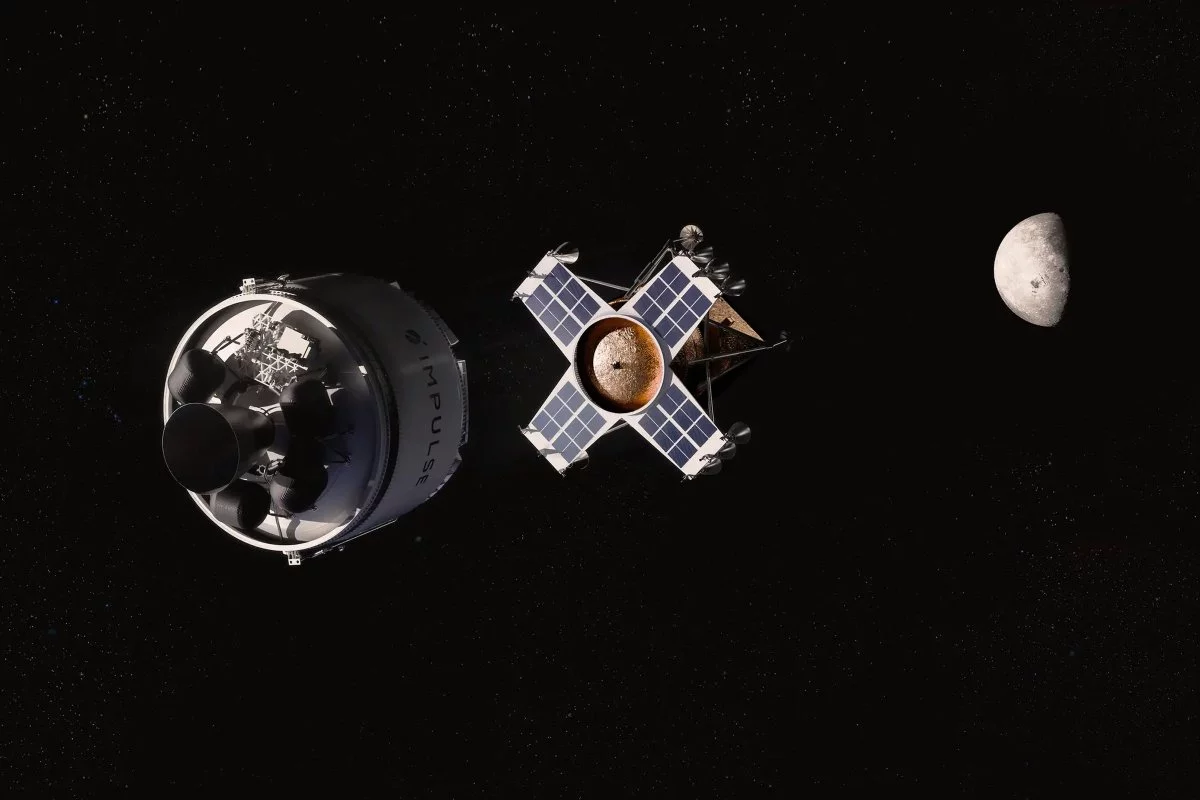
Impulse Space’s OTV specialization speaks directly to the mobility and sustainment side of that equation—moving payloads, repositioning assets, and potentially enabling rapid redeployment of interceptors, sensors, or logistics modules. Anduril’s value proposition, by contrast, is typically rooted in systems integration, autonomy, and software-centric defense operations—the connective tissue needed to make a distributed architecture behave like a coherent system.
Yet a central reality remains: no orbital missile intercept has been demonstrated end-to-end in an operationally representative way. The distance between “prototype design” and a credible on-orbit intercept capability is filled with integration risk—precisely the kind that has historically driven schedule slips and cost overruns in large defense programs.
Defense-commercial convergence accelerates innovation—while tightening regulatory and supply-chain constraints
Golden Dome sits squarely in a broader trend: the convergence of commercial space infrastructure and national security missions. Technologies developed for telecommunications, Earth observation, and satellite servicing—electric propulsion, modular satellite buses, optical inter-satellite links, autonomous navigation—can be adapted for defense. The Pentagon, in turn, can “derisk” these technologies through funding and flight opportunities, compressing development cycles that would otherwise depend on slower commercial adoption.
This convergence creates a new set of market dynamics:
- A shifting contractor landscape: DoD interest in smaller, faster-moving providers reflects a desire for agility and cost discipline, particularly as budgets face competing priorities.
- Talent and supplier bottlenecks: The pool of engineers with deep experience in propulsion, guidance, navigation, control, and space-qualified manufacturing remains limited. Startups must compete with incumbents (and increasingly Big Tech) for scarce expertise.
- Export controls and compliance friction: As dual-use capabilities mature, ITAR and related regimes become more central to product roadmaps, partnerships, and international scaling.
- Investment and consolidation signals: A high-profile award can catalyze private capital inflows into space defense startups and trigger M&A among primes seeking OTV and on-orbit servicing capabilities. Conversely, missed milestones could chill funding and concentrate power among a few large integrators.
In practical terms, Golden Dome could become a proving ground for whether commercial-style iteration can survive the realities of strategic defense: stringent reliability, adversarial environments, and political scrutiny over cost and escalation.
Strategic consequences: deterrence signaling, counterspace escalation, and the case for phased demonstrations
Placing interceptors in orbit is inherently geopolitical. Proponents frame space-based intercept as a deterrence enhancer—denying adversaries confidence in long-range strike options. Critics warn it could accelerate a counterspace competition, incentivizing:
- Co-orbital anti-satellite systems
- Directed-energy or electronic warfare payloads
- Preemptive doctrines targeting space infrastructure early in a conflict
That tension makes architecture choices decisive. A distributed, mesh-like constellation—many smaller nodes rather than a few exquisite platforms—can improve resilience and reduce single-point failures, aligning with modern doctrines of graceful degradation. But distribution also increases the burden on interoperability, space traffic coordination, and command-and-control integrity.
The most credible path through technical and political skepticism is disciplined, incremental proof:
- Validate on-orbit rendezvous and repositioning under operational constraints
- Demonstrate interceptor deployment and release with verified timing and control
- Progress to tightly scoped kinetic intercept trials designed to minimize debris and maximize learning
- Build parallel capabilities for debris mitigation, space situational awareness, and liability management, because sustainability will be inseparable from legitimacy
Golden Dome’s early contracts are best understood as a wager on a new defense-industrial synthesis: OTVs as logistics infrastructure, autonomy as the integration layer, and LEO as the operating domain. If Impulse Space and Anduril can translate prototype work into measurable, phased demonstrations, they will not only shape a missile-defense program—they may define what “operational space mobility” means for the next decade of national security space.
 By
By
 By
By
 By
By
 By
By
 By
By
 By
By
 By
By