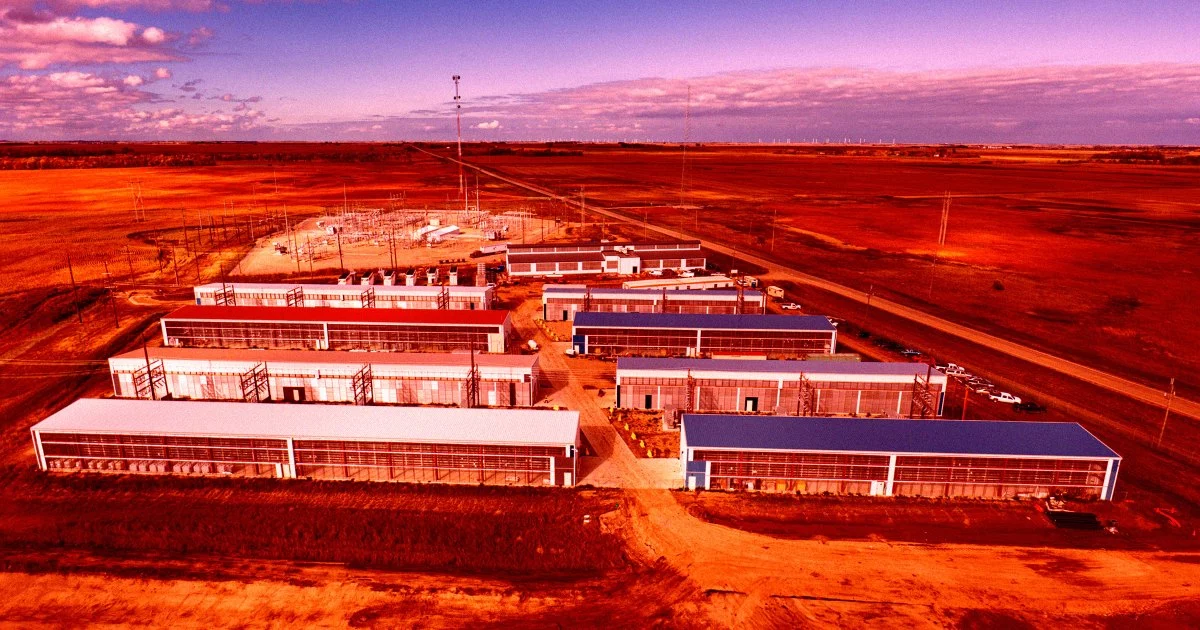

Maine’s proposed moratorium signals a new era of “compute governance”
Maine lawmakers are moving to pause a specific kind of growth: new data centers drawing 20 megawatts (MW) or more—a threshold roughly equated to powering about 15,000 homes—until at least November 2027, contingent on deeper environmental and grid-impact assessments. If the Senate concurs, Maine would become the first U.S. state to enact a formal moratorium of this kind, turning what has often been a local zoning dispute into a statewide policy framework.
The significance extends beyond one New England grid. Data centers—especially those optimized for AI training and inference—have become the physical backbone of the digital economy, but they are also increasingly treated as industrial-scale energy customers. Maine’s action effectively reframes hyperscale compute not as a neutral economic development win, but as a resource-allocation decision with distributional consequences: who bears the costs of grid upgrades, who benefits from tax revenue, and how quickly decarbonization goals can realistically be met.
This is also a political marker. As the midterm cycle approaches, the debate over data centers is evolving into a proxy for broader anxieties about AI’s societal footprint—spanning energy affordability, environmental externalities, and the perception that local communities are being asked to absorb infrastructure burdens for distant corporate gains.
Electricity prices, grid constraints, and the politics of ratepayer fairness
Maine’s policymakers are acting against a backdrop of acute cost sensitivity. Average electricity prices in the state have reportedly climbed nearly 60% between 2021 and 2026, sharpening scrutiny of any new load that could tighten supply-demand balance or accelerate capital spending on transmission and distribution. Large data centers often seek rural sites—where land is cheaper and permitting can be simpler—but rural grids can be less robust, making incremental demand more disruptive and more expensive to serve.
The core policy question is not whether data centers are “good” or “bad,” but whether current market and regulatory structures allocate costs in a way that is broadly acceptable. Key tensions now driving legislative interest include:
- Grid stability and peak demand risk: High-density compute loads can amplify peak stress, potentially increasing reliance on peaker plants and other high-emissions backup resources.
- Rate impacts and cost socialization: If upgrades are required to serve a single large customer, regulators and residents increasingly ask whether those costs are being shifted onto ordinary ratepayers.
- Local economic trade-offs: Data centers can deliver property tax revenue and construction activity, but typically provide limited permanent employment relative to their energy footprint—fueling skepticism about net community benefit.
- Environmental accounting: A moratorium creates time to embed more rigorous lifecycle carbon and air-quality metrics into permitting, rather than treating emissions as an indirect or secondary concern.
This dynamic is not confined to Maine. Ten other states—including New York, South Carolina, and Oklahoma—are weighing moratoria or heightened regulatory hurdles. At the federal level, calls for national limits on AI data-center construction from figures such as Sen. Bernie Sanders and Rep. Alexandria Ocasio-Cortez, alongside pressure from 200+ environmental groups, indicate that the issue is rapidly becoming a mainstream policy battleground rather than a niche infrastructure debate.
How the moratorium reshapes data-center strategy: siting, efficiency, and edge architectures
For hyperscalers and cloud operators, Maine’s move is less a one-off obstacle than a signal that site selection is entering a more politicized, energy-centric phase. The traditional playbook—secure inexpensive land, tap available interconnection capacity, build at scale—faces new friction where communities perceive a mismatch between local costs and local benefits.
Expect several strategic shifts to accelerate:
- Geographic re-optimization: Operators may pivot toward regions with faster permitting, clearer grid-upgrade pathways, or more mature energy markets—especially where utilities have already planned for large load growth.
- Grid modernization over pure capacity expansion: Utilities and regulators may prioritize substation upgrades, energy storage, advanced metering, and demand-response programs rather than simply adding generation. This is a subtle but important shift: it treats data centers as flexible grid participants, not just fixed megawatt consumers.
- Efficiency as regulatory leverage: Anticipating constraints, operators are likely to intensify R&D in power-efficient AI accelerators, liquid cooling, and higher utilization designs that reduce wasted capacity.
- Edge and modular compute: Smaller, distributed deployments—edge data centers and containerized modular builds—could become more attractive where centralized hyperscale campuses face political resistance or interconnection bottlenecks.
These changes could also reshape competition. Large hyperscalers can reroute workloads across a diversified footprint; regional providers may have fewer options, potentially accelerating market consolidation via partnerships or acquisitions. Meanwhile, if U.S. restrictions proliferate unevenly, some AI compute demand could shift offshore to more permissive jurisdictions—raising questions about supply-chain dependence, data sovereignty, and geopolitical exposure for sensitive workloads.
The emerging compromise: “build the compute, but pay for the resilience”
The most durable outcome is unlikely to be blanket prohibition or unconditional expansion. Instead, Maine’s moratorium points toward a negotiated model in which data-center growth is conditioned on measurable public benefits—especially around grid resilience and emissions.
Several approaches are gaining traction as pragmatic middle ground:
- Proactive utility partnerships: Co-funding energy storage, demand-response, and targeted transmission upgrades to reduce ratepayer exposure and improve reliability.
- Shared-value community programs: Structured commitments such as off-peak pricing support, local energy-efficiency investments, or transparent long-term rate impact disclosures to build trust.
- Green financing mechanisms: Public-private tools—such as green municipal bonds or infrastructure funds—linking new compute capacity to renewable buildouts and grid modernization.
- Stronger permitting metrics: Incorporating “environmental-grid risk” scoring—carbon intensity, peak contribution, backup generation profile—into approvals, making performance measurable rather than rhetorical.
Maine’s legislative push is best understood as an early test of how democracies will govern the physical expansion of AI. The state is asserting that digital growth must reconcile with local infrastructure realities—and that the license to operate for hyperscale compute increasingly depends on proving not only economic value, but grid responsibility and environmental credibility.

 By
By
 By
By
 By
By


 By
By

 By
By