
When biometric tracking becomes part of the jewelry box
The Oura Ring has spent a decade doing what successful wearables do best: quietly embedding themselves into daily routines. Since its 2015 debut, the ring has evolved from an early quantified-self curiosity into a mainstream wearable health tracker associated with sleep scoring, readiness metrics, and a broader wellness identity. Oura’s latest refinements—most notably a sleeker titanium chassis—signal a familiar technology arc: better materials, tighter form factors, and incremental improvements that make the device easier to live with.
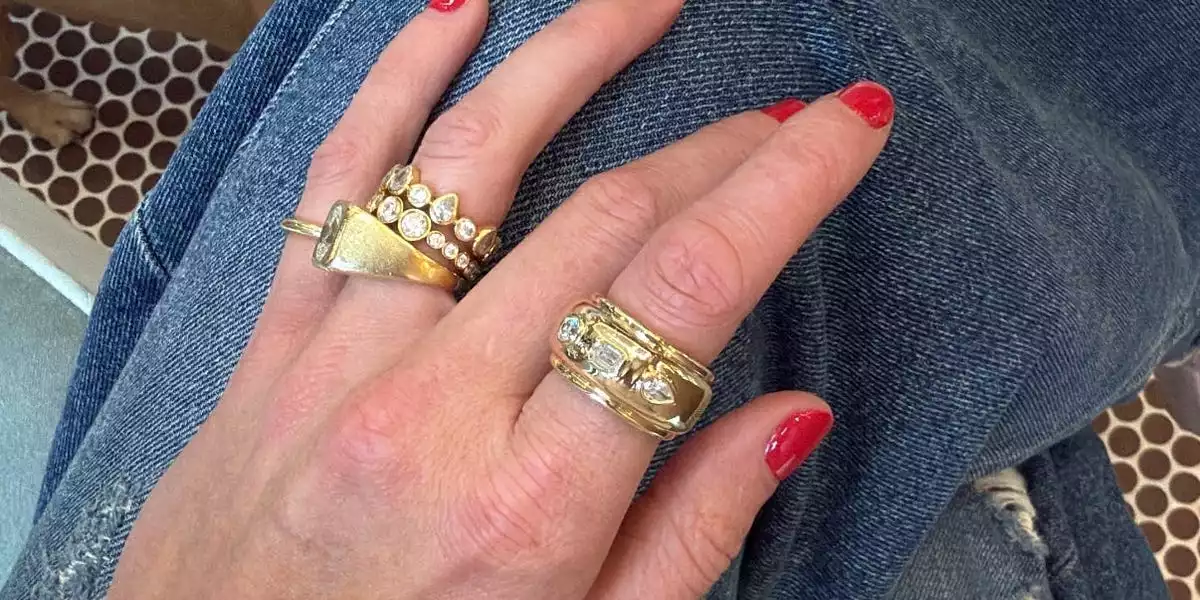
Yet the most telling shift around Oura may be happening outside the company’s product roadmap. Across the United States, upscale jewelers and independent designers are building a new category around the device: bespoke Oura Ring “jackets”, decorative outer shells that can be swapped onto the ring to transform its look without changing its sensors. Prices reportedly range from about $2,800 to nearly $10,000, and in some luxury circles the concept is already normalized—high-net-worth buyers, including luxury real-estate CEO Dawn McKenna, are commissioning these add-ons as a way to align wellness technology with personal style, social context, and status signaling.
The result is a revealing cultural moment for health tech: the ring is no longer only a tool for measuring the body; it is increasingly a canvas for expressing identity. In that sense, the Oura Ring is drifting toward the role historically played by luxury timepieces—objects that are functional, but also legible in public as markers of taste and belonging.
The rise of modular luxury: a new value chain around the Oura Ring
The jacket trend underscores a broader shift in consumer technology: value is fragmenting across ecosystems, with third parties capturing meaningful margin by enhancing the “outer layer” of a core device. Smartphone cases and Apple Watch bands established the template; Oura jackets elevate it into the luxury tier, where craftsmanship, precious materials, and scarcity narratives can command significant premiums.
Several forces are converging here:
- Aesthetic integration as a driver of adoption
Wearables succeed when they fit seamlessly into wardrobes and social settings. For many users, a ring is more visible—and more personal—than a phone or even a watch. If the base design reads as utilitarian, the aftermarket steps in to supply elegance.
- Modularity without compromising the core device
Jackets offer a practical proposition: upgrade the look without replacing the electronics. This is a form of “hardware modularity” that preserves the ring’s health-tracking functionality while allowing style variation across occasions.
- A new kind of “lifestyle interface”
As health metrics become part of everyday decision-making, the device collecting those metrics becomes part of the wearer’s public-facing identity. Ornamentation turns biometric tracking into a social object—less clinical, more curated.
Independent designers are also treating this as a scalable market rather than a one-off novelty. Names cited in the emerging space include Vivian Grimes of Henri Noël and Jenya Srour, with collections expanding and men’s lines reportedly forthcoming. That detail matters: it suggests the category is moving beyond a niche of bespoke commissions toward a broader product strategy with segmentation, seasonal drops, and repeat buyers.
Economics of premiumization: wellness, status goods, and accessory margins
The timing is notable. Oura is reportedly on a growth trajectory that could reach $1 billion in sales by 2025, roughly doubling prior annual revenue. Whether or not that forecast lands precisely, the direction is clear: the addressable market for ring-based health tracking is expanding, and with it, the opportunity for adjacent revenue streams.
From an economic standpoint, luxury jackets highlight three dynamics:
- Premiumization persists even under inflation pressure
While many consumers remain constrained by higher costs for essentials, high-income cohorts continue to spend on wellness and status goods. A diamond- or gold-set jacket sits at the intersection of both, functioning as an indulgence that can be framed as self-optimization.
- Aftermarket accessories can out-margin the core hardware
In many consumer categories, accessories produce disproportionate profit. In luxury, that effect can intensify: markups tied to craftsmanship, brand equity, and exclusivity can be substantial. For jewelers, Oura jackets represent a way to monetize a tech trend without building the tech.
- A tiered market is forming
Alongside high-end ateliers, lower-cost options on platforms like Etsy and Amazon introduce price elasticity. This bifurcation is typical of maturing accessory ecosystems: mass customization grows the category, while the top end defends pricing through materials, provenance, and bespoke service.
For business leaders, the key insight is that Oura’s projected revenue may understate the broader “Oura economy.” As the installed base grows, so does the incentive for third parties to build products, services, and brand narratives around the ring.
Strategic implications for wearable tech, luxury brands, and the next wave of smart jewelry
For Oura and other wearable OEMs, the jacket phenomenon is both an endorsement and a strategic challenge. It validates demand for ring-based tracking, but it also signals that aesthetic control is drifting outward—and with it, potential brand risk and quality variability.
Several strategic paths are emerging:
- Partnerships, licensing, and certification programs
An official accessory ecosystem—through licensing or certification—could protect fit tolerances (critical for comfort and sensor performance), preserve warranties, and prevent low-quality add-ons from degrading the user experience. It also creates a framework for co-branded limited editions with luxury houses.
- Designing for modularity at the hardware level
If jackets become mainstream, future rings may incorporate standardized attachment geometries or interchangeable exteriors. That would formalize what is currently an aftermarket workaround and could deepen ecosystem lock-in.
- ESG and ethical sourcing become unavoidable
As gemstones and precious metals merge with consumer electronics, scrutiny will follow. Conflict-free diamonds, recycled metals, and transparent sourcing are likely to become differentiators—especially for luxury buyers who increasingly expect an ESG narrative alongside craftsmanship.
- Privacy optics in a status-driven wearable era
When health trackers become conspicuous luxury objects, the conversation around data stewardship can intensify. The more visible the device, the more it symbolizes participation in data-driven wellness—and the more important it becomes for brands to communicate privacy safeguards clearly.
What’s unfolding around the Oura Ring is less about decoration for its own sake and more about a market signal: health tech is graduating into fashion infrastructure. The companies that treat aesthetics, modularity, and trust as first-class product features—not afterthoughts—will be best positioned as wearables move from gadgets to heirloom-adjacent objects people choose to be seen wearing.

 By
By
 By
By
 By
By
 By
By
 By
By
 By
By
 By
By