
A $15 horror bundle that doubles as a market signal for PC game pricing
Humble and Frictional Games’ limited-time PC horror bundle—six titles for $15 against a combined $78 Steam MSRP—is more than a consumer-friendly promotion. It is a compact case study in how digital bundling continues to reshape price expectations in PC gaming, particularly for high-quality back catalogs. The lineup—Penumbra Collector’s Pack; Amnesia: The Dark Descent; Amnesia: A Machine for Pigs; Amnesia: The Bunker; Amnesia: Rebirth; and Soma—spans releases from 2007 through 2020, effectively compressing more than a decade of genre evolution into a single, low-friction purchase.
For the market, the headline isn’t merely the discount; it’s the strategic intent behind it. Bundles like this function as a form of price discovery: they test elasticity, re-activate dormant demand, and introduce newer players to foundational franchises without asking them to commit to full-price experimentation. In a period where discretionary spending is often cautious, curated collections can outperform standalone sales by offering a clear value proposition and a sense of completeness—especially in genres where reputation and legacy matter.
Key commercial mechanics stand out:
- Deep discounting as a controlled disruption: a sub-20% effective price versus MSRP can reset what consumers perceive as “fair” for older premium titles.
- Back-catalog monetization at scale: legacy IP becomes a revenue engine without the development risk of new releases.
- Time-boxed urgency: the bundle’s limited sale window (through April 1) and key redemption deadline (April 1, 2027) create a structured incentive to buy now rather than later.
Platform interoperability and the quiet importance of Steam Deck readiness
The bundle’s platform posture is equally telling. It supports Windows, includes select macOS and Linux support, and is positioned as fully compatible on Steam Deck—a combination that reflects a broader industry pivot toward hardware diversity. Steam Deck has effectively normalized the idea that PC games must be evaluated not just for performance on desktops, but for handheld thermals, controller-first UX, and suspend/resume reliability.
This matters because cross-platform readiness is no longer a “nice-to-have” for mid-sized and independent studios; it is increasingly tied to discoverability and conversion. A bundle purchase is often impulsive, and friction—unclear compatibility, uncertain performance, missing native builds—can quickly erode that impulse.
From a technology and production standpoint, Frictional’s catalog also highlights how modern indie pipelines have matured:
- Engine modularity and middleware leverage make multi-OS deployment more feasible than it was during the early Penumbra era.
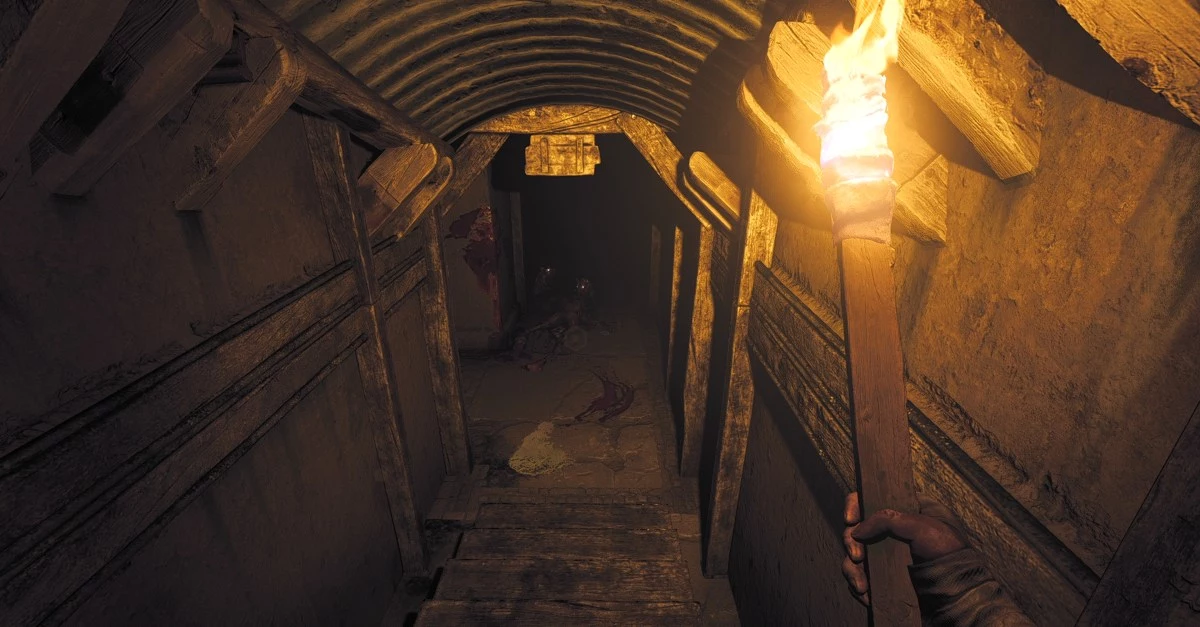
- Atmospheric rendering—particularly associated with Soma—signals how indie studios now routinely deploy techniques that read as “premium,” including volumetric fog, advanced shader work, and sophisticated lighting that supports mood as a gameplay mechanic.
- Steam Deck validation, in practical terms, is a proxy for optimization discipline: stable frame pacing, readable UI at smaller resolutions, and controller mapping that doesn’t feel like an afterthought.
The broader implication is that interoperability is becoming a competitive moat. Studios that treat handheld PCs, micro-PCs, and cloud-adjacent play patterns as first-class targets are better positioned to capture incremental audiences without reinventing their content strategy.
From jump scares to systems: how reactive AI sustains psychological tension
Frictional’s brand of horror has long been less about sudden shocks and more about ambient dread—a design philosophy that aligns with a wider shift toward systems-driven fear. Where many horror titles rely on scripted triggers, these games emphasize uncertainty: the sense that the environment is watching, responding, and escalating in ways the player cannot fully predict.
The news material points to reactive enemy behavior, including mechanics that respond to player attention (such as tracking gaze). Whether implemented through deterministic rules or more adaptive logic, the design effect is similar: it transforms fear from a pre-authored sequence into an emergent experience. That approach has two strategic advantages:
- Replayable tension: players can’t memorize a single “correct” route through the scare architecture.
- Streamability and word-of-mouth: emergent moments travel well on Twitch, YouTube, and social clips, effectively turning player experience into marketing.
This is also where forward-looking technology narratives begin to form. Reactive AI in horror is an early cousin of what many studios are exploring elsewhere: adaptive difficulty, procedural pacing, and personalization. The next frontier—already hinted at across the industry—is the integration of richer inputs (eye tracking, biometrics, behavioral telemetry) to calibrate tension dynamically. In that context, Frictional’s design legacy reads less like a niche aesthetic and more like a blueprint for adaptive suspense frameworks that could become premium features in VR or cloud-streamed horror experiences.
Cause-driven commerce and the strategic value of credibility
Humble’s charitable component—directing proceeds to the Against Malaria Foundation—adds a second axis to the bundle’s appeal: values-based purchasing. This is not simply altruism layered onto a discount; it is a proven conversion lever when executed with transparency and a credible partner. For platforms, philanthropy can increase willingness to pay, reduce buyer’s remorse, and strengthen brand trust in an ecosystem often criticized for aggressive monetization.
Strategically, the bundle benefits both parties:
- Humble reinforces its identity as a curator with a social-impact model, differentiating from storefronts optimized purely for transaction volume.
- Frictional expands reach and renews franchise awareness with minimal marketing overhead, while preserving resources for future development—potentially in emerging formats like VR or new distribution models.
Taken together, the Humble–Frictional horror bundle illustrates a modern playbook for digital entertainment: interoperable distribution, experience-first design, time-limited scarcity, and cause-aligned monetization—all deployed to unlock latent value in proven IP while shaping what consumers expect to receive for $15 in the PC gaming economy.


 By
By

 By
By
 By
By

 By
By
 By
By