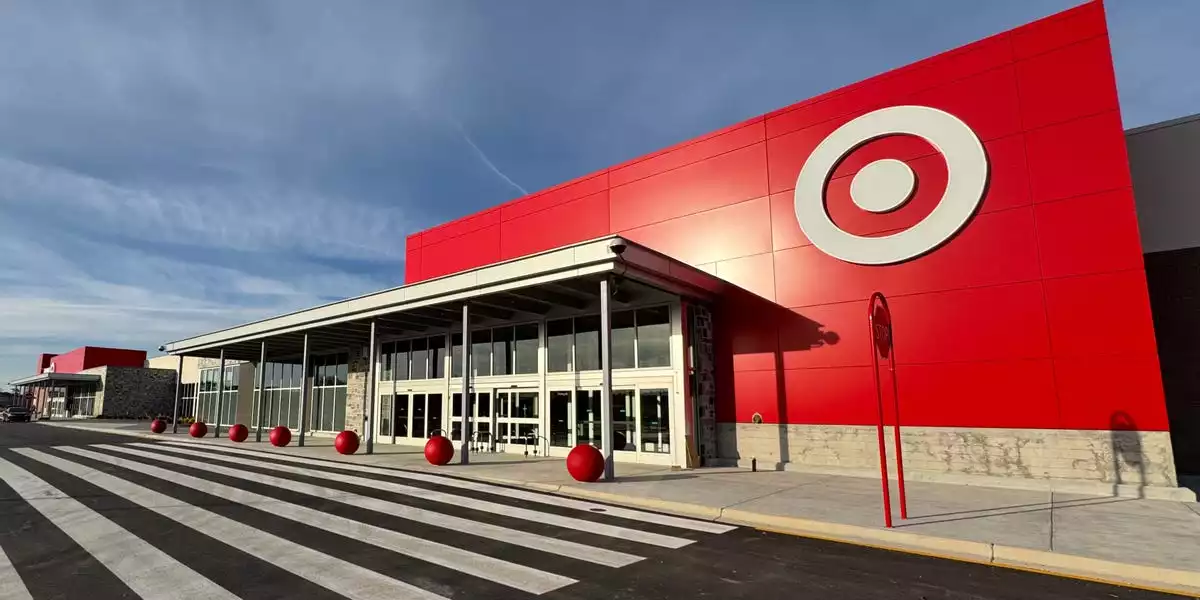

A milestone store signals a broader bet on physical retail as a digital asset
Target’s decision to inaugurate its 2,000th U.S. store in March in Fuquay‑Varina, North Carolina is more than a ceremonial marker—it is a strategic statement about where large-format retail is headed next. The company plans to open 30 new locations in 2024 and deploy $5 billion in capital projects, including renovations of roughly 130 existing stores. Notably, that budget is $1 billion higher than last year, underscoring CEO Michael Fiddelke’s “turnaround” orientation: improve the fundamentals of in-person retail while making each store more valuable to Target’s digital business.
For investors and competitors, the key takeaway is that Target is treating stores less as static points of sale and more as multi-purpose infrastructure—part showroom, part fulfillment center, part data engine. The long-range ambition to open 300 additional stores by 2035 further frames this as a sustained footprint strategy aimed at strengthening Target’s position against Walmart’s roughly 4,600 U.S. units and Costco’s roughly 634 U.S. units.
Omnichannel fulfillment and in-store analytics move from “nice-to-have” to operating system
Target’s emphasis on upgraded digital-order fulfillment capabilities inside new and renovated stores reflects a broader industry reality: the most defensible retail advantages increasingly come from executional logistics and customer experience, not simply assortment breadth.
Several technology vectors stand out:
- Store-based fulfillment as a cost lever: By improving buy-online-pickup-in-store (BOPIS), curbside, and same-day delivery workflows, Target can reduce last-mile costs and increase speed—especially in dense suburban corridors where proximity matters. Each store effectively becomes a micro-fulfillment node, tightening delivery radii and improving service-level consistency.
- Data-driven merchandising and layout optimization: “Curated shopping experiences” are often interpreted as branding, but they also imply operational sophistication—using real-time sales signals, heat-mapping, and predictive analytics to refine category adjacencies, promotional placement, and inventory visibility. Grocery, in particular, benefits from this approach because it is both high-frequency and operationally complex.
- Platform extension through the store footprint: Every new store adds capacity for Target’s broader digital ecosystem—inventory transparency, personalized promotions, and mobile-enabled convenience. A modernized store network also creates a scalable testbed for emerging capabilities such as frictionless payment, computer-vision loss prevention, or automation-assisted replenishment, even if those initiatives roll out selectively.
The strategic implication is clear: Target is not merely expanding square footage; it is expanding computational and logistical reach. In a maturing omnichannel market, that reach can become a competitive moat—if execution remains disciplined.
Capital spending in a higher-rate economy: why grocery and local density matter
Committing an additional $1 billion in capital compared with last year is a notable posture in a world of tighter monetary conditions. Higher rates typically punish long-duration payback projects, yet Target is signaling confidence that store investments can generate durable returns—especially when stores serve both walk-in demand and digital fulfillment.
From an economic standpoint, three dynamics help explain the bet:
- Grocery as a stabilizer in volatile consumer cycles: Target’s plan to feature enhanced grocery assortments is a pragmatic hedge against discretionary softness in categories like home goods and apparel. Food and essentials tend to be more resilient, and they increase trip frequency—an important driver of cross-category basket building.
- Real estate and local market anchoring: New stores in suburban and exurban areas—such as Fuquay‑Varina—often function as community anchors, pulling adjacent retail development and reinforcing local traffic patterns. That “halo effect” can strengthen Target’s negotiating position with municipalities and landlords while building long-term brand presence in growth corridors.
- Renovations as productivity insurance: Refreshing roughly 130 existing outlets suggests Target is prioritizing store productivity, not just store count. Renovations can address underperforming layouts, outdated fulfillment backrooms, and customer experience gaps—reducing the risk that new openings simply dilute sales density or cannibalize nearby locations.
This is also a bet on operational leverage: if Target can improve throughput, reduce fulfillment friction, and lift conversion rates, the same store base can generate more revenue per square foot and better margin durability.
Competitive pressure from Walmart and Costco raises the bar for differentiation and execution
Target’s expansion plan sits in a competitive landscape defined by two different retail machines. Walmart brings unmatched scale and increasing automation; Costco brings membership economics and high-volume efficiency. Target’s path to durable differentiation is therefore less about matching unit counts and more about building a distinct blend of experience, convenience, and reliability.
Key strategic questions will shape whether this footprint strategy becomes a long-term advantage:
- Can Target grow without eroding store productivity? Adding locations must be paired with rigorous site selection and demand forecasting to avoid cannibalization and protect sales density.
- Can experiential retail translate into measurable returns? Curated assortments, localized merchandising, and community-centric design can justify modest price premiums—but only if they consistently lift traffic, conversion, and loyalty.
- Can a denser footprint improve supply-chain resilience? More regional nodes can shorten replenishment loops and improve inventory agility during disruptions, acting as a buffer against global logistics volatility.
Looking ahead, the most consequential opportunity may be the integration of Target Circle loyalty data with in-store behavioral insights to deliver more precise personalization—while carefully managing privacy expectations and regulatory scrutiny. Layer in ESG considerations—such as sustainable building standards, waste reduction, and local hiring—and Target has a chance to align operational modernization with stakeholder expectations that increasingly influence both consumer choice and investor sentiment.
Target’s 2,000th store is a milestone, but the real story is the company’s reframing of the store as a strategic digital-physical platform—one that must earn its keep through faster fulfillment, smarter merchandising, and a shopping experience that remains meaningfully distinct in a market where convenience is quickly becoming table stakes.

 By
By
 By
By
 By
By
 By
By
 By
By