

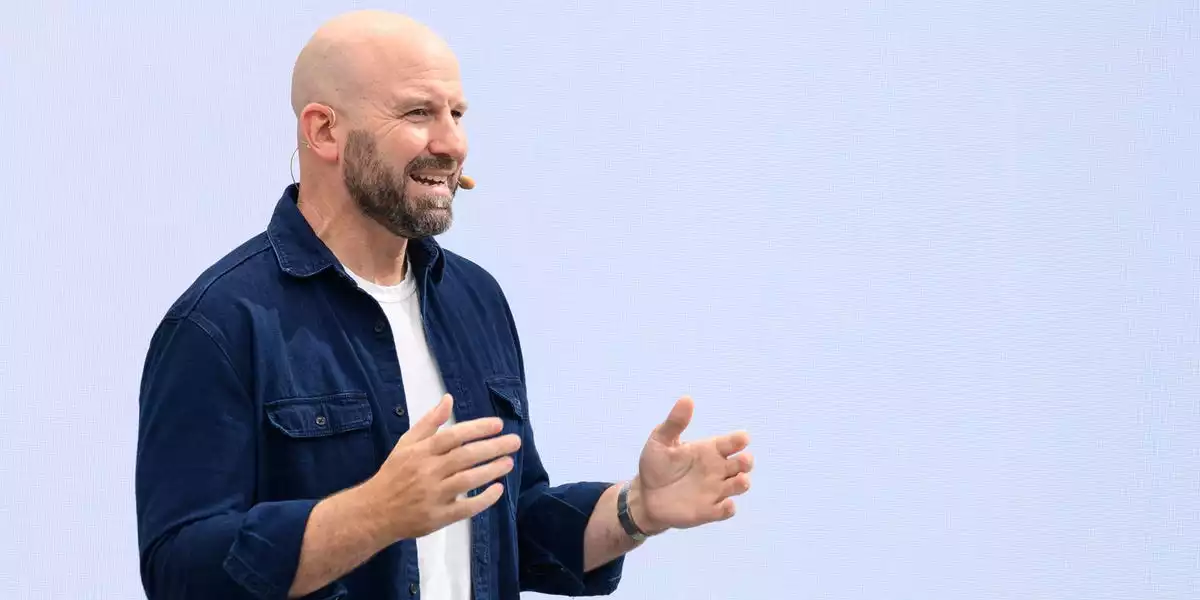

A cultural signal from the executive suite—why Bosworth’s “traits” matter now
When Meta CTO Andrew “Boz” Bosworth uses an Instagram AMA to spell out the employee traits he values—ownership, excellence, direct communication, adaptability, and personal character—it reads as more than leadership advice. It functions as a public-facing cultural memo at a moment when Meta is actively recalibrating how it funds and governs its most ambitious bets: virtual reality (VR), the metaverse, AI-powered glasses, and gaming.
In large technology organizations, culture is often discussed as an internal matter—an HR concern, a talent brand, a set of values on a wall. Bosworth’s framing suggests something more operational: culture as a management system designed to reduce execution risk in complex R&D portfolios. Meta’s product surface area now spans social platforms, AI research, hardware, and developer ecosystems. In that environment, the cost of misalignment is not merely slower shipping; it can be strategic drift, reputational damage, and capital inefficiency.
Bosworth’s emphasis also lands amid investor scrutiny of Reality Labs spending and broader industry pressure to justify long-horizon investments. The subtext is clear: Meta wants to keep building for the future, but it intends to do so with tighter accountability, faster learning loops, and clearer thresholds for what “progress” means.
Ownership and “relentless excellence” as a scaling mechanism for innovation
Bosworth’s call for employees to take “pride and ownership” is a familiar startup mantra, but its meaning changes at Meta’s scale. In a sprawling R&D environment—where teams may be distributed across hardware, AI infrastructure, and product engineering—ownership becomes a way to prevent the organizational failure modes that slow innovation:
- Handoffs that dilute accountability, where no single team feels responsible for end-to-end outcomes
- Local optimization, where teams hit internal metrics while the product experience suffers
- Decision latency, where approvals and coordination become the default bottleneck
By elevating ownership as a prized trait, Meta is implicitly pushing for a model where individuals and teams behave more like mini-general managers: accountable for quality, timelines, and downstream consequences. That matters in emerging categories like VR and AR, where product-market fit is still evolving and iteration cycles can be expensive. It also matters in generative AI, where the “cost of being wrong” can include not only wasted engineering time but also trust and safety incidents that trigger regulatory and public backlash.
In practical terms, ownership culture is a lever to compress the distance between problem discovery and problem resolution—a competitive advantage when rivals are racing to ship AI features, immersive experiences, and new hardware form factors.
Radical candor as product strategy—feedback loops that reduce expensive mistakes
Bosworth’s preference for “direct, unvarnished communication” and receptivity to feedback aligns with a broader engineering reality: the most costly failures are often the ones discovered late. In AI systems, late discovery can mean model behavior that is unsafe, biased, or misaligned with policy. In hardware, it can mean design decisions that lock in cost structures or usability constraints for years.
Meta’s emphasis on blunt, constructive dialogue signals an attempt to institutionalize high-velocity iteration—a culture where people surface issues early, challenge assumptions, and treat critique as a tool for better outcomes rather than a threat to status. For business and technology leaders, the strategic takeaway is that feedback loops are not soft-skills theater; they are risk controls.
This is especially relevant for Meta because its platforms operate under persistent scrutiny in areas such as:
- AI safety and model governance
- Content moderation and platform integrity
- Privacy, data handling, and regulatory compliance
A culture that rewards directness can function as an internal early-warning system—surfacing ethical and technical concerns before they become public incidents or costly reversals.
Adaptability, cross-domain talent, and the economics of Meta’s VR/AR recalibration
Bosworth’s emphasis on curiosity and adaptability reflects a converging technology landscape. Meta is no longer “just” a social media company; it is simultaneously a hardware builder, an AI research organization, and a platform operator with global policy exposure. That convergence changes what “great talent” looks like. Increasingly, high-impact employees must navigate multiple domains—AI tooling, product design, infrastructure constraints, and user trust considerations—without waiting for perfect clarity.
This is where Bosworth’s cultural message intersects with Meta’s capital posture. The note that VR spending must align with growth potential points to a more disciplined approach after years of heavy metaverse investment. Across the tech sector, the era of open-ended funding for speculative projects has narrowed; boards and investors want clearer signals of traction and a stronger link between R&D and future cash flows.
Meta’s recalibration does not necessarily imply retreat. It suggests benchmarking and prioritization—a shift toward proving adoption, retention, and ecosystem vitality rather than relying on vision alone. Expect the market to demand metrics beyond “headsets shipped,” including:
- Active usage and retention in VR experiences
- Developer economics and content pipeline health
- Unit economics and component cost trajectories for hardware
- Evidence of AI-driven differentiation in glasses and mixed reality
Bosworth’s remit across gaming, AI glasses, and core engineering also hints at a structural bet: synergy through shared platforms. If Meta can reuse AI toolkits, data pipelines, and developer frameworks across Reality Labs and its core apps, it can amortize R&D costs and accelerate iteration—an increasingly important advantage when capital discipline tightens.
Character as governance—“being a good person” in an era of AI and reputational risk
Perhaps the most consequential element of Bosworth’s framework is the insistence on personal character—“being a good person”—as part of professional evaluation. In a company operating at global scale, character is not merely interpersonal; it is a governance issue. The risks Meta faces—deepfakes, manipulation, algorithmic harms, misuse of immersive environments—are often amplified by small lapses in judgment.
Treating integrity as a hiring and performance trait functions as a preventative control: a way to reduce the probability of ethical corner-cutting, internal silencing, or reckless experimentation. For boards and executive teams across the industry, the implication is that ethical governance is becoming inseparable from product governance, particularly in AI and immersive computing.
Bosworth’s public articulation of these traits offers a clear lens into Meta’s current operating thesis: win the next platform transition not only through technical ambition, but through accountable execution, faster truth-telling, adaptable talent, and tighter alignment between innovation and responsible stewardship.

 By
By

 By
By
 By
By
 By
By

 By
By


