


A narrow window in the High North: NATO’s Arctic posture meets Russia’s post-Ukraine calculus
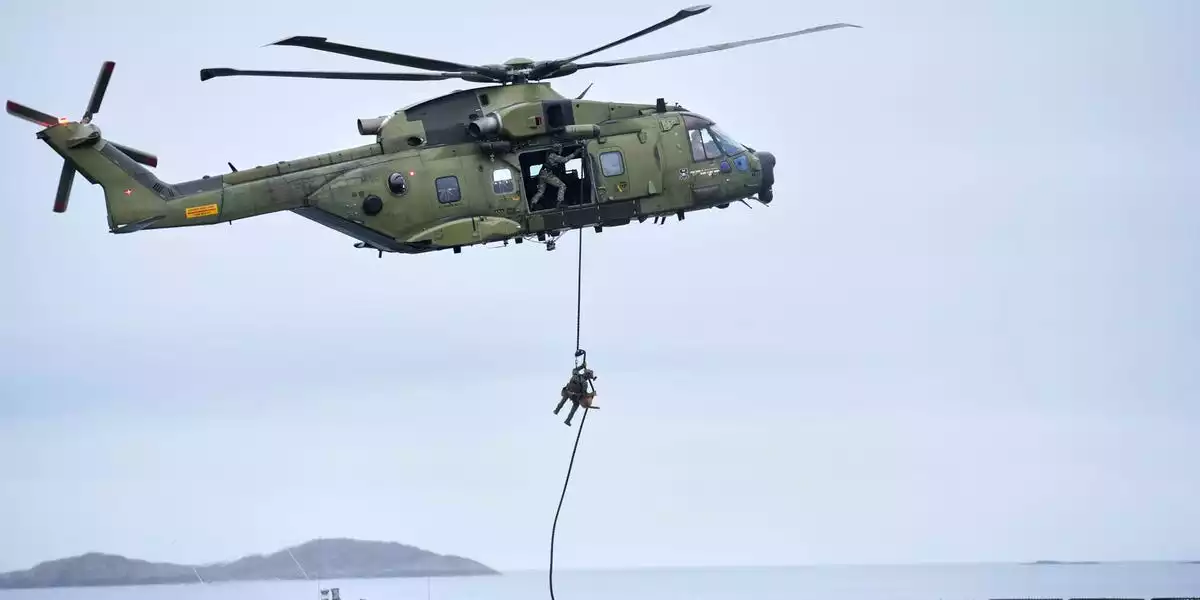
NATO’s renewed focus on the Arctic is less a reaction to an imminent clash than a strategic bet on what comes next. Norwegian Vice Adm. Rune Andersen’s assessment—that the near-term threat remains low—coexists with a harder, longer-range premise: Russia is likely to rebuild and potentially expand its Arctic force posture once the war in Ukraine eases. The current drawdown from the Kola Peninsula, driven by manpower and materiel demands elsewhere, has temporarily reduced Russia’s readiness in the High North. For NATO planners, that “hollowing out” is not reassurance; it is a time-limited opportunity to invest, exercise, and standardize capabilities before a second-wave Russian reconstitution tests Alliance preparedness.
This is also a theater where geography compresses decision time. The Arctic’s chokepoints, sparse infrastructure, and extreme weather magnify the value of early warning and logistics. Large-scale exercises such as Cold Response in Norway serve a dual purpose: they validate operational concepts in harsh conditions and signal that NATO intends to treat the High North as a core security domain rather than a peripheral frontier.
At the same time, the Arctic is no longer defined solely by Moscow and NATO. China’s growing polar ambitions—from infrastructure projects to scientific and commercial presence—add a second strategic vector. Even absent formal alliances, a Sino-Russian alignment of interests can complicate deterrence by increasing the number of actors, platforms, and “gray-zone” activities that NATO must monitor and interpret.
Dual-use technology becomes the Arctic’s decisive advantage—and its procurement challenge
What distinguishes the Arctic build-up from other modernization cycles is the centrality of dual-use platforms and data-rich surveillance. Icebreakers, autonomous surface vessels, and specialized cold-weather vehicles are not merely military assets; they are also the backbone of Arctic logistics, surveying, and emergency response. That overlap creates economies of scale—if procurement and governance are designed to capture them.
Key technology vectors emerging from NATO’s Arctic investments include:
- Ice-capable maritime platforms and autonomy
– Icebreakers and autonomous vessels can support civilian resupply, hydrographic mapping, and scientific missions, while also enabling persistent maritime presence and escort roles.
- Sensor networks and AI-enabled maritime domain awareness
– Expanded radar, infrared, and undersea sensing can create a high-fidelity operating picture, where AI-driven analytics help forecast anomalies—unusual vessel patterns, electronic emissions, or emerging risks to subsea infrastructure.
- Cold-weather mobility, power, and sustainment
– Extreme-cold requirements accelerate innovation in battery chemistry, thermal management, low-temperature lubrication, and ruggedized components, with spillovers into off-grid energy systems and polar industrial operations.
- Resilient communications in high-latency environments
– Arctic operations stress-test satellite constellations and mesh networks, pushing NATO and industry toward hardened 5G/6G architectures and cyber-resilient command-and-control suitable for remote regions.
Yet the Arctic also punishes fragmented procurement. Specialized equipment is expensive, and national requirements vary widely. Without interoperability standards—common data formats, shared logistics interfaces, compatible communications—NATO risks building a patchwork of niche capabilities that perform well in isolation but poorly at scale. The strategic prize is decision superiority: faster detection, clearer attribution, and more reliable sustainment across dispersed bases and maritime routes.
Industrial realignment, shipping risk, and the economics of Arctic security
The Arctic posture is not only a defense story; it is an industrial and macroeconomic one. As NATO invests, supply chains will tilt toward firms that can meet the region’s technical demands—composite materials suited to cold stress, specialty semiconductors, low-temperature lubricants, and ruggedized power systems. That reorientation can reshape industrial clusters across Scandinavia, Canada, and Alaska, while encouraging new public-private partnerships around ports, communications hubs, and search-and-rescue capacity.
Commercial implications are equally consequential:
- Resource access and energy security
– The strategic value of the Arctic is reinforced by subsea hydrocarbons and critical minerals—rare earths and battery metals—even as environmental scrutiny intensifies. A stronger NATO footprint can improve safety and predictability, but it can also accelerate commercial interest by lowering perceived security risk.
- Northern Sea Route and global supply-chain incentives
– As navigable windows widen with diminishing sea ice, Arctic routes become more commercially tempting. NATO’s presence around key chokepoints may influence how maritime insurers price risk, shaping investment in ice-hardened fleets and altering global shipping calculus.
- Tech nationalism and industrial policy spillovers
– Western stimulus for critical technologies increasingly overlaps with defense modernization, creating de facto technology borders—export controls, trusted supply chains, and secure-by-design requirements—that mirror the physical reinforcement of Arctic frontiers.
The economic signal matters: defense investments can move markets by implying future stability or future contestation. Commodity traders, insurers, and infrastructure investors will read NATO’s Arctic posture as a forward indicator of how “bankable” Arctic projects may become—and under what regulatory and security constraints.
Deterrence after Ukraine: managing Russia’s rebound and the emerging Sino-Russian factor
The most delicate part of NATO’s Arctic strategy is temporal. Russia’s current degradation in the High North may be real, but it is also reversible. A post-Ukraine reconstitution could be gradual or rapid, and the risk is not simply a return to baseline—it is a return with lessons learned, different force mixes, and potentially deeper coordination with China in areas like logistics, surveillance, and joint presence.
This places a premium on NATO cohesion and burden sharing. The Alliance must balance competing priorities—Baltic urgency versus High North specialization—while funding capabilities that are expensive, climate-specific, and politically easy to defer. Concepts such as a standing multinational Arctic contingent or a “Pole Force” reflect a broader need: institutionalizing readiness so it does not fade when headlines shift.
Strategically, the most durable advantage may come from integrating civil and military planning—dual-use ports, resilient communications, and shared data platforms—so deterrence is reinforced by economic resilience and operational continuity. If NATO can use today’s relative calm to build interoperable Arctic capabilities, it will be better positioned for the moment Russia turns back north—and for an Arctic where competition is increasingly defined not just by ships and troops, but by sensors, data, and the industrial capacity to sustain presence at the top of the world.

 By
By
 By
By
 By
By
 By
By


 By
By
 By
By


