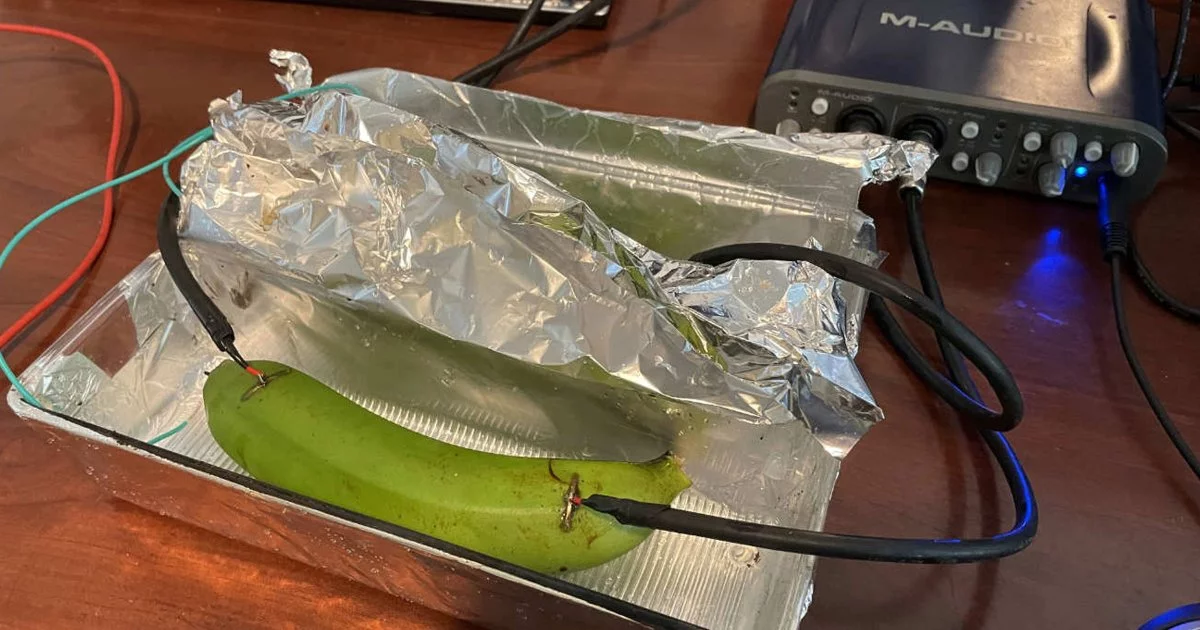

A grassroots experiment that punctured a luxury narrative in high‑end audio cables
A blind-listening experiment led by diyAudio forum moderator “Pano” has resurfaced one of consumer audio’s most persistent fault lines: whether ultra‑premium speaker and interconnect cables deliver audible improvements commensurate with their price. The setup was disarmingly simple yet methodologically potent—listeners were asked to identify signal paths across a range of conductors, from conventional pro‑audio copper and silver‑plated wire to deliberately unconventional media such as banana flesh and pond mud. Across 43 trials, correct identification occurred only six times—performance that reads less like golden‑ear discernment and more like statistical noise.
What makes this episode resonate beyond audiophile forums is not the spectacle of “banana cables,” but the broader implication: when blind testing removes brand cues, price anchoring, and expectation bias, many claimed differences appear to evaporate. For an industry segment that has long relied on the language of “soundstage,” “microdetail,” and “black backgrounds,” the experiment functions as a public stress test of a business model built on sensory claims that are difficult to verify.
This is not a definitive verdict on every cable design or every use case. It is, however, a high-visibility reminder that in typical home audio lengths and bandwidths, basic electrical behavior often dominates the outcome—and that the human brain is highly susceptible to interpreting cost and narrative as quality.
What the measurements suggest: resistance, shielding, and the limits of “material magic”
The technical takeaway reported from the experiment is striking in its ordinariness: the tested materials largely behaved as passive resistive paths. Where deviations appeared, they were associated with level loss or minor frequency-response changes—effects consistent with impedance interactions, contact quality, or inconsistent dielectric behavior, rather than any intrinsic “tonal signature” of copper versus silver metallurgy.
This aligns with long-standing electrical engineering principles for audio-frequency transmission:
- Resistance and contact integrity matter because they can reduce signal level or alter damping in speaker circuits, particularly with long runs or thin conductors.
- Shielding and geometry matter primarily for noise rejection in interconnects and electrically hostile environments, not for “adding detail.”
- Skin effect—often invoked in marketing—tends to be negligible at audio frequencies for typical cable gauges and lengths used in homes.
- Dielectric absorption and exotic insulation claims can be real phenomena in certain contexts, but their audibility in standard consumer setups is frequently overstated relative to more dominant variables (speaker placement, room acoustics, transducer distortion, and EQ).
The most consequential point is methodological: blind listening changes the evidentiary standard. When listeners cannot see the cable, cannot see the price, and cannot anticipate the “upgrade,” the perceptual system loses many of the cues it uses to manufacture certainty. That does not mean all cables are identical in all conditions; it means extraordinary claims require repeatable, controlled demonstrations—especially when the market asks consumers to pay five figures for passive components.
High‑end cables as “credence goods”: why the margins persist even when evidence wobbles
From a business perspective, premium audio cables are a textbook example of a credence good—a product whose quality is difficult for buyers to evaluate even after purchase. Unlike a higher-resolution display or a faster processor, the “improvement” is often framed as subtle, system-dependent, and listener-dependent. That ambiguity is commercially useful: it allows differentiation to live in storytelling, scarcity, and identity, not necessarily in measurable performance.
The economic incentives are powerful:
- High gross margins are structurally easier to achieve on cables than on electronics, where silicon, compliance, and platform competition compress pricing.
- Marketing can lean on pseudo-technical vocabulary that sounds scientific while remaining hard to falsify in casual listening.
- Retail dynamics reward accessories because they can be bundled as “system completion,” often at the moment a buyer is already financially committed.
Pano’s experiment threatens this equilibrium not by proving that “all cables are the same,” but by giving cost-conscious consumers a narrative that is both memorable and shareable: if banana flesh and pond mud can pass audio with only predictable resistive effects, what exactly is being purchased at luxury price points?
In an inflation-sensitive environment—where discretionary spending is scrutinized and commodity prices for copper and silver fluctuate—the optics become even more challenging. Premiumization can still work, but it must increasingly justify itself with transparent performance disclosures, not mystique.
Strategic implications: a pivot from metallurgy theater to verifiable value
For manufacturers and retailers, the lesson is not that cables are irrelevant; it is that the basis of differentiation is shifting. The most defensible premium propositions will likely cluster around engineering that is measurable, situationally necessary, and clearly communicated.
Areas where companies can credibly compete include:
- Build quality and reliability: connector tolerances, strain relief, oxidation resistance, and long-term durability.
- Noise and interference management: shielding effectiveness, grounding schemes, and installation-specific solutions for EMI/RFI-heavy environments.
- Standards-based disclosure: published resistance per meter, capacitance, inductance, shielding coverage, and connector specifications—presented in a way consumers can compare.
- Service-led premium bundles: room measurement, calibration, acoustic treatment guidance, and system integration—domains where improvements are often dramatic and repeatable.
- Innovation beyond passive conductors: DSP-based room correction, active noise mitigation, robust wireless protocols, and ecosystem software that improves user experience and retention.
The broader consumer-tech implication is that communities are increasingly capable of organizing ad hoc verification movements—and distributing the results at internet speed. In that environment, brands that treat measurement as an adversary risk reputational whiplash. Brands that embrace third-party validation can convert skepticism into trust, even if it forces a recalibration of pricing power.
Pano’s blind test is ultimately less about humiliating luxury cables than about re-centering the conversation on what high fidelity actually depends on: controlled evidence, honest specifications, and improvements that survive the moment the listener stops looking at the price tag.

 By
By
 By
By

 By
By
 By
By

 By
By
 By
By