
A private memory giant rides the AI infrastructure wave
The sudden surge in the fortunes of David Sun and John Tu—cofounders of Kingston Technology—reflects a deeper structural change in the global compute economy. Their individual net worths rising to roughly $45 billion each (about 44% higher since January) is not merely a human-interest milestone; it is a market signal. Memory—often treated as the “supporting actor” to CPUs and GPUs—has become a strategic chokepoint in the AI era.
At the center of this shift is a global memory-chip shortage fueled by hyperscalers racing to expand data-center capacity for large-scale AI workloads. As generative AI systems grow in parameter count, context length, and real-time inference demands, the infrastructure stack is being rebalanced. Compute remains essential, but memory bandwidth, capacity, and availability increasingly determine whether expensive accelerators can be fully utilized.
Kingston, founded in 1987 and long known for memory modules and storage products, is benefiting from a market environment where memory pricing has moved sharply upward—an unusual departure from the industry’s historically brutal boom-bust cycles. Public peers such as Micron have seen dramatic valuation expansion, reinforcing the narrative of a “memory supercycle” driven by AI-centric demand.
—
Why AI is turning DRAM, HBM, and SSDs into scarce strategic assets
AI’s hunger is not abstract; it is measurable in high-bandwidth memory (HBM) stacks, DDR5 DRAM modules, and increasingly dense solid-state storage footprints. Training frontier models and serving them at scale requires:
- More memory per accelerator node (to keep GPUs/TPUs fed and avoid idle cycles)
- Higher bandwidth (HBM and fast interconnects to reduce bottlenecks)
- Faster storage and larger datasets (to sustain training pipelines and retrieval-augmented generation)
A key dynamic is that each new generation of AI model can multiply memory requirements, not only for raw parameter storage but for optimizer states, activations, KV caches, and multi-tenant inference. Hyperscalers are therefore competing for the same constrained pool of advanced memory components, and that competition is rippling outward into enterprise procurement budgets and OEM supply chains.
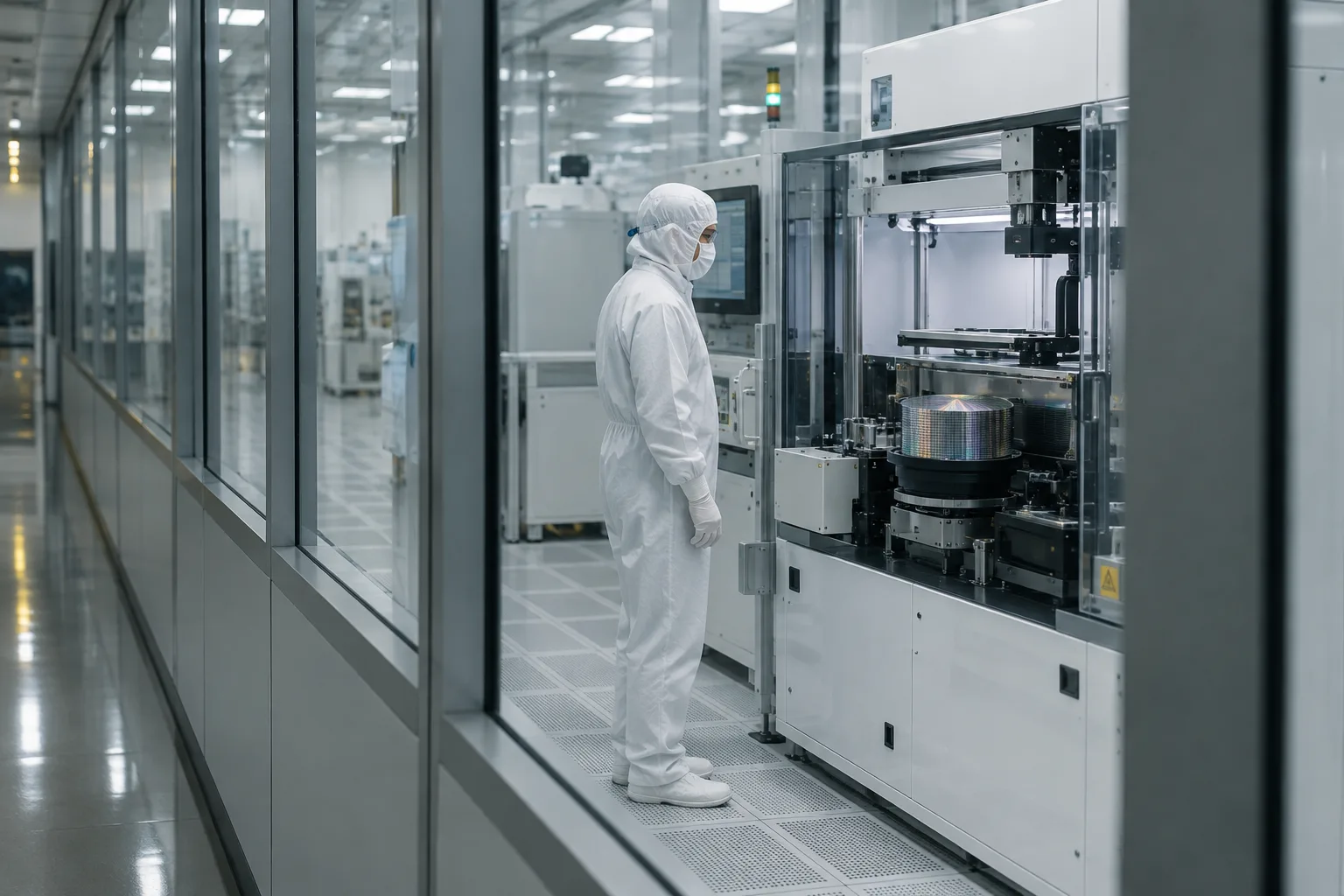
Compounding demand is the supply-side reality: DRAM and NAND fabrication is concentrated among a small set of manufacturers, notably Samsung, SK Hynix, and Micron. Scaling is getting harder. As Moore’s Law-style density gains slow for memory, the cost per incremental improvement rises, and advanced nodes require capital-intensive tooling and process expertise. The result is a market where capacity additions are slow, expensive, and strategically rationed—especially for premium products like HBM.
—
Kingston’s advantage: margin uplift without fab-capex exposure
Kingston’s position is particularly instructive for business and technology leaders because it sits at a powerful intersection: the module-assembly layer. Rather than owning the most expensive part of the value chain—fabs—Kingston purchases dies and components, then adds value through:
- Module design and qualification
- Testing, binning, and reliability screening
- Distribution scale and channel reach
- Customer-specific configurations and supply assurance
In a tight wholesale market, this model can be unusually lucrative. When memory prices rise by double digits year-on-year, revenue per module increases quickly, and well-positioned assemblers can capture meaningful margin expansion—especially if they can secure inventory and manage allocation intelligently.
Kingston’s private ownership structure further differentiates its playbook. Without quarterly earnings pressure, a private firm can make longer-horizon decisions that are difficult for public companies to justify, including:
- Building inventory ahead of demand spikes
- Selective pricing and customer prioritization
- Working-capital deployment to secure supply
- Faster operational adjustments during supply shocks
This is not risk-free—inventory strategies can backfire if pricing reverses—but in a shortage environment, the ability to act decisively can become a competitive moat.
—
What executives should watch next: capacity timelines, geopolitics, and new memory architectures
The next phase of the memory cycle will be shaped by a mix of industrial lead times and policy constraints. New DRAM and advanced memory capacity is unlikely to arrive quickly; meaningful fab expansions often land on 2025–2026 timelines, leaving a multi-quarter window where pricing power may remain elevated.
For enterprise buyers, cloud strategists, and hardware OEMs, several implications stand out:
- Procurement strategy becomes a competitive lever
Multi-year supply agreements, volume guarantees, and tighter vendor relationships may matter as much as benchmark performance.
- Inventory policy shifts from “lean” to “resilient”
CFOs and supply-chain leaders will need to model the trade-off between higher working capital and the far larger cost of production delays or missed deployment windows.
- Vertical partnerships may accelerate
Module vendors could pursue upstream partnerships or equity-linked arrangements to secure die allocation, while hyperscalers may explore closer alliances—or even in-house assembly—to reduce exposure to spot markets.
- Geopolitical risk is now operational risk
With U.S. export controls, China’s push for indigenous memory capability, and globally distributed sourcing, memory supply chains are increasingly shaped by compliance, licensing, and regional manufacturing strategies.
- Emerging technologies could reshape the bottleneck
Alternatives such as MRAM, ReRAM, and CXL-enabled memory pooling are not immediate replacements for DRAM/NAND at scale, but they are becoming more relevant as organizations seek architectural ways around scarcity and bandwidth constraints.
The wealth gains of Kingston’s founders may read like a headline about billionaire rankings, but the more durable story is industrial: control over memory supply is becoming as strategically consequential as access to cutting-edge processors. In the AI buildout, the companies that secure bandwidth, capacity, and allocation discipline will be the ones that turn compute ambition into deployed reality.

 By
By
 By
By
 By
By

 By
By


 By
By