
A viral soundbite that doubles as a masterclass in narrative control
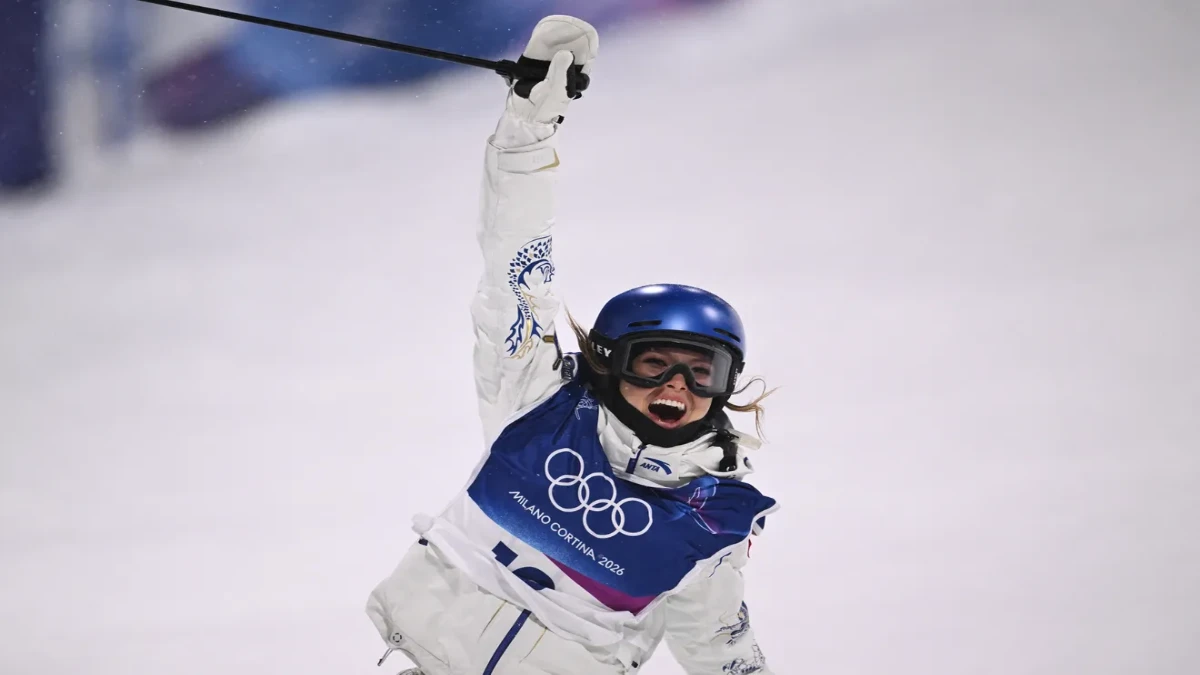
Eileen Gu’s two silver medals at the 2026 Winter Olympics in Milan would, in any traditional framing, be treated as a near-miss story—especially for an athlete already positioned as the most decorated woman in freeskiing. Yet the defining moment was not on the podium; it was in the mixed zone, when a journalist posed the familiar provocation: were these “two silvers gained or two golds lost?”
Gu’s response—laughing off the premise and reaffirming that every Olympic medal is “life-changing,” particularly as expectations compound with prior success—landed with the precision of a rehearsed campaign line while retaining the authenticity of an unscripted retort. The clip’s rapid circulation across social platforms turned a potentially deflating narrative into a global affirmation of achievement, and it highlighted a broader shift in how elite athletes manage public perception in real time.
For business leaders, sponsors, and sports executives, the episode is less about a single interview than about a structural change: the athlete is now a media node, a brand platform, and a high-velocity distribution channel—often more efficient than the institutions surrounding them.
—
Athlete-as-enterprise: why composure now translates directly into commercial value
Gu’s rebuttal illustrates how modern sports stardom increasingly resembles an enterprise model, where performance, personality, and platform are inseparable. In earlier eras, athletes relied on federations, broadcasters, and print coverage to set the tone. Today, a single clip can reset the narrative within minutes—especially when it aligns with audience values like self-advocacy, mental resilience, and authenticity.
From a brand and sponsorship perspective, the key takeaway is that Gu didn’t merely “handle” a question; she reframed the value proposition:
- Brand safety through positivity: By rejecting the “gold lost” framing, she avoided negativity without sounding defensive—an outcome sponsors prize in high-stakes global events.
- Premium positioning through confidence: The response reinforced her status as a top-tier athlete accustomed to pressure, which strengthens her leverage in endorsement negotiations.
- Audience alignment with Gen Z norms: The tone—direct, candid, and unbothered—mirrors the communication style that performs best with younger demographics and digital-first audiences.
The viral amplification, reportedly boosted by prominent online voices such as venture partner Alvin Foo, underscores an evolving reality: influence is increasingly brokered by networks, not newsrooms. For corporate backers, the metric that matters is not only broadcast reach, but the athlete’s ability to generate repeatable engagement—shares, remixes, commentary threads, and sentiment lift—at global scale.
—
The new Olympics media stack: short-form video, direct-to-fan channels, and data exhaust
Gu’s moment also spotlights the technological dynamics reshaping sports media. The Olympics remain a marquee broadcast product, but the cultural conversation now travels through short-form video ecosystems that reward immediacy, clarity, and emotional resonance. A 15–30 second clip can outperform hours of official coverage in attention and recall.
This shift has several implications for media strategy and monetization:
- Short-form as the primary distribution layer: TikTok-style clips and vertical video formats increasingly function as the “front page” of the Games for younger viewers.
- Direct-to-fan disintermediation: Athletes using livestreams, vlogs, and social messaging can bypass traditional gatekeepers, reducing message dilution and increasing control over tone and timing.
- Analytics as competitive advantage: Every viral moment produces data exhaust—engagement velocity, sentiment signals, audience demographics—that can inform sponsorship activation, content strategy, and even contract structures.
For rights holders and sports organizations, the strategic question is whether to treat athlete-led media as a threat to centralized messaging or as an asset to be integrated. The more pragmatic approach is co-development: build frameworks that let athletes speak in their own voice while aligning with broader commercial and reputational objectives.
—
Sponsorship ROI, soft power, and the rising premium on authentic self-advocacy
Gu’s global profile carries economic and geopolitical dimensions that extend beyond sport. Her success and public demeanor are positioned to resonate strongly in Asia’s expanding sports consumer markets, where demand is rising across health, wellness, luxury, and performance lifestyle categories. Brands evaluating sponsorship ROI increasingly look for athletes who can deliver:
- Cross-market cultural fluency
- High engagement rates, not just visibility
- Aspirational identity with low controversy risk
At the same time, the episode reflects how athlete narratives can intersect with national soft power. In an era where countries compete for influence through culture as much as commerce, globally recognized athletes can become informal ambassadors—shaping tourism interest, merchandise demand, and broader perceptions of modernity and confidence.
Yet the Milan Games also highlight a risk frontier: unfiltered discourse scales faster than institutional response cycles. Gen Z–driven transparency can deepen fan loyalty, but it also raises the probability of off-the-cuff remarks becoming reputational flashpoints. The organizations best positioned for this environment will be those that invest in:
- Media training that preserves authenticity rather than sanding it down
- Psychological support systems that help athletes manage expectation pressure
- Real-time risk assessment and rapid-response playbooks
Gu’s viral rebuttal ultimately reads as more than a clever answer—it is a signal of where elite sport is heading. The next generation of Olympic icons will not only be judged by medals, but by their ability to command narrative, convert attention into durable brand equity, and speak with a clarity that audiences increasingly demand from every public figure operating at global scale.

 By
By
 By
By
 By
By

 By
By

 By
By