
The Lunar Detective Story: Crowds, Code, and the New Space Race
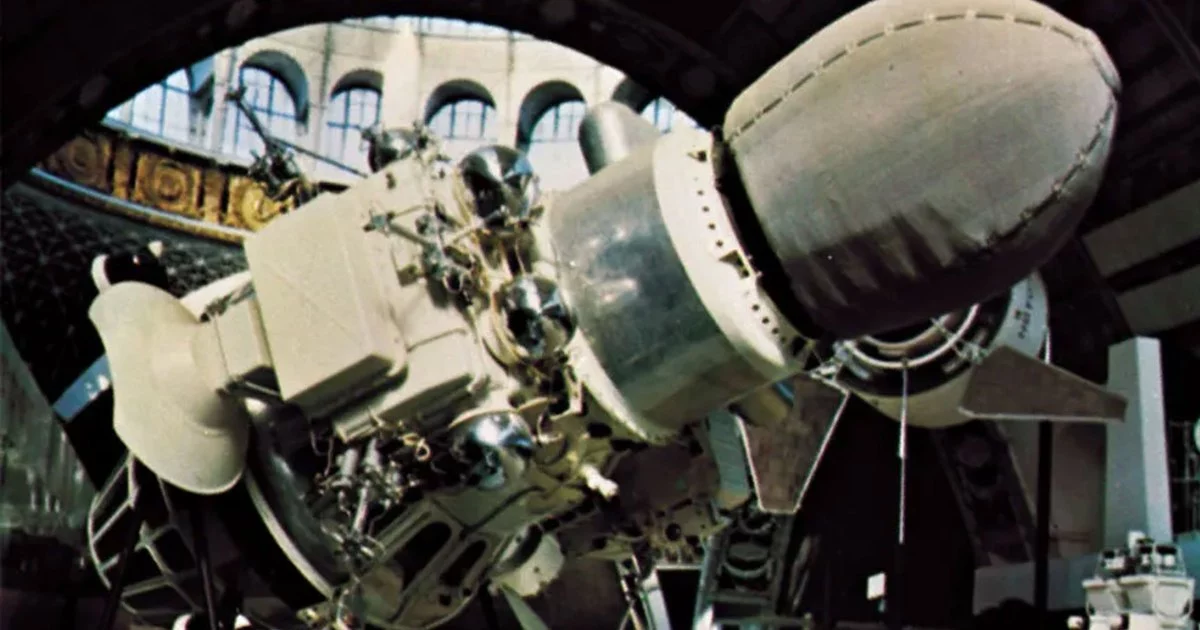
Beneath the cold, cratered silence of the Moon, a new contest is unfolding—not for territory or treasure, but for knowledge. The search for Luna 9, the Soviet probe that made humanity’s first soft landing on the lunar surface in 1966, has become a crucible for the next era of planetary data science. This is no mere nostalgia trip. Instead, it is a collision of crowdsourced ingenuity, machine learning, and a rapidly diversifying field of orbital surveillance, each vying to pinpoint a relic that has eluded definitive rediscovery for decades.
Crowdsourcing Meets Machine Vision: The Anatomy of a Lunar Hunt
The renewed pursuit of Luna 9’s final resting place has become a proving ground for hybrid intelligence—where the intuition of global volunteers meets the relentless pattern-matching of artificial neural networks. Vitaly Egorov’s informal consortium orchestrated a campaign reminiscent of Zooniverse’s citizen-science triumphs, enlisting thousands to comb through 60,000 images of the lunar surface. This approach, leveraging the pattern recognition skills of the human eye, is not just a nod to the past; it’s a blueprint for future exploration in environments where labeled data is scarce, from the abyssal ocean to the Martian poles.
Meanwhile, University College London’s team has wielded YOLO-ETA, a bespoke adaptation of the “You-Only-Look-Once” object-detection framework. Retrained on the Moon’s spectral and topographical idiosyncrasies, this model demonstrates the cross-domain agility of modern AI—capable of leaping from urban traffic scenes to the regolith-dusted artifacts of lunar history. The implications extend well beyond the Moon: lightweight, high-precision models like YOLO-ETA are poised to become indispensable for commercial nano-orbiters and defense reconnaissance, where every bit of bandwidth and every pixel of clarity counts.
India’s Chandrayaan-2 orbiter, equipped with the high-resolution Terrain Mapping Camera-2, is set to adjudicate these competing claims. Its fly-over will provide the kind of sub-meter detail that was once the exclusive domain of NASA and ESA, signaling a new, multipolar era in lunar observation. The emergence of private optical-relay providers, eager to broker near-real-time lunar imagery, hints at a future where access to cislunar data becomes a service—one that is as much about economic leverage as scientific discovery.
Lunar Heritage, Soft Power, and the Economics of Data
For India, the opportunity to deliver the “forensic audit” of a Soviet-era artifact is more than a technical milestone; it is a statement of intent. By positioning itself as an analytic broker in the lunar economy, India is signaling its readiness to play a central role in both the Artemis coalition and the Sino-Russian International Lunar Research Station. The act of mapping heritage sites on the Moon is also a diplomatic gesture, intersecting with United Nations debates on the preservation of “sites of outstanding human value” beyond Earth. A verified Luna 9 coordinate could become the seed for protected “heritage polygons”—legal constructs that may one day constrain or guide the allocation of lunar mining rights.
At the heart of this drama is the scarcity of data. Luna 9, barely a meter across, challenges the limits of orbital imaging and the flexibility of sensor tasking. Mastery of sub-0.3-meter lunar imaging is not just a scientific feat—it is a strategic asset, with direct applications in Earth observation and defense. The nation or company that can consistently deliver such acuity will hold a competitive moat in both commercial and security domains.
From Digital Twins to Citizen Science: The Next Frontier
The precise geolocation of legacy lunar landers is more than an exercise in historical curiosity. It is a foundational step toward constructing a federated “digital twin” of the Moon—a living, layered model integrating topography, mineralogy, and human infrastructure. Such a scaffold will be indispensable for the logistics of in-situ resource utilization and the planning of human outposts in the coming decade.
The Luna 9 search also underscores the potency of citizen science as a force multiplier for research and development. By mobilizing non-traditional talent pools, projects like Egorov’s can absorb the up-front costs of data labeling—costs that often stymie AI innovation in emerging domains. The lesson for industry is clear: strategic release of declassified imagery can accelerate algorithmic progress while safeguarding core intellectual property.
On the bleeding edge, machine learning models like YOLO-ETA foreshadow a new product category: detectors tuned for environments where objects are meant to disappear—be it stealth technology on Earth or camouflaged infrastructure on the Moon. Adjacent markets beckon, from insurance verification after natural disasters to environmental monitoring of microplastics at sea.
The race to rediscover Luna 9 is a microcosm of the cislunar future: a theater where crowdsourcing, edge AI, and heritage-driven policy converge. Those who grasp these interdependencies—between data, policy, and technology—will shape not only the next phase of lunar exploration but the very architecture of the space economy itself.

 By
By
 By
By
 By
By
 By
By
 By
By


 By
By