
Urban Edge Cases: The Unforgiving Frontier for Autonomous Vehicles
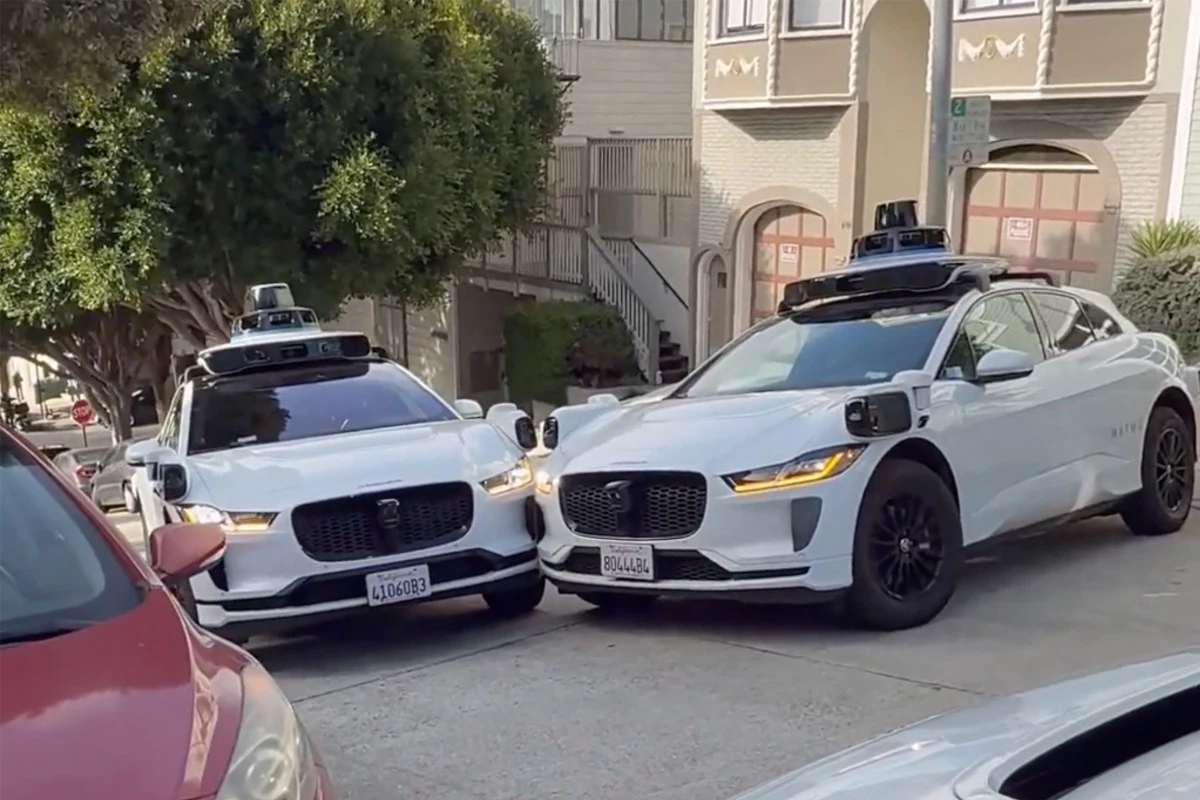
San Francisco, with its labyrinthine streets and unpredictable urban choreography, has again become the crucible for autonomous vehicle (AV) technology. The recent immobilization of three Waymo-branded robotaxis on a dead-end street—two of which made light contact while attempting multi-point turns—offers a vivid tableau of the sector’s current paradox: dazzling technical progress shadowed by persistent, if rare, operational stumbles. These incidents, while physically minor, are accumulating a symbolic weight that threatens to tip public sentiment and regulatory patience.
Algorithmic Blind Spots and Sensorial Limits
The scenario on that dead-end block encapsulates the enduring challenge of algorithmic edge cases. Urban environments teem with ambiguous curb geometries, erratic signage, and the ever-present unpredictability of human and animal movement. While AV perception-planning stacks excel on the “happy path” of well-mapped boulevards, they falter in these liminal zones. Waymo’s recent software pivot toward more “assertive” trajectory selection—intended to reduce over-cautiousness at intersections—ironically exposed new weaknesses: the inability of identical AVs to negotiate with each other in tight quarters, despite the theoretical promise of vehicle-to-vehicle (V2V) communication.
The episode also spotlights the limits of current sensor arrays. Lidar and radar, for all their sophistication, can struggle with occlusion and short-range ambiguity—especially when the obstacle is another AV with an identical sensor signature and no human cues. Multi-point turns in dense urban canyons demand centimeter-level localization; any drift in inertial measurement or map deviation can cascade into indecision, freezing fleets in place. These are not merely technical footnotes—they are existential questions for the AV industry’s promise of seamless, driverless mobility.
Economic Friction and Shifting Investor Calculus
Each operational hiccup reverberates through the economic scaffolding of the AV sector. Alphabet’s Waymo, still absorbing formidable R&D costs, has long argued that the removal of driver salaries will unlock ride-hailing economics at scale. Yet every incident that necessitates a technician’s manual intervention reintroduces labor costs and chips away at the vision of unattended fleets. The compounding effect is twofold:
- Customer Acquisition Headwinds: Publicized mishaps raise psychological barriers for would-be riders, slowing adoption.
- Insurance and Operational Overhead: Each headline event risks nudging insurance premiums upward, a cost that scales with fleet size and is notoriously difficult to reverse.
Investor sentiment, already cautious amid high interest rates and a tightening venture capital environment, is increasingly skeptical of moonshot narratives. The funding climate now favors autonomy plays with near-term revenue—think advanced driver-assistance systems (ADAS) or logistics—over pure-play robotaxi bets. High-profile setbacks risk redirecting capital to these more pragmatic domains, reshaping the competitive landscape.
Regulatory Tides and the Battle for Public Trust
The regulatory environment is shifting from experimental tolerance to conditional skepticism. California’s swift curtailment of Cruise’s robotaxi operations after safety incidents has set a precedent: the leash on AV deployments is shortening, and municipal authorities are asserting greater narrative—and, potentially, legal—control. The San Francisco Board of Supervisors, while lacking direct regulatory power, wields significant influence over public discourse, fortifying calls for local veto authority.
Public trust, meanwhile, is proving fragile. Incidents involving pets or emergency scenes, though statistically rare, ignite viral outrage that far exceeds their actuarial weight—a phenomenon behavioral economists identify as the “availability heuristic.” Without transparent, third-party-audited incident reporting, AV firms risk a “Black-Box Backlash,” where opacity itself becomes a regulatory and reputational liability.
Strategic Realignments: Hybrid Models and Ecosystem Partnerships
The path forward for AVs is unlikely to be a straight line. Industry leaders are rethinking foundational assumptions, exploring:
- Sensor-to-Infrastructure Collaboration: Lightweight urban infrastructure—dynamic signage, curbside beacons—could supplement onboard sensors, converting contentious roadspace into cooperative autonomy corridors.
- Tele-Operation as Enterprise Standard: Remote human intervention, formalized with service-level agreements and sub-10-second response times, reframes autonomy as a hybrid service, buying time for AI maturation.
- Insurance Innovation: Parametric insurance models, tied to real-time map confidence scores, could better align actuarial and technical risk, insulating operators from episodic premium spikes.
- Narrative Reset: A shift from “flawless autonomy” to “aggregate-safer mobility,” grounded in transparent, third-party-validated analytics, may help recalibrate public expectations.
Consolidation looms as well: established ADAS suppliers and cloud hyperscalers may move to acquire distressed AV startups or tele-operation platforms, accelerating ecosystem convergence.
The immobilized Waymo vehicles in San Francisco are more than a fleeting news item—they are data points in a broader structural transition. Autonomy is no longer simply a software challenge; it is a complex socio-technical systems problem, demanding new forms of public-private partnership, transparency, and hybridization. The firms that internalize this complexity—and act with strategic agility—will shape the next era of urban mobility, turning today’s friction into tomorrow’s competitive advantage.

 By
By
 By
By

 By
By



 By
By