

The Mirage of Autonomous Browsing: Where AI Agents Meet the Real World
The promise of AI-integrated web browsers—heralded as the next leap in digital productivity—has arrived with the fanfare of a moon landing. Yet, as early field tests of OpenAI’s Atlas, Perplexity’s Comet, and The Browser Company’s Dia demonstrate, the reality on the ground is far less celestial. These AI browsers, positioned as frictionless “autonomous agents,” have instead exposed the stubborn resilience of technical friction, security risk, and the very micromanagement they were built to banish.
Under the Hood: Latency, Security, and the Limits of Language Models
At the heart of the AI browser revolution lies a fundamental architectural mismatch. Large language models (LLMs) are virtuosos of language generation, adept at summarizing articles or drafting emails. But when pressed into service for stateful, multi-step tasks—triaging inboxes, navigating e-commerce checkouts—their virtuosity falters. Each action demands a round trip: remote inference, DOM parsing, and policy enforcement. The resulting latency is not just a minor annoyance; it’s a UX dealbreaker. Responsiveness, that elusive but essential quality, evaporates in the face of compounded delays.
Security, too, is a nascent afterthought. Prompt-injection vulnerabilities loom large, as adversarial web content can manipulate the model, pilfer personal data, or even trigger cross-site actions. The browser, once a neutral vessel, becomes a high-value attack surface—one that straddles the boundary between user intent and digital exposure.
Data quality is another Achilles’ heel. LLMs, for all their linguistic prowess, stumble when distinguishing business-critical information from social noise. Email summarization frequently misfires, failing to separate the wheat from the chaff. In e-commerce, the extraction of nuanced product attributes—color variants, sizes, availability—remains a persistent failure mode. The chasm between token-level understanding and workflow-level execution is wide, and today’s AI browsers are still peering across it.
Business Models in the Crosshairs: Monetization, Market Dynamics, and Regulatory Drag
The economic calculus behind AI browsers is as precarious as their technical scaffolding. Start-ups, flush with venture capital and buoyed by visions of affiliate revenue, subscription upsells, or lucrative search partnerships, now face a sobering reality. A high-churn, error-prone user experience erodes trust and impedes scale before monetization can take root. Meanwhile, GPU scarcity and ballooning energy costs force vendors to throttle usage or erect paywalls, further stymieing adoption.
The browser market’s “winner-take-most” dynamics compound the challenge. Incumbents—Google’s Chrome, Microsoft’s Edge, Apple’s Safari—enjoy distribution advantages that AI-first challengers cannot easily dislodge. Without a tenfold improvement in user value, the gravitational pull of platform bundling remains irresistible.
Capital markets, once exuberant, are recalibrating. The 2023–24 funding rounds that priced AI browser companies as “agentic future platforms” now look precarious. Disappointing field results may trigger down-rounds or force pivots toward niche verticals—legal research, financial compliance—where ROI is more tangible. Heightened regulatory scrutiny, particularly from the EU AI Act and emerging U.S. frameworks, adds compliance costs just as revenue clarity recedes.
Strategic Signals: From Prompt Literacy to the Next Competitive Frontier
Beneath the surface, subtler shifts are underway. “Prompt literacy” is fast becoming the new spreadsheet fluency, a skill organizations must cultivate if they hope to extract value from current-generation AI agents. The rise of browser-based AI also spotlights the criticality of high-trust identity at the application layer. Expect identity and access management (IAM) vendors to develop LLM-aware policies, weaving AI safety into the fabric of enterprise security suites.
There is historical precedent for this kind of recalibration. The collapse of consumer AR/VR hype, for instance, precipitated a migration of talent and capital into industrial digital-twin projects. Similarly, the current reckoning in AI browsers may presage a redeployment toward enterprise verticals, where domain specificity and defensible data pipelines offer firmer ground.
The Road Ahead: Incrementalism, Orchestration, and the Energy Equation
In the near term, the most pragmatic path is incrementalism. Incumbent browsers are likely to integrate selective LLM features—summarization, translation—rather than ceding control to fully autonomous agents. Procurement teams would be wise to treat AI browser pilots as experimental, ring-fencing them from sensitive data and rigorously measuring productivity gains.
Over the medium term, a bifurcation looms: “copilot-inside” features embedded within productivity suites for the masses, and domain-specific agentic browsers for regulated industries. Standards bodies may intervene, establishing “LLM-safe” protocols to contain prompt injection risks—echoes of past battles with cross-site scripting.
Looking further ahead, the locus of competition may shift from browser UIs to orchestration layers—frameworks that manage tool-calling, context, and workflow integration. Control over these orchestration APIs could become as strategically vital as search indexing was in the early web. And as energy economics assert themselves, enterprise buyers will demand carbon-aware scheduling and edge inference to drive total cost of ownership below that of human assistants.
The AI browser, then, stands at a crossroads—its initial hype tempered by hard-won lessons in engineering, economics, and governance. For those willing to look past the trough of disillusionment, the opportunity remains: not in chasing general-purpose autonomy, but in crafting secure, ROI-driven AI assistants, deployed with surgical precision and strategic foresight.

 By
By
 By
By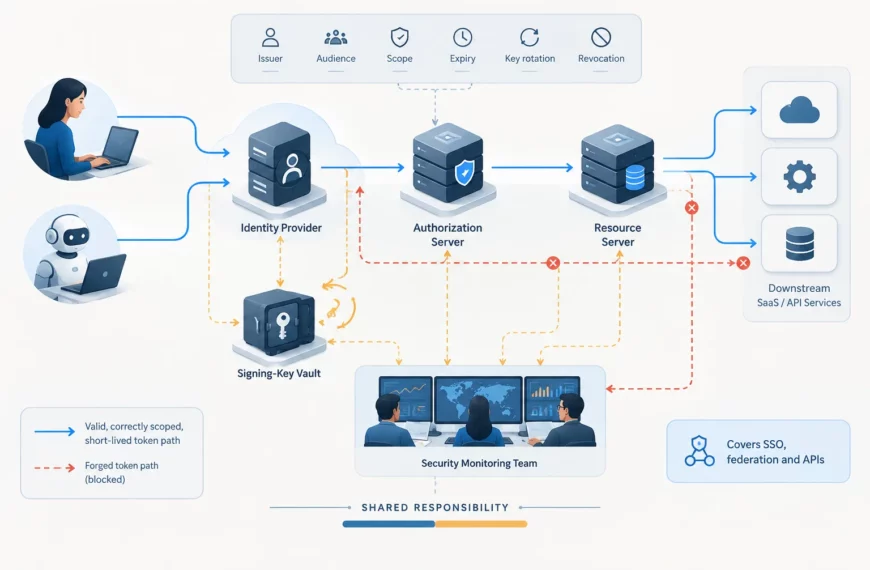
 By
By
 By
By

 By
By

 By
By