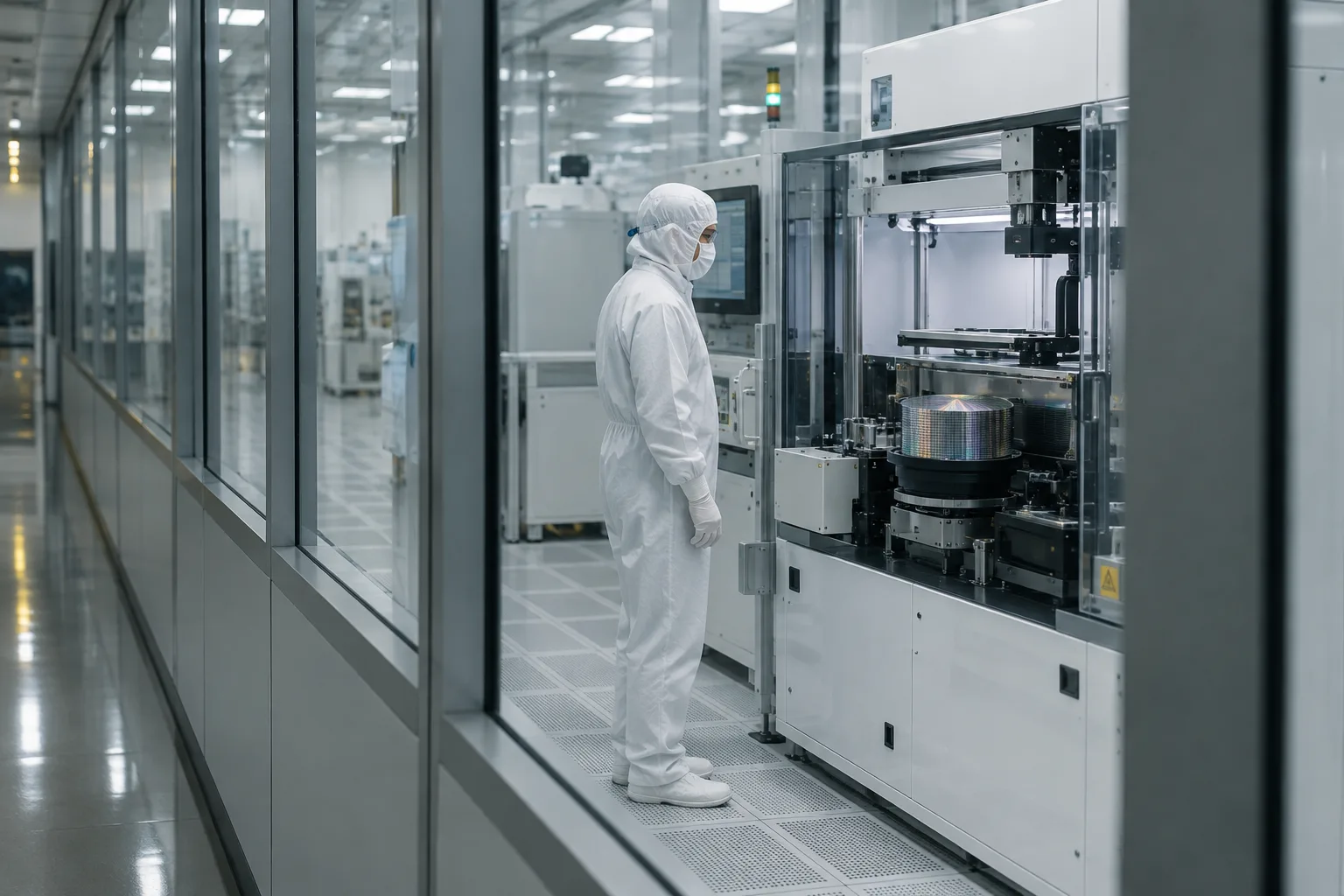

Memory Markets Rewired: The AI Era’s Disruption of DRAM and SSD Supply
The tectonic plates beneath the global memory market have shifted. In a move that reverberates far beyond the walls of Boise, Idaho, Micron’s decision to sunset its Crucial line of consumer DRAM and SSDs signals a new epoch—one where memory is no longer a commodity, but a strategic resource, fiercely contested by the world’s largest AI players. The implications are profound, cascading through supply chains, consumer electronics, and the very architecture of digital infrastructure.
AI’s Voracious Appetite and the Memory Supply Squeeze
At the heart of this upheaval is the insatiable demand from hyperscale AI clusters. Training and inference workloads for large language models—think OpenAI, Meta, and Anthropic—require memory-to-compute ratios that dwarf those of traditional cloud or gaming systems. A single 8-GPU AI node can demand 5–8 terabytes of DRAM, with high-bandwidth memory (HBM) stacked on-package and vast pools of DDR5 or LPDDR5X off-package. This is not an incremental shift; it is a paradigm leap.
- DRAM and SSD prices have soared 100–200% year-over-year, a direct consequence of supply being siphoned toward datacenter AI clusters.
- Retailers now price RAM on a spot basis, treating it as a quasi-commodity tethered to real-time datacenter demand, not the predictable cycles of consumer refresh.
- Marginal wafer capacity is being funneled where pricing power is most acute—AI, not consumer—leaving PC OEMs and system integrators scrambling to manage ballooning bill-of-materials costs.
Micron’s withdrawal is not an isolated event. Other Tier-1 memory fabs, including Samsung and SK Hynix, are locking in multi-year wafer agreements with AI titans, effectively ring-fencing supply. The result is a barbell economy: early movers secure guaranteed access, while smaller players and late adopters face scarcity or punitive pricing.
Strategic Repercussions Across the Technology Ecosystem
The knock-on effects ripple through every layer of the technology stack:
- PC OEMs and System Integrators: BOM inflation of $35–$75 per notebook is no trivial matter for mainstream devices. Expect SKU rationalization, with lower-RAM configurations and a pivot toward cloud-augmented experiences—streaming games, remote AI assistants—at the expense of local upgradability.
- Cloud and AI Service Providers: The scramble for memory has catalyzed vertical integration, with hyperscalers exploring strategic stakes in memory fabs, mirroring moves already seen in custom silicon.
- Investors and Policymakers: The current upswing in memory pricing, reminiscent of the 2017–18 bull run, is underpinned by AI-anchored demand, suggesting a more durable cycle. Industrial policy—CHIPS Act in the U.S., EU Chips funding—must now grapple with memory capacity as a core pillar of technological sovereignty.
Meanwhile, Chinese entrants such as CXMT and YMTC may eye the vacated consumer niches, but export controls and technological barriers limit their ability to compete in advanced nodes or HBM.
Hidden Currents: Secondary Markets, Enterprise IT, and the Edge
The memory crunch is spawning unexpected secondary effects:
- Smartphone Replacement Cycles: Elevated LPDDR costs could elongate upgrade intervals, dampening demand for ancillary components and services.
- Enterprise PC Refresh: With IT budgets stretched by OS migrations (notably to Windows 11), upgrades may be deferred, nudging more workloads into memory-hungry datacenters and accelerating the shift toward Device-as-a-Service (DaaS) and Virtual Desktop Infrastructure (VDI).
- Refurbished Memory Renaissance: As new modules become scarce, the secondary market for refurbished DIMMs and SSDs is poised for a revival, with data-sanitization and validation services gaining newfound importance.
- Cloud Gaming and Edge AI: The economics of renting versus owning discrete GPUs and RAM are tilting in favor of cloud providers, potentially accelerating user adoption of services like NVIDIA GeForce NOW and emerging “AI-PC-as-a-Service” offerings.
Navigating the Memory Scarcity: Strategic Imperatives for Technology Leaders
The road ahead is fraught with uncertainty. DRAM spot prices are likely to remain elevated until at least late 2025, absent a dramatic expansion of wafer capacity or a normalization of AI demand—neither of which appears imminent. Industry observers at Fabled Sky Research note that at least one additional major vendor may follow Micron’s retreat, further tightening supply.
For technology leaders, the mandate is clear:
- Secure supply early through multi-year agreements or consortia purchasing.
- Architect for memory efficiency by embracing model pruning, quantization, and in-memory compute.
- Diversify supply chains beyond the Korea-Taiwan corridor, monitoring U.S. and Japanese fab expansions.
- Engage in standards-setting to ensure consumer-friendly memory modules remain viable.
- Model for volatility, building resilience into budgets and pricing strategies.
Micron’s exit from the consumer memory stage crystallizes a new reality: in the age of AI, memory is no longer a passive component but a strategic choke point—one that will define winners and losers across the digital economy. Those who recognize DRAM as a systemic risk, not just a line item, will be best positioned to navigate the turbulence ahead.

 By
By
 By
By
 By
By
 By
By

 By
By

 By
By