

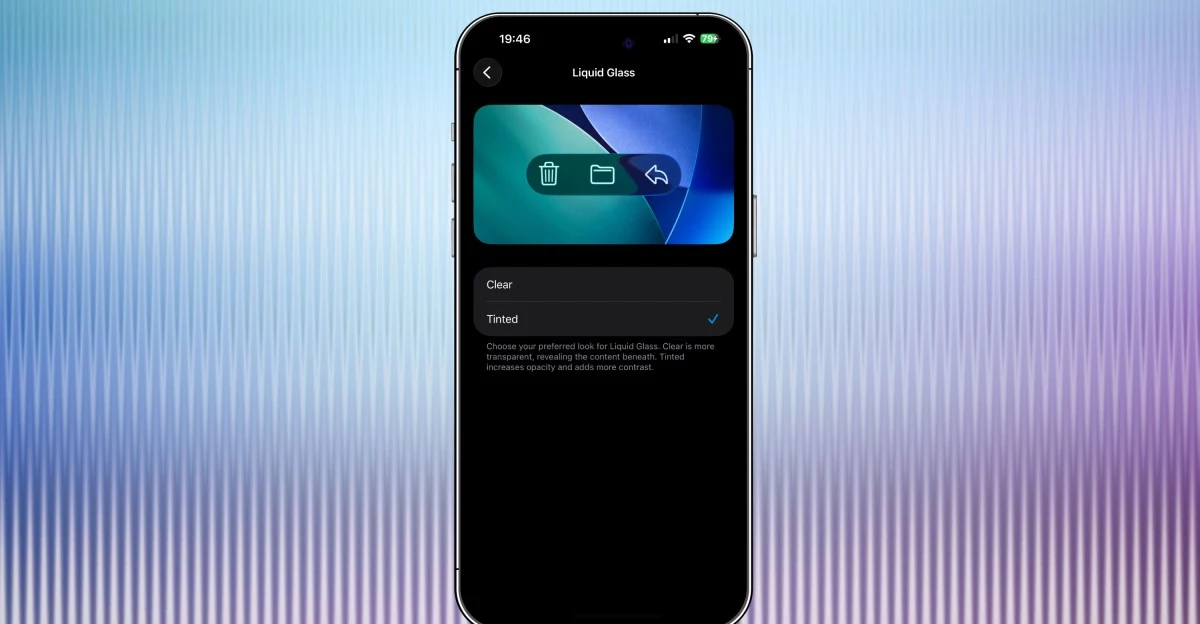

The Liquid Glass Era: Apple’s Bid for Adaptive UX and Regulatory Resilience
Apple’s iOS 26.1, released in lockstep with updates across iPadOS, macOS, watchOS, visionOS, and tvOS, marks a strategic inflection point in the company’s ongoing campaign to reinforce its ecosystem. This latest suite of updates is not merely incremental—it is a calculated response to mounting regulatory scrutiny, shifting user expectations, and intensifying competition in the ambient computing arena.
At the heart of this release lies the Liquid Glass transparency toggle, a feature emblematic of Apple’s pivot from rigid, design-centric minimalism to a more user-driven paradigm of interface personalization. Leveraging advances in GPU-accelerated compositing, Liquid Glass empowers users to modulate translucency in real time, sidestepping the historical trade-offs of battery drain or UI lag. Beyond its technical finesse, this move anticipates new accessibility mandates—such as the U.S. Department of Justice’s proposed WCAG 2.1 standards—by natively supporting high-contrast alternatives. In doing so, Apple not only preempts regulatory headwinds but also reframes adaptive UI as a mainstream expectation, not a niche accommodation.
Privacy, Security, and Edge AI: Apple’s Strategic Triad
The iOS 26.1 update is underpinned by a renewed emphasis on on-device privacy and security. Disabling lock-screen camera access and expanding Communication Safety content filters are more than incremental tweaks; they represent a deepening of Apple’s “privacy as product” doctrine. By embedding these controls at the firmware level, Apple raises the bar for would-be attackers, while also insulating itself from the compliance headaches that have plagued less vertically integrated rivals.
Perhaps most telling is the integration of advanced neural vocoders—likely inherited from Apple’s recent AI audio acquisition—into FaceTime’s low-bandwidth audio enhancement. This cross-pollination of machine learning assets exemplifies Apple’s ability to rapidly operationalize its AI investments, turning them into tangible user benefits. Meanwhile, the expansion of Live Translation via AirPods to five new languages, executed entirely on H-series silicon, signals a decisive shift toward edge AI. By reducing reliance on cloud round-trips, Apple not only slashes latency but also curtails operational expenditure—a prudent hedge as data-center energy costs soar.
These developments are not merely technical milestones; they are strategic chess moves. Localized translation and audio enhancements position Apple’s wearables as the vanguard of ambient computing, subtly rebuffing cloud-centric offerings from Google and Microsoft. The addition of gain control for USB microphones and local file management further entrenches iOS as a serious contender in the prosumer content-creation market, blurring the line between mobile device and digital audio workstation.
Economic Ripples: Ecosystem Cohesion and Competitive Jockeying
Apple’s synchronized OS updates are more than a display of engineering prowess—they are a bulwark against regulatory fragmentation and competitive encroachment. By harmonizing features across six platforms, Apple tightens its ecosystem precisely as the EU Digital Markets Act seeks to pry it open. The implicit argument: seamless cross-device functionality enhances consumer welfare, complicating regulators’ efforts to mandate radical interoperability.
This cohesion also feeds directly into Apple’s services revenue ambitions. Features like auto-mix on AirPlay and enhanced Music navigation create micro-moments that deepen user engagement, paving the way for higher average revenue per user (ARPU) through tiered pricing for premium audio experiences. For competitors such as Spotify and Amazon Music, the frictionless mini-player and improved discovery tools heighten the risk of subscriber churn—potentially prompting a wave of UI simplification and exclusive content deals in response.
On the hardware front, Apple’s reliance on in-house silicon for edge processing mitigates supply-chain volatility and reduces operational costs tied to cloud infrastructure. This is not just a technical optimization—it is a strategic insulation against the unpredictable tides of the semiconductor market and the escalating scrutiny of tech companies’ environmental footprints.
The Road Ahead: Implications for Developers, Enterprises, and Policymakers
For developers, the writing is on the wall: adaptive UI is no longer optional. As Apple edges toward deprecating default translucency, building design systems that accommodate high-contrast and personalized states will soon be a prerequisite for App Store approval. Enterprises deploying iOS devices in sensitive environments—healthcare, logistics, field operations—should move swiftly to update mobile device management profiles, leveraging new lock-screen controls for enhanced data-leak prevention.
The competitive landscape is poised for rapid evolution. Google’s likely integration of on-device translation into Pixel Buds, powered by its Tensor chipsets, signals an impending arms race in ear-based ambient AI. Meanwhile, Apple’s early lead in edge translation and audio enhancement positions its wearables as the decisive battleground for next-generation AI experiences.
Regulatory and ESG considerations loom large. Apple’s proactive child-safety features offer a template for tech firms bracing for the EU’s forthcoming “Child-Friendly Design” code, while its shift to edge processing delivers measurable gains in sustainability metrics—an increasingly salient factor for investors and watchdogs alike.
As the boundaries between device, service, and environment continue to blur, Apple’s iOS 26.1 update is more than a routine refresh. It is a calculated assertion of control—over the user experience, the competitive narrative, and the regulatory agenda—setting the stage for a new era of adaptive, privacy-centric, and context-aware computing.

 By
By
 By
By

 By
By
 By
By


 By
By







