
The Dawn of Coalition-Driven Spatial Computing
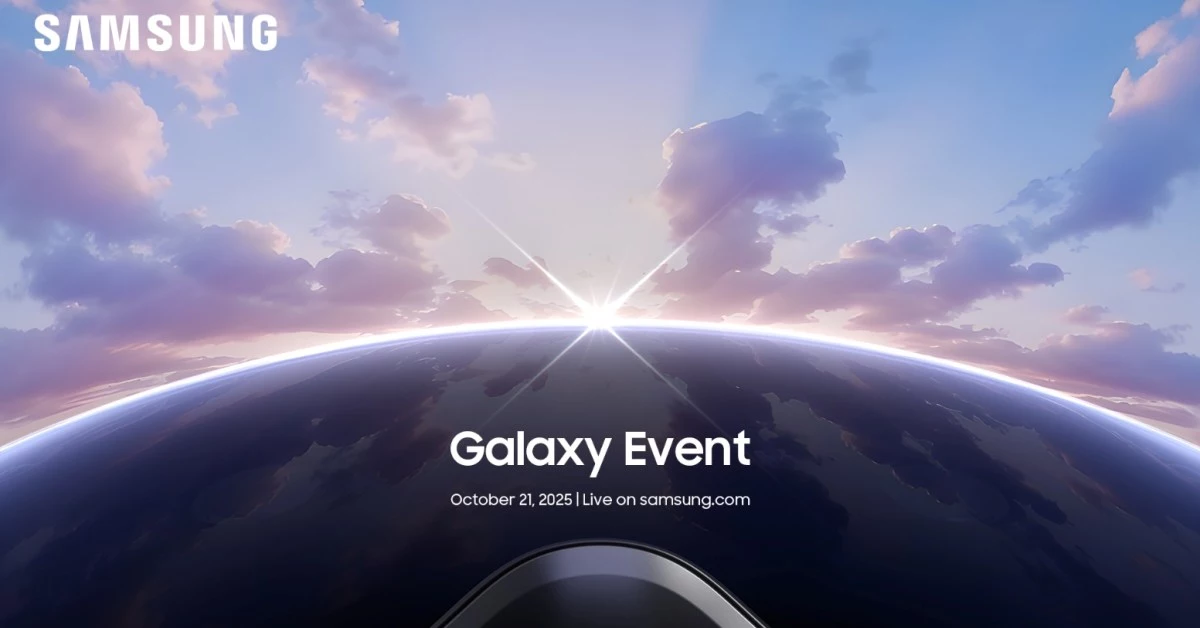
The mixed-reality landscape, long characterized by siloed innovation and fragmented standards, is poised for a tectonic shift. At the center of this transformation stands Samsung’s Project Moohan, a flagship mixed-reality headset to be unveiled at the “Worlds Wide Open” Galaxy showcase on October 21. This device is not merely another entrant in the XR arms race—it is the physical manifestation of a new, open spatial-computing stack, forged in partnership with Google and Qualcomm and anchored by the debut of the Android XR platform.
This coalition marks a decisive divergence in industry strategy. On one side, Apple’s Vision Pro line embodies the vertically integrated, premium ecosystem—an approach that has historically delivered seamless user experiences but at the cost of flexibility and, crucially, supply-chain resilience. On the other, Samsung’s alliance with Google and Qualcomm signals a return to the “Wintel” playbook: a multi-OEM, modular platform designed to democratize access and accelerate iteration. The stakes are high, as this bifurcation will shape not only the competitive landscape but also the very architecture of the next computing era.
Inside Project Moohan: Silicon, Optics, and AI-First Design
At the heart of Project Moohan lies an intricate tapestry of technological advances. Qualcomm’s forthcoming Snapdragon XR3 platform, fabricated on a cutting-edge 3 nm process, promises on-device neural processing units exceeding 20 TOPS—enabling real-time generative AI inference without the latency or privacy risks of cloud dependence. This leap in silicon is matched by Samsung’s mastery of micro-OLED display manufacturing, a move that could alleviate the industry’s chronic microdisplay bottlenecks and reduce reliance on incumbent suppliers.
But it is the software layer—the Android XR OS—that truly sets Moohan apart. By exposing an “Intent-in-Space” API, the platform fuses environmental meshing, multimodal AI (voice, gesture, biometrics), and gaze tracking into a cohesive, context-aware interface. Distilled large language models, running privately on-device, offer scene understanding and interaction without compromising user data—a timely differentiator as regulators intensify scrutiny of biometric cloud processing.
The architecture’s openness extends to hardware integration. Unlike Apple’s self-contained Vision Pro, Project Moohan supports optional tethering to smartphones or PCs, leveraging Samsung’s DeX and Google’s Chromebook ecosystems. This modularity not only broadens the device’s utility but also hints at more accessible price points, potentially undercutting Apple’s $3,499 Vision Pro by a significant margin.
Economic Ripples and the New Platform Battleground
The coalition economics underpinning Android XR distribute R&D and manufacturing risk, enabling aggressive pricing and faster innovation cycles. For developers, Google’s ability to mobilize its vast Android base—2.7 million strong—means the flywheel of spatial content could spin up rapidly, overcoming a historic bottleneck in XR adoption.
The revenue implications are manifold:
- Services: Spatial advertising, virtual storefronts, and AI-driven cloud subscriptions beckon as new frontiers.
- Enterprise: Sectors such as remote maintenance, digital twins, and immersive training are seeing robust investment, bolstered by a 28% CAGR in enterprise XR budgets (PwC).
- Component Supply Chains: As Android XR proliferates beyond Samsung to Chinese and Taiwanese OEMs, suppliers of micro-OLED, optics, and haptic modules should brace for a surge in demand.
Macroeconomic headwinds—elevated interest rates, cautious consumer spending—are counterbalanced by a surge in enterprise capex aimed at productivity-enhancing technologies. This dual-path go-to-market strategy positions Samsung and its partners to capture both the consumer imagination and the enterprise wallet.
Strategic Inflection: Beyond Hardware to Ambient Intelligence
The implications of Project Moohan reverberate far beyond hardware. Google’s deep involvement is a calculated move to preserve its app, payment, and search “toll-booth” economics as spatial computing threatens to disintermediate traditional mobile paradigms. By embedding the Play ecosystem natively in 3D space, Google secures its position in the next era of discovery and monetization.
Meanwhile, the convergence of AI and hardware is dissolving old boundaries. XR headsets, once mere display devices, are evolving into context-aware assistants—competing not just with rival headsets, but with emergent AI wearables like the Humane AI Pin and Meta-Ray-Ban glasses for a share of the ambient computing landscape.
For decision-makers, the message is clear: the spatial computing wars are entering a new phase, one defined by open platforms, AI-native interfaces, and coalition economics. Early movers—whether enterprise buyers, developers, or component suppliers—stand to shape and benefit from the contours of this post-mobile epoch. As Project Moohan takes center stage, the industry must recalibrate its roadmaps, partnerships, and capital bets to seize the opportunities of a trillion-dollar platform transition now coming into view.


 By
By
 By
By
 By
By
 By
By
 By
By

 By
By