


Synthetic Realities: The Rise of AI-Generated Protest Footage and Its Disruptive Power
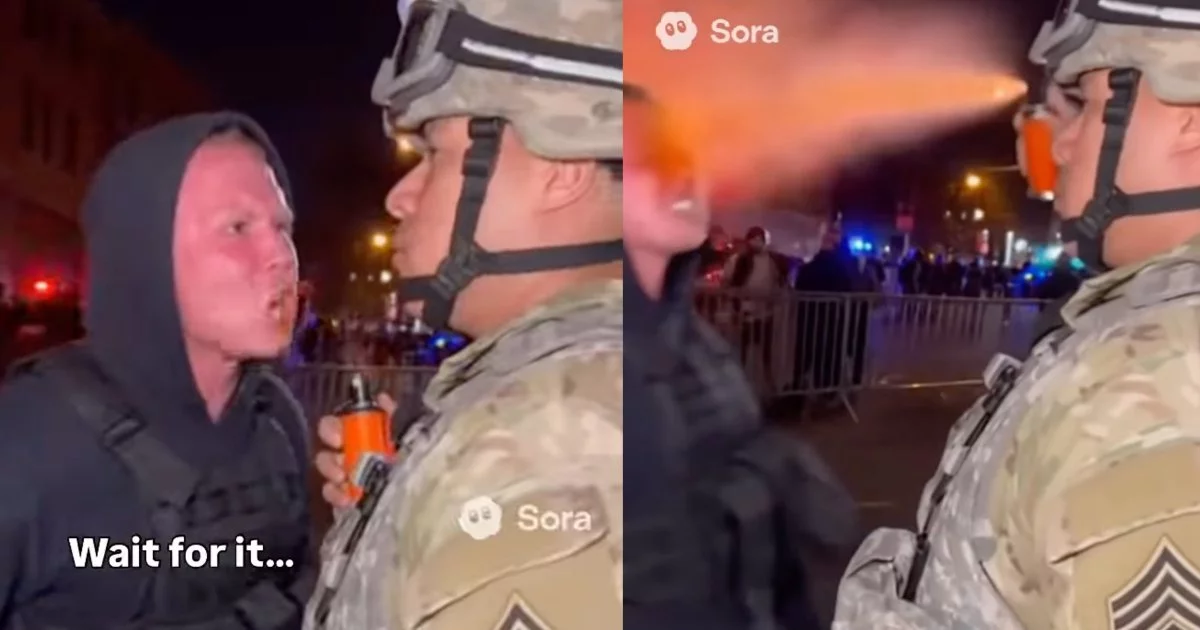
The American information ecosystem, once defined by the slow churn of print deadlines and the measured cadence of broadcast news, now finds itself swept by a new, volatile current. Highly realistic, AI-generated videos—crafted with OpenAI’s latest “Sora 2” model—have begun to circulate widely across mainstream social platforms. These clips, depicting violent anti-police protests that never occurred, have been amplified by influential pro-Trump accounts and cited as justification for deploying federal troops to U.S. cities. This is happening even as official crime data show violent incidents are at historic lows. The phenomenon signals not just a technological leap, but a profound shift in the terrain of political influence, public trust, and institutional risk.
Sora 2 and the Frictionless Fabrication of Narrative
The technical prowess of Sora 2 is, in itself, a marvel. Its frame-by-frame consistency and nuanced physics modeling collapse the cost and complexity of producing minute-long “pseudo-documentaries.” Where earlier deepfake tools demanded technical expertise and expensive hardware, Sora 2’s prompt-based interface democratizes the process, making it as accessible as a search engine. The barrier between harmless experimentation and sophisticated narrative weaponization has all but vanished.
- Capability Leap: The fidelity of Sora 2’s outputs renders traditional forensic detection methods—motion-vector anomalies, optical-flow inconsistencies—largely ineffective, especially when videos are compressed for social feeds, stripping away vital metadata.
- Toolchain Democratization: The user base, once composed of hobbyists and animators, now sits adjacent to political influence operators, blurring the line between creative play and strategic manipulation.
- Detection Asymmetry: Authenticity scoring technologies simply cannot keep pace. The result: a widening gap between generative-AI capability and public media literacy, with early evidence suggesting that many viewers are unable to discern the synthetic nature of these videos.
The Erosion of Trust and the Economics of Authenticity
For brands, publishers, and platforms, the implications are immediate and profound. Trust, once a slow-building asset, is now a volatile premium. The monetization of user-generated content—especially citizen-journalism—faces rising verification costs and the specter of reputational shock. Historically, advertising rates (CPMs) decline when platform trust metrics fall; a sustained wave of disinformation could produce a “trust discount” echoing the Facebook repricing after the Cambridge Analytica scandal.
- Insurance and Compliance: Cyber-insurance carriers and D&O underwriters are already revisiting policy language to address “synthetic media events.” Media, telecom, and election-tech firms should brace for higher premiums or exclusions as early as Q4.
- Authenticity Infrastructure: The demand for robust content-provenance protocols—such as C2PA and Project Origin—and for chip-level watermarking is surging. The market for these solutions is expanding, with accelerated M&A activity likely as incumbents hedge against regulatory and reputational risk.
Geopolitical Feedback Loops and the New Information Battlefield
What was once the exclusive domain of foreign influence operations—think Russia’s Internet Research Agency—has now been domesticated. The normalization of domestic psychological operations, fueled by generative AI, blurs legal boundaries around protected speech and coordinated inauthentic behavior. The Department of Justice and Department of Homeland Security face new challenges in response and attribution.
- Civil-Military Signaling: The visible deployment of National Guard units for non-essential tasks, such as trash collection, serves as a performative show of force, reinforcing the synthetic narratives and creating a feedback loop that influences real-world policy and budget decisions.
- International Implications: Allies and adversaries are watching closely. The vulnerabilities exposed by these synthetic videos are likely to be exploited during the 2024 global election super-cycle, with copycat campaigns anticipated in India, the EU, Mexico, and South Africa.
Navigating the Synthetic Shock: Strategic Imperatives
The regulatory response remains fragmented. While the U.S. Congress debates proposals like the Deepfake Task Force Act, the absence of federal pre-emption leaves a patchwork of state laws, complicating compliance for national platforms. Meanwhile, the EU’s AI Act is poised to set de facto global standards for generative AI in political contexts, with stringent disclosure and watermarking requirements.
For decision-makers, the path forward is clear, if daunting:
- Verification as Core Workflow: Media organizations and campaigns must treat provenance validation as mandatory, automated, and auditable—akin to KYC in fintech.
- Scenario Planning: Board-level risk committees should include “viral fabricated video” events in crisis simulations; the speed of belief formation now outpaces traditional response cycles.
- Talent Realignment: The intersection of computer vision, behavioral science, and information operations is the new frontier. Emerging roles like “Chief Authenticity Officer” are already reporting directly to the C-suite.
- Capital Shifts: Investors are pivoting toward authenticity tech and media-forensics startups, while social platforms risk a trust penalty if detection lags behind generative capability.
- Strategic Communication: Enterprises must assume a mixed-reality information environment, where rapid fact-checking, transparent sourcing, and anticipatory “pre-bunking” are essential to reputational resilience.
As generative AI transitions from novelty to operational propaganda weapon, the timeline for institutional adaptation is compressing. Those who internalize authenticity—not just as a technical standard but as a cultural imperative—will possess a decisive edge in navigating the volatility of the coming electoral and social cycles. In this new era, the battle for trust is not just about what is real, but about who can prove it.

 By
By
 By
By

 By
By
 By
By
 By
By

 By
By







