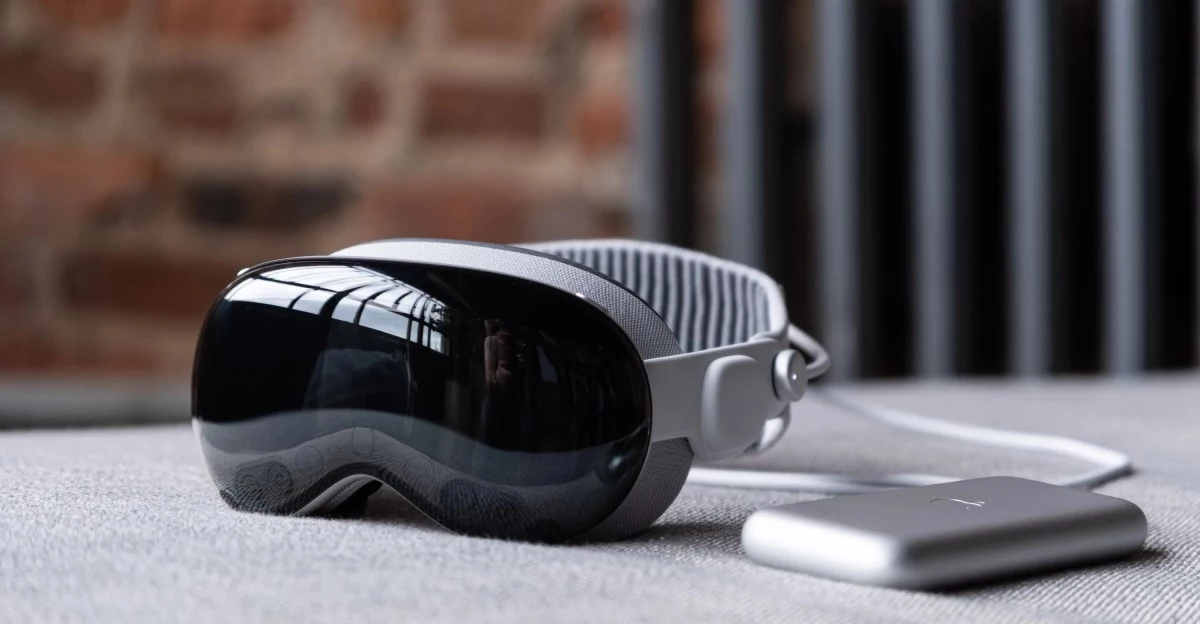

Apple’s Calculated Pivot: From Spatial Headsets to the Next-Gen Wearable Frontier
In a move that signals both urgency and intent, Apple is reallocating resources from its ambitious Vision Pro headset to an accelerated smart-glasses initiative. This strategic recalibration is more than a product shuffle—it’s a high-stakes bet on the future of ambient computing, where lightweight, AI-powered wearables become the new battleground for ecosystem dominance.
The roadmap is now unmistakably clear: two distinct smart-glasses SKUs are in development. The first, an audio-centric, display-free model, is slated for a 2025 unveiling with a 2027 commercial launch. The second, a display-equipped variant, has been pulled forward—potentially debuting as early as 2026. Both will be powered by proprietary low-power silicon and on-device AI, positioning Apple to challenge Meta’s Ray-Ban portfolio head-on. The retreat from a lighter Vision Pro and the tapering of first-generation headset volumes reflect a decisive pivot away from niche, premium spatial computing toward mass-market, all-day wearables.
Competitive Dynamics: Platform Wars and the Race for the Face
At stake is far more than hardware sales. For Apple and Meta alike, head-mounted wearables represent the next node in their respective ecosystem flywheels. Apple’s play is characteristically vertical: integrating custom silicon, software, and services to reinforce its walled garden. Meta, by contrast, seeks hardware autonomy—a bid to loosen its dependency on iOS and Android gatekeepers.
- Timing and Execution: Apple enters this cycle two hardware generations behind Meta, yet its historical playbook—superior vertical integration and unmatched channel leverage—has closed such gaps before. By accelerating its timeline, Apple narrows Meta’s first-mover lead to a mere 18–24 months.
- Product-Line Realignment: The discontinuation of a lightweight Vision Pro removes internal competition, freeing up silicon capacity and channel bandwidth for smart glasses to become Apple’s “entry-level spatial” anchor.
- Cannibalization as Strategy: Apple’s willingness to cannibalize its own high-margin headsets in favor of scalable, lower-cost wearables is a classic Jobsian move, aimed at capturing the widest possible addressable market.
Technology and Supply Chain: Engineering for the Everyday
The technical underpinnings of Apple’s smart-glasses push are as ambitious as they are pragmatic. At the heart lies a custom edge-AI chip, likely leveraging Neural Engine IP, enabling always-on, privacy-preserving inference for voice and vision tasks—without the latency or privacy risks of cloud processing.
- Audio-First, Display-Less Model: Echoing the AirPods’ runaway success, this variant abstracts the user interface to audio and Siri, serving as both a data-collection platform and a developer seeding ground for richer spatial interfaces down the line.
- Display Breakthroughs: The accelerated display-glasses timeline hints at breakthroughs in microLED yields or waveguide supply. Apple may be securing multi-year allocations from suppliers like AMS-Osram or Sony, hedging against capacity constraints that have hobbled rivals.
- Battery Innovation: Confidence in in-house battery chemistry or stacked-cell suppliers suggests Apple is targeting over six hours of continuous use in sub-50-gram frames—an engineering feat that would set a new industry standard.
On the economic front, the shift away from Vision Pro frees up capital and component allocations, enabling Apple to invest in RF, speaker, and lens assembly lines with higher unit velocity and healthier margins. Smart glasses are expected to slot between the Apple Watch and AirPods in gross margin profile, a significant improvement over the Vision Pro’s sub-20% margins.
Ecosystem Implications: Monetization, Privacy, and the Ambient Future
The implications for Apple’s ecosystem are profound. Always-on audio and capture capabilities open new monetization vectors, from spatial Apple Music playlists to context-aware Fitness+ prompts. The anticipated debut of developer frameworks—potentially branded as “EyeKit” or “AmbientKit”—at WWDC 2025 will nudge the developer community toward micro-interactions and away from fully immersive XR apps, accelerating Apple’s pivot from immersive to ambient computing.
Crucially, Apple’s emphasis on on-device AI and privacy-preserving architectures offers a reputational counterpoint to Meta’s data-collection liabilities. End-to-end encryption and differential privacy will likely feature prominently in Apple’s marketing narrative, reinforcing its brand as the trusted steward of personal data.
Navigating Risks and Shaping the Next Platform
Yet, the path forward is not without risks. Yield issues in microLED and waveguide production could inflate bills of materials or delay launches. The absence of a “killer app” risks a repeat of the Apple Watch’s slow early adoption curve. Co-branding with eyewear giants like Luxottica could complicate retail exclusivity and dilute brand control.
Still, the strategic logic is compelling. As consumer spending tightens and enterprises seek productivity-boosting AI hardware, sub-$1,000 wearables have a far clearer total addressable market than $3,499 headsets. For developers and partners, the message is clear: invest in context-aware, multimodal experiences that bridge audio, vision, and AI. For Apple, this is not just a product launch—it’s the laying of a new foundation for ambient computing, one that could define the next decade of personal technology.
The industry is watching. The race to own the face—and the data surface it represents—has only just begun.

 By
By
 By
By

 By
By

 By
By
 By
By


 By
By

 By
By