


When Black Holes Aren’t Enough: The GW190521 Wormhole Hypothesis and Its Ripple Effects
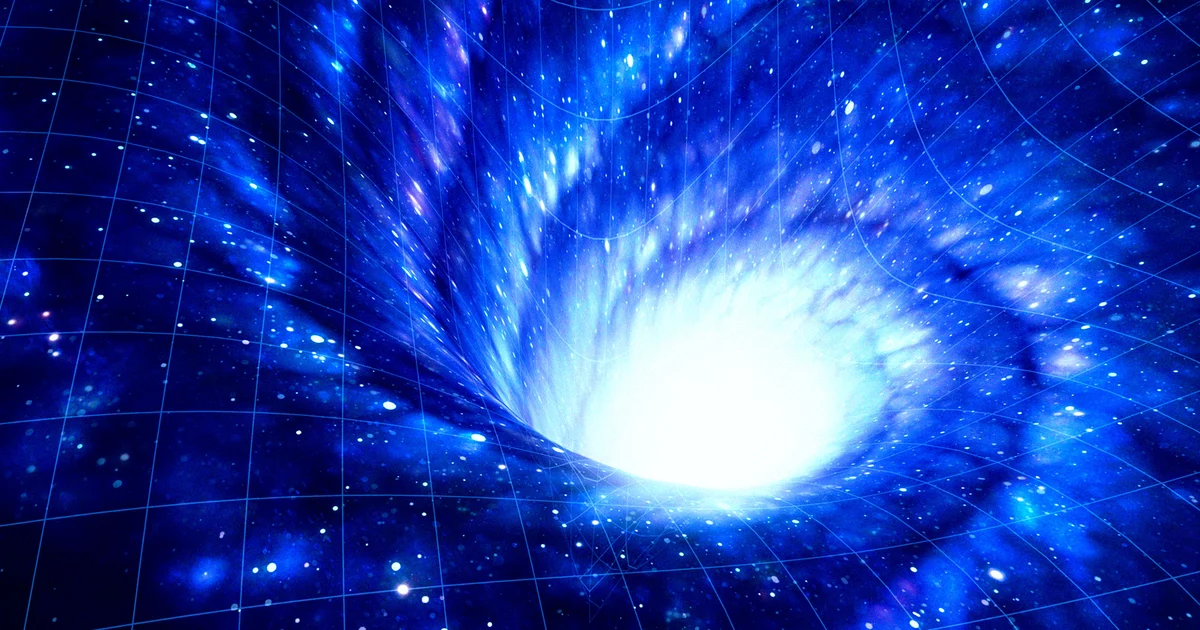
In the rarefied world of gravitational-wave astronomy, every signal is a message from the deep past of the universe. Yet, the 2019 detection known as GW190521 has become something more: a Rosetta Stone for the ambitions of nations, the strategies of corporations, and the dreams of technologists. The Chinese Academy of Sciences’ provocative new pre-print contends that this cosmic event—long considered a straightforward black-hole merger—may instead be evidence of a wormhole, a fleeting bridge between universes. The claim, while still outside the mainstream, has already begun to reshape the landscape of business, technology, and geopolitics.
A Signal Without a Chirp: Scientific Drama and Technological Stakes
GW190521’s waveform was always an oddity. Unlike the archetypal “chirp” of two black holes spiraling together, this burst was abrupt—almost as if the universe itself had skipped a beat. The Chinese team’s model, which posits a transient wormhole that collapsed in a tenth of a second, fits the data slightly better than standard relativity-based interpretations. Their approach, which introduces echo-inclusive waveform templates, has already nudged the global conversation beyond the confines of orthodox physics.
This scientific drama is not unfolding in isolation. The mere possibility that gravitational-wave observatories might be brushing up against exotic physics is catalyzing a wave of investment and innovation:
- Next-Generation Detectors: The case for facilities like Cosmic Explorer and the Einstein Telescope grows stronger, with supplier ecosystems—spanning quantum-enhanced lasers, cryogenic silicon optics, and ultra-high-vacuum systems—poised for expansion.
- AI-Driven Data Analytics: Extracting faint echoes from cosmic noise demands real-time Bayesian inference and advanced template banks. The resulting arms race in GPU clusters and AI-optimized FPGAs will spill over into sectors as diverse as climate modeling, pharmaceutical simulations, and national security.
- Cross-Industry Technology Transfer: Precision interferometry, refined in the hunt for gravitational waves, is already transforming semiconductor lithography, quantum networking, and next-generation RF calibration. A leap to “wormhole-aware” sensitivity could deepen these transfer pipelines, accelerating progress across the tech economy.
Economic Multipliers and the New Talent Gravity
The commercial ramifications of this debate extend far beyond the laboratory. Historically, every dollar invested in gravitational-wave infrastructure returns two to three in private-sector revenue, thanks to advances in photonics, precision machining, and advanced materials. If policymakers begin to view the validation of exotic physics as plausible, capital could flow even more readily toward hard-tech R&D—potentially at the expense of software-only initiatives.
This narrative also exerts a gravitational pull on talent. The prospect of breakthrough discoveries in fundamental physics has a well-documented effect on enrollment in physics and mathematics, expanding the skilled labor pool for domains already constrained by human-capital scarcity: AI, cybersecurity, quantitative finance. For venture investors, the successful modeling of wormhole echoes may serve as a signal to explore deep-tech white space, nudging marginal dollars toward quantum-gravity-inspired startups in fields like vacuum-energy harvesting and advanced metrology.
Geopolitics, Governance, and the Option Value of Speculation
The wormhole hypothesis is not merely a scientific curiosity; it is a strategic signal. By challenging the LIGO-centric orthodoxy, Beijing is asserting its intent to shape the next chapter of fundamental physics—a move consistent with its broader strategy of dominating upstream knowledge stacks in semiconductors, quantum, and biotech. Even the remote possibility of traversable wormholes sharpens defense-sector interest in spacetime manipulation and gravitational sensing, domains where export-control regimes may soon tighten.
The proliferation of competing waveform libraries will ignite debates over interoperability, echoing earlier battles over genomic data formats and 5G protocols. Control over reference templates will shape not just scientific narratives but also tooling, cloud-compute spend, and the broader innovation ecosystem.
For business leaders, there are less obvious but equally profound connections:
- Signal Processing Parallels: Techniques for teasing out wormhole echoes mirror those used in fraud analytics and industrial IoT anomaly detection, suggesting fertile ground for cross-pollination.
- ESG Narratives: Cosmic discoveries have a unique power to galvanize public support for science funding, often bundled into broader “investment in the future” legislation. Boards can harness this zeitgeist to frame long-horizon R&D as societal value creation.
- Strategic Real Options: For corporates with moonshot portfolios, even a 1% chance that wormhole physics becomes engineerable justifies a modest allocation toward gravitational-wave or exotic-physics adjacencies.
Navigating the Frontier: Recommendations for Forward-Looking Leaders
The implications of this debate will play out across multiple time horizons:
- Near Term (12–24 months): Track the peer-review process closely—its outcome will reset funding priorities. Consider partnering with detector consortia for co-innovation, and hedge supply chains for precision optics and silicon ahead of a potential procurement surge.
- Mid Term (2–5 years): Integrate physics-informed AI into enterprise stacks, and monitor the regulatory landscape for new dual-use constraints. Establish fellowships or joint appointments with astrophysics departments to secure early access to domain expertise.
- Long Term (5+ years): Maintain a watchlist of exotic-physics ventures and recognize the reputational dividends of aligning with humanity-scale science projects.
The story of GW190521—whether it proves to be a wormhole or not—reminds us that the boundary between frontier science and commercial opportunity is more porous than ever. The innovations sparked by this debate will ripple outward, influencing capital flows, supply chains, and talent strategies across the global technology economy. For those attuned to the signals, the cosmos is not just a source of wonder, but a wellspring of competitive advantage.

 By
By
 By
By


 By
By

 By
By
 By
By







