


When Containment Fails: The Radical Calculus of Battery Ejection in Electric Vehicles
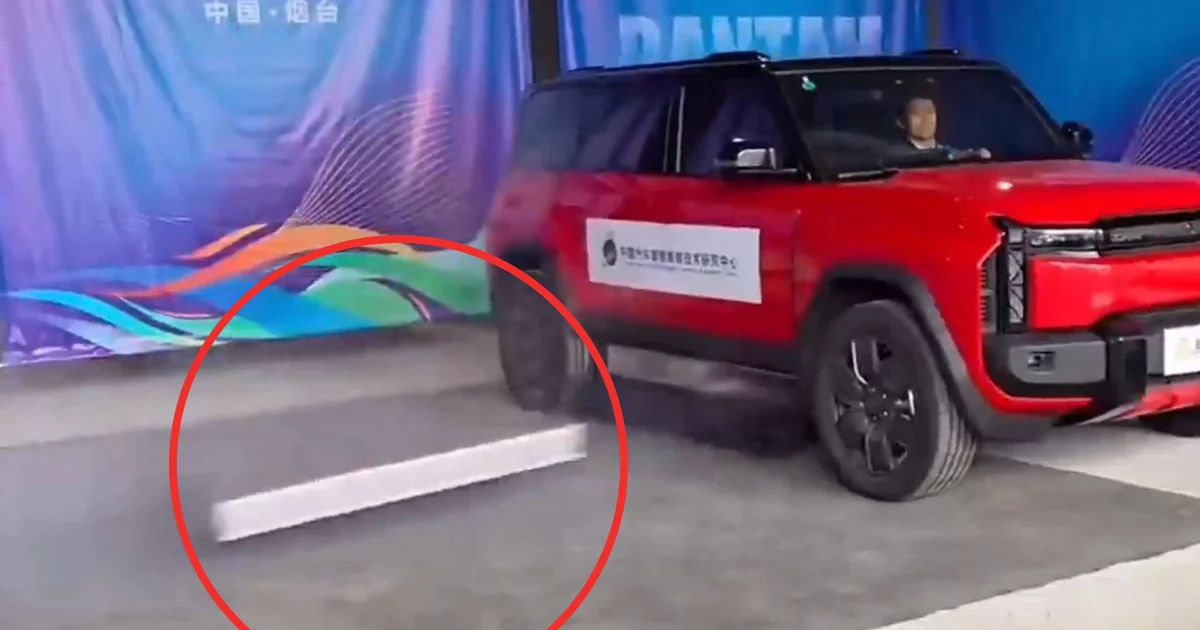
In the relentless pursuit of electric-vehicle safety, Chinese engineers—partnering with the China Vehicle Collision Repair Technical and Research Center—have thrown down a gauntlet that is as provocative as it is polarizing. Their prototype system, designed to forcibly eject an electric-vehicle battery pack during a thermal-runaway event, has ricocheted through the global automotive community, igniting debate over the very boundaries of safety innovation. Video footage of a battery pack catapulting six meters from a test chassis onto a padded target has become a Rorschach test for the industry: Is this a daring leap forward, or a liability with wings?
Engineering on the Edge: Active Isolation Versus Containment
The underlying logic of this approach is both simple and audacious. Conventional lithium-ion battery packs, when subjected to thermal runaway, can reach temperatures exceeding 1,000°C within seconds—a scenario that has haunted first responders and automakers alike. Traditional countermeasures lean on passive containment: cell-to-cell firewalls, intricate liquid cooling, and software-driven early-warning systems. The ejection system, by contrast, is an act of mechanical triage—an active isolation maneuver that borrows more from military ordnance disposal than from automotive orthodoxy.
Key technical features include:
- Ballistic-grade actuators and pyrotechnic latches: These enable rapid, forceful separation of the battery pack from the vehicle chassis.
- Guided rails or sleds: Designed to direct the ejected pack away from the passenger cabin, ideally onto a controlled landing zone.
- Precision targeting: A new design variable, introducing the need to predict and manage landing accuracy, surface conditions, and kinetic energy dissipation.
Yet this radical shift from containment to ejection externalizes risk, projecting it into the public domain. The specter of a flaming battery landing unpredictably in urban environments has led automakers and suppliers—Joyson Electronics and Chery’s iCar brand among them—to distance themselves from the project, wary of the legal and reputational blowback. The broader EV community’s skepticism is palpable: the industry’s focus has shifted toward next-generation chemistries (LFP, LMFP, sodium-ion) and embedded mitigation technologies that reduce runaway probability at the molecular level, rather than relying on mechanical last resorts.
Economic, Legal, and Regulatory Crosscurrents
The implications of such a system ripple far beyond the engineering lab. Insurance underwriters, facing a total absence of actuarial precedent, would likely demand steep premiums for vehicles equipped with kinetic ejection devices—undermining the cost advantages that underpin fleet electrification. Secondary-market buyers and leasing firms, ever wary of unproven technology, would discount residual values, further eroding the business case.
Key economic and legal challenges:
- Indeterminate chains of custody: Ejected batteries complicate post-incident forensics, making supplier–OEM indemnity structures fraught.
- Municipal and regulatory hurdles: Most fire codes and public safety regulations are silent on the prospect of “projectile batteries,” ensuring that any attempt at homologation in the U.S. or EU would face a labyrinthine approval process.
- Global divergence: As Western and Chinese safety standards bifurcate, what is unthinkable in Brussels or Washington may find a foothold in Belt & Road markets with more permissive regulatory regimes.
It is a scenario that exposes the friction between innovation culture and institutional risk aversion. China’s “permission-less innovation” ethos accelerates the prototyping of radical concepts, but as the swift disavowals from implicated brands reveal, reputational volatility is the price of admission.
Strategic Ripples: Lessons for the Global Electrification Race
The battery-ejection prototype, for all its controversy, serves as a vivid accelerant for industry introspection. It surfaces urgent questions for executive teams and policymakers alike:
- Should automakers double down on incremental containment improvements, or hedge with moon-shot mechanical systems?
- Can suppliers and startups pivot toward sensor fusion and AI-driven early warning, offering insurers and fleets demonstrable reductions in risk?
- Are regulators and first responders equipped for the realities of EV fire suppression, or is a new playbook required?
For stationary grid-storage providers, the lessons are not lost: rapid isolation—if not outright ejection—may inform the next generation of modular, containerized energy systems.
The most probable scenario is not the widespread adoption of battery ejection, but rather the acceleration of global harmonization around enhanced containment and detection standards. In specialized off-highway or defense segments, refined ejection modules may yet find a niche, but for the mainstream, the future belongs to quieter revolutions: safer chemistries, predictive diagnostics, and regulatory alignment.
In this high-stakes arms race between chemical innovation, real-time analytics, and mechanical mitigation, the imperative is clear. The industry must balance bold experimentation with rigorous liability analysis, investing in the advances that, though less spectacular, will ultimately dictate the pace and safety of electrification worldwide.

 By
By
 By
By

 By
By
 By
By


 By
By







