

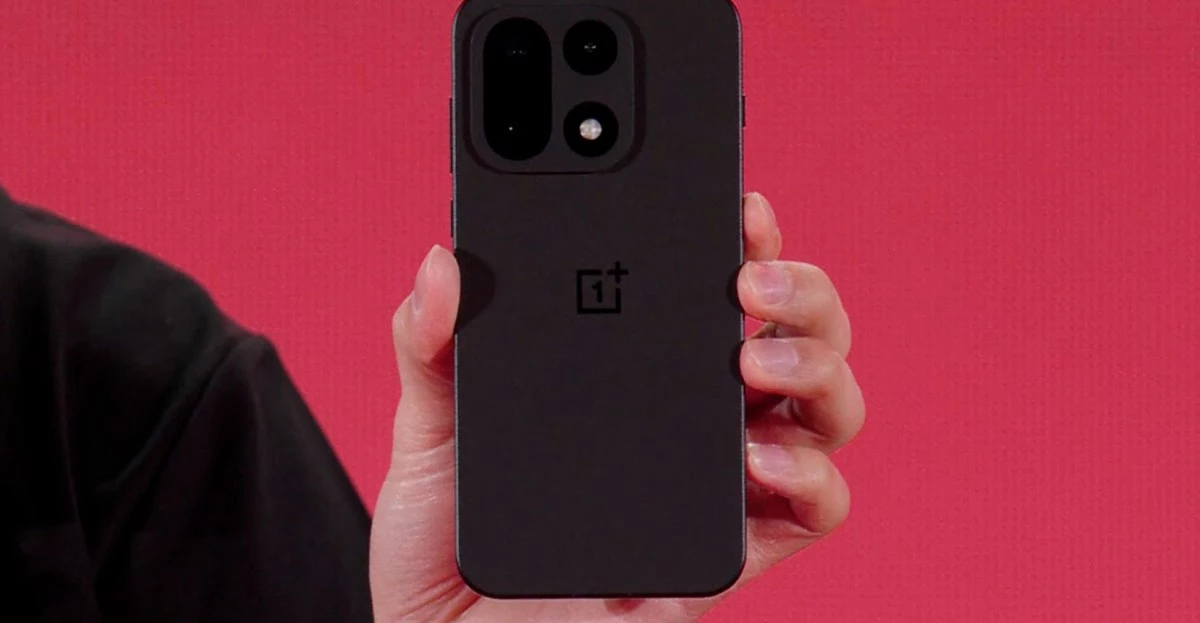

OnePlus 15: A Calculated Leap Toward AI-Centric Differentiation
In a marketplace saturated with iterative upgrades and indistinguishable silhouettes, the unveiling of the OnePlus 15 signals a rare moment of strategic clarity. OnePlus, once the upstart darling of Android enthusiasts, now finds itself at the crossroads of technological ambition and market pragmatism. The company’s latest flagship is not merely a showcase of bleeding-edge hardware; it is a declaration of intent—a decisive pivot away from legacy partnerships and toward a future defined by vertical integration, AI-driven user experiences, and nuanced cultural localization.
From Hasselblad to DetailMax: The Quiet Revolution in Imaging
Perhaps the most telling shift is the retirement of the Hasselblad co-branding, a move that transcends mere aesthetics. In its place, OnePlus introduces the in-house DetailMax Engine, a proprietary image-processing suite that marks the company’s embrace of vertical integration. This is more than a cost-saving maneuver—though the reduction in licensing and marketing outlays is nontrivial. By internalizing its image-signal processing (ISP) and computational photography stack, OnePlus gains granular control over the data pipeline, accelerating firmware updates and enabling rapid iteration as AI-powered imaging evolves from static HDR to real-time, multimodal scene analysis.
The DetailMax Engine’s debut dovetails elegantly with the Snapdragon 8 Elite Gen 5’s formidable NPU, unlocking generative features—style transfer, depth mapping, and beyond—without the latency or privacy trade-offs of cloud dependence. The result is an imaging experience that is not only faster and more secure but also more malleable, setting the stage for personalized photo enhancement models and privacy-preserving voice agents that could be monetized as subscription-based services.
Snapdragon 8 Elite Gen 5 and the High-Velocity Display: Gaming the Premium Tier
If the OnePlus 15’s imaging overhaul is a nod to the future of AI, its adoption of Qualcomm’s Snapdragon 8 Elite Gen 5 is a statement of present-day intent. Early benchmarks suggest a 20-25% uplift in CPU performance and a more than 30% gain in GPU efficiency over its predecessor. For a device that positions itself at the intersection of mainstream and gaming audiences, this matters. The inclusion of a 165 Hz display—surpassing the 120 Hz plateau that defines most flagships—serves as both a technical flex and a market signal. OnePlus is courting gamers without alienating mass-market buyers, carving out a niche that sits comfortably between the utilitarian and the aspirational.
The SoC’s support for on-device large language models (LLMs) of up to 10 billion parameters is particularly prescient. As data-sovereignty concerns intensify and regulatory scrutiny mounts, the ability to run branded AI assistants locally becomes both a competitive differentiator and a compliance safeguard. For OnePlus, this is a hedge against the tightening cross-border data regimes that increasingly shape the global smartphone landscape.
Strategic Realignment: Margins, Modularity, and Market Segmentation
The OnePlus 15’s hardware innovations are matched by a shrewd recalibration of its economic and competitive architecture. Dissolving the Hasselblad partnership trims costs at a moment when average selling prices (ASPs) for handsets have plateaued and capital markets in China grow more selective. Meanwhile, the probable replacement of the iconic alert slider with a configurable action key hints at a modular, software-first approach to user experience—one that echoes Apple’s Action Button and opens the door to upsell opportunities via user-defined automations and third-party integrations.
Within the broader BBK Group, this repositioning allows for sharper audience segmentation: OnePlus for performance-centric users, Oppo for camera purists. It is a hedging strategy reminiscent of Volkswagen Group’s careful calibration across Audi, Porsche, and beyond. The commitment to Snapdragon 8 Elite Gen 5 also secures early access to TSMC’s 3 nm wafer starts, a critical buffer against the geopolitical headwinds that threaten to disrupt supply chains.
The Broader Canvas: AI, Localization, and the Shape of What’s Next
OnePlus’s decision to skip the “14” moniker is more than a numerological quirk; it is a subtle gesture of cultural attunement, signaling respect for mainland consumer sentiment at a time when national-champion rhetoric increasingly influences purchasing decisions. The design language, with its rounded-square camera island, hints at a future multi-tier lineup with shared accessories and economies of scale—mirroring Apple’s cross-generation case compatibility and reinforcing brand cohesion.
For decision-makers across the mobile value chain, the OnePlus 15 is a harbinger. OEMs must reconsider the ROI of legacy co-branding as AI-driven software layers become the true locus of differentiation. Component suppliers are on notice: flexibility in ISP modules and AI toolchains will be rewarded. Carriers and channel partners have new opportunities in 5G gaming and XR, while investors should anticipate rising R&D capex and potential industry consolidation. Even policy teams must prepare for a world in which on-device AI both alleviates and complicates regulatory compliance.
In the end, the OnePlus 15 is not just another flagship; it is a lodestar for the next era of mobile computing, where edge AI, supply-chain resilience, and cultural fluency converge. Those who read these signals with acuity will be best positioned to capture the value of a market in rapid, intelligent flux.

 By
By
 By
By
 By
By

 By
By


 By
By







