
A Thousand Miles in a BYD Dolphin: The New Contours of European Mobility
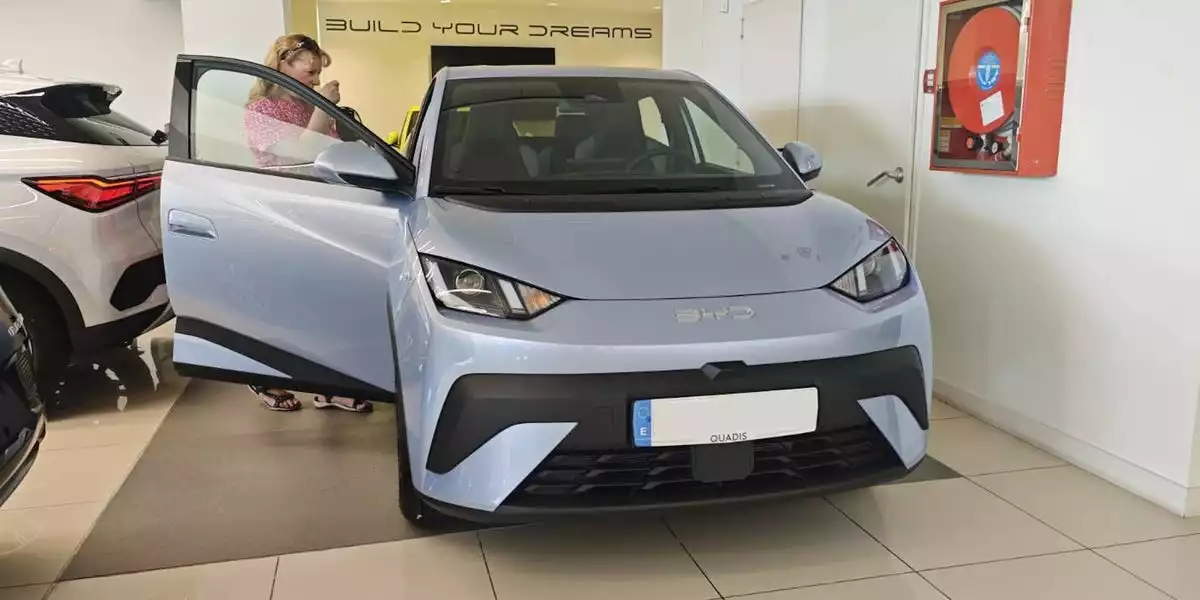
When the Verástegui family set off across Spain in their BYD Dolphin, their 1,000-mile odyssey was more than a test of battery endurance or a testament to the growing confidence in electric vehicles. It became a living tableau of the tectonic shifts now underway in the global automotive sector—shifts powered by Chinese technological ascendancy, European regulatory momentum, and the dawning realization that the next competitive battleground will be as much about software and user experience as it is about hardware.
The Rise of Integrated EV Platforms and Human-Centric Mobility
The BYD Dolphin’s performance on the open road is emblematic of the rapid maturation of Chinese EV platforms. At its core is BYD’s proprietary Blade Battery, a marvel of engineering that, when paired with embedded navigation and over-the-air (OTA) software updates, delivers a seamless, low-friction driving experience. For drivers, this means less time spent calculating range and more time enjoying the journey—a subtle but profound shift from the anxiety-laden calculus of early EV adoption.
- Vertically Integrated Design: BYD’s unified hardware-software stack reduces cognitive load and streamlines route planning, setting a new standard for user experience.
- OTA Updates: The ability to refine navigation and energy management post-purchase creates an ongoing value stream, something legacy automakers have struggled to monetize.
Yet, the most telling insight from the Verástegui family’s trip may be the reframing of “range anxiety.” Their 22-hour journey, compared to an 18-hour internal combustion engine (ICE) benchmark, was less a story of lost time and more a narrative of improved journey quality—quieter cabins, reduced stress, and enhanced climate comfort. This subtle pivot aligns with a broader consumer shift toward wellness and convenience, opening the door to ancillary services such as in-car commerce and adaptive insurance.
Economic Realignment and the Competitive Chessboard
The economic implications of Chinese EVs’ European incursion are impossible to ignore. The BYD Dolphin enters the market at a price point €5,000–€8,000 below Western competitors, a gap underwritten by a roughly 20% battery-cell cost advantage. Chinese OEMs now account for around 11% of Western European EV sales, with forecasts suggesting this could double within two years—even in the face of rising tariffs and regulatory scrutiny.
- Cost-Innovation Curve: Chinese automakers’ ability to leverage scale and supply chain integration is forcing European incumbents to accelerate their own e-platform rollouts and revisit make-or-buy decisions regarding battery technology.
- Trade Policy Crosscurrents: EU investigations into Chinese state subsidies signal a more protectionist stance, but the complexity of global supply chains means that higher tariffs could inadvertently raise costs for European brands reliant on Chinese battery packs.
For incumbent automakers, the path forward is fraught with dual imperatives: match the cost-to-value ratios of their Chinese rivals and deepen partnerships with utilities and charging networks. The latter is especially critical as software becomes the primary interface between brands and customers, and as charging infrastructure emerges as a new locus of competitive differentiation.
Infrastructure, Policy, and the Data Dividend
The Verástegui family’s relaxed, frequent charging stops are more than anecdotal—they hint at a behavioral shift that could reshape the economics of charging infrastructure. Higher utilization rates at both highway and urban nodes, combined with dynamic pricing models and dwell-time analytics, promise new revenue streams for operators. Meanwhile, the technical feasibility of vehicle-to-grid (V2G) services, already realized in Chinese domestic markets, portends a future where EVs are not just consumers of energy but active participants in grid management.
Policymakers, for their part, face a delicate balancing act. Pollution restrictions are driving adoption but risk ceding market share to non-EU manufacturers. The standardization of real-time charging data, as highlighted by the Verástegui experience, is emerging as a critical lever—one that could ensure open-platform competitiveness and prevent proprietary lock-in.
The Road Ahead: Experience, Data, and Strategic Opportunity
The implications of this new mobility paradigm ripple far beyond the automotive sector. As range confidence grows, cross-border EV tourism is poised to become a catalyst for infrastructure investment in secondary corridors, with the hospitality sector standing to benefit from differentiated EV services. The narrative of “less stress” travel is ripe for marketing alliances that blend automotive, technology, and wellness brands, echoing the recent boom in sleep tech.
Perhaps most consequential is the data dividend. Continuous telemetry from long-haul EV journeys will enrich datasets invaluable to mapping providers, insurers, and energy traders—fuel for a new wave of M&A and strategic partnerships. For institutional investors, the decarbonization of supply chains offers a compelling rationale for channeling capital into EV-centric ecosystems, even as policy debates over tariffs and data sovereignty intensify.
The Verástegui family’s journey is thus more than a personal milestone; it is a harbinger of a new era in European mobility—one where the fusion of technology, policy, and consumer experience is redrawing the competitive map. For industry leaders, the challenge is clear: adapt to the integrated, experiential, and data-driven future, or risk being left behind as the road bends toward a new horizon.

 By
By
 By
By
 By
By
 By
By



 By
By