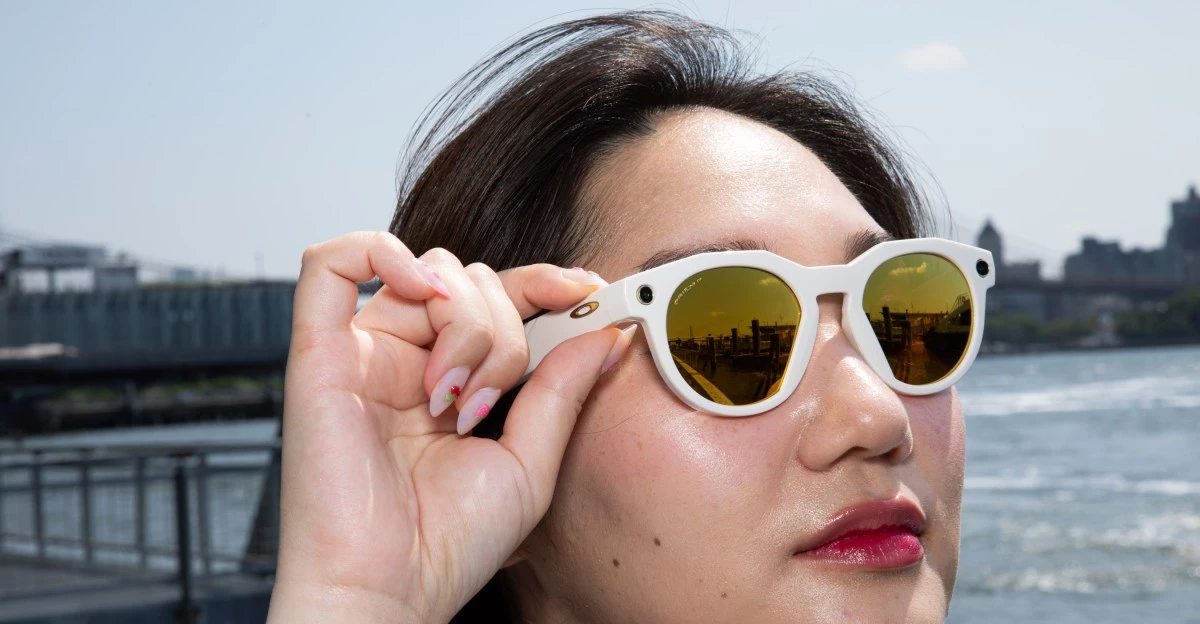

Meta’s Ambient Computing Gambit: Smart Glasses, sEMG, and the Next Platform War
Meta’s 2024 Connect conference signals a decisive turn in the company’s long-term vision, one where ambient computing and generative AI are not mere buzzwords but the scaffolding for a new technological epoch. The anticipated unveiling of the Hypernova smart-glasses line, third-generation Ray-Ban Meta eyewear, and—crucially—the opening of Horizon OS to external hardware partners, together mark a strategic pivot from social media dominance toward becoming the operating system of spatial computing.
Gesture at the Wrist: sEMG and the Rise of Invisible Interfaces
At the heart of Meta’s new hardware is a technological marvel: the CTRL-Labs-derived surface-electromyography (sEMG) wristband. This device, capable of detecting neural signals with sub-millisecond precision, transforms the wrist into a silent command center. Unlike the overt gestures or voice commands that have defined earlier AR and VR interactions, sEMG enables micro-gestures—subtle, nearly invisible movements that lower the social and cognitive friction of wearable tech.
- Precision and Latency: sEMG’s real-time signal detection enables nuanced control, a leap beyond the clunky latency of voice or touch.
- Edge AI Integration: By embedding neural inference directly on the wrist, Meta is foreshadowing a broader industry shift toward decentralized, low-power AI silicon in wearables.
This paradigm shift is not merely technical. It offers a new social contract for AR: interfaces that are private, unobtrusive, and seamlessly integrated into daily life. For enterprise and consumer markets alike, the implications are profound. The cost of retraining users—often a stumbling block for new input paradigms—may be far lower than anticipated, as intuitive micro-gestures become second nature.
Horizon OS: Meta’s Bid to Become the Android of Spatial Computing
Perhaps the most consequential move is Meta’s decision to license Horizon OS, inviting hardware partners like Lenovo and Asus to build on its platform. This echoes Google’s Android strategy, but with a spatial twist: instead of smartphones, the battlefield is AR headsets and smart glasses.
- Strategic Licensing: By opening its OS, Meta sidesteps the capital-intensive burden of subsidizing every device, instead leveraging ODM partners for scale.
- SDK Gravity: Developers are drawn to a larger, more diverse hardware ecosystem, while Meta retains control over telemetry, social graphs, and—critically—new advertising surfaces.
This approach pressures Apple’s vertically integrated model, positioning Meta as the open alternative in an emerging market. For software firms, early engagement with Horizon OS APIs could secure valuable shelf space before the ecosystem saturates. Meanwhile, the expanded Meta AI portfolio—potentially including a standalone app and on-device LLM services—binds hardware and software into a closed, self-improving feedback loop.
Economic Stakes and the Competitive Chessboard
The economics of Meta’s new hardware are finely calibrated. With an $800 price point, Hypernova targets a “prosumer” segment—above the mass-market Oculus Quest, below the ultra-premium Apple Vision Pro. The brisk sales of previous Ray-Ban Meta eyewear (2 million units) suggest that fashion-aligned devices can scale faster than headset-centric VR, provided the form factor remains discreet and comfortable.
- Supply Chain Ripples: Demand for waveguides, micro-LEDs, and next-gen gesture sensors is set to surge. Early-stage vendors in gallium-nitride power management and optics fabrication stand to benefit, or become acquisition targets as Meta’s volume commitments grow.
- Competitive Dynamics: Apple’s Vision Pro may normalize head-mounted computing for affluent consumers, indirectly legitimizing Meta’s more accessible offerings. Google and Samsung’s XR partnership now faces a Meta ecosystem that is both earlier to market and more open. Chinese players like Bytedance (Pico) are poised to accelerate AR deployments in markets insulated from U.S. regulatory scrutiny.
On the regulatory front, Meta’s willingness to share Horizon OS could be positioned as a pro-competitive gesture, even as European and U.S. watchdogs scrutinize data aggregation. Simultaneously, Meta’s investments may dovetail with Western industrial policy, anchoring domestic semiconductor and optics production in an era of geopolitical flux.
Preparing for a Post-Smartphone Reality
Meta’s methodical integration of hardware, operating systems, and generative AI is more than a product roadmap—it’s a bid to define the next computing paradigm. For business leaders and technology strategists, the signals are clear:
- Rethink User Experience: sEMG-enabled devices demand a reassessment of interface assumptions; micro-gesture control could unlock new productivity frontiers.
- Ecosystem Positioning: Early adoption of Horizon OS and related APIs may secure long-term competitive advantages.
- Advertising and Commerce: First-person data streams from smart glasses will reshape spatialized advertising and shoppable content, while raising fresh privacy challenges.
- M&A and Workforce Enablement: The coming wave of lightweight, comfortable headsets will catalyze new training, simulation, and remote-assist applications—potentially transforming enterprise workflows.
As Meta stitches together the threads of ambient computing, its ambitions extend far beyond social media. The company is positioning itself as the gatekeeper of a world where the boundaries between physical and digital dissolve—an inflection point that demands attention from every executive charting a course through the coming decade.


 By
By
 By
By

 By
By
 By
By