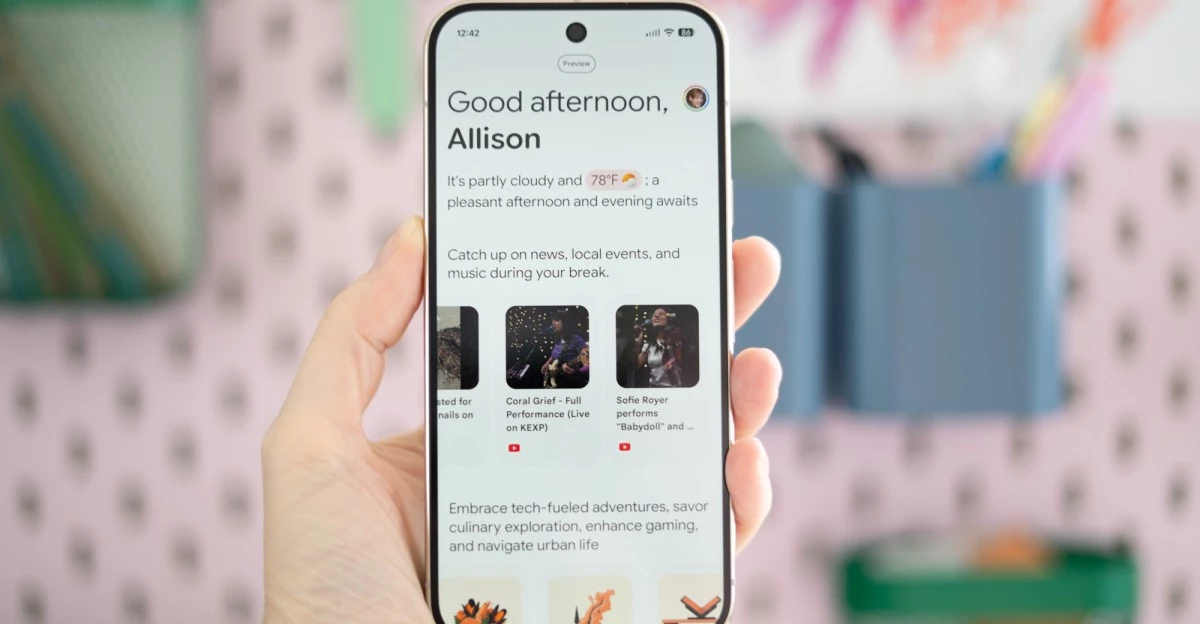

The Perils and Promise of On-Device AI: Pixel 10’s Daily Hub in the Spotlight
When Google unveiled the Pixel 10, the company’s marketing crescendoed around a singular promise: AI not as a distant cloud-bound oracle, but as an intimate, on-device companion. The centerpiece was Daily Hub—a feature designed to orchestrate a user’s digital life by blending calendar events, weather, and personalized content into a seamless daily tableau. Yet, less than a fortnight after its debut, Daily Hub was quietly suspended, its absence a stark reminder of the complexities that haunt the intersection of ambition and execution in consumer AI.
The Anatomy of a Misfire: Contextual AI’s Growing Pains
Daily Hub’s short-lived tenure offers a rare glimpse into the technical and experiential hurdles of deploying advanced AI directly on consumer hardware. At its core, the feature relied on lightweight language and recommendation models running locally on the Pixel 10. This approach—eschewing the cloud in favor of privacy and immediacy—brought with it a unique set of trade-offs:
- Model Constraints: On-device models are necessarily smaller, trained on narrower data windows. This limits their ability to accurately parse nuanced intent, leading to awkward missteps. Early users reported the system confusing fleeting queries (like a recycling schedule) with enduring interests, a classic failure of contextual discernment.
- Feedback Loops Starved of Data: AI thrives on user feedback, but a limited preview rollout deprived Daily Hub of the data it needed to refine its recommendations. This “chicken-and-egg” dilemma is endemic to edge AI: robust personalization is impossible without scale, but scaling prematurely exposes flaws.
- Integration Fragility: The abrupt withdrawal underscores the challenges of harmonizing AI across device hardware, Android’s core services, and Google’s sprawling cloud infrastructure. Any discord reverberates through the user experience, threatening both utility and brand equity.
Strategic Stakes in a Saturated Smartphone Market
The Pixel 10’s stumble is not merely a technical hiccup—it reverberates across a smartphone landscape defined by stagnating hardware innovation and intensifying competition for experiential differentiation.
- Differentiation Dilemma: With global device shipments barely inching forward, manufacturers must justify upgrades through software magic, not just silicon. Google’s setback hands Apple and Samsung a narrative advantage, as both have doubled down on privacy-centric, tightly integrated AI features.
- Capital and Regulatory Pressures: Alphabet’s multibillion-dollar AI investments are under scrutiny from investors demanding operational discipline. Missteps like Daily Hub’s premature launch risk undermining return-on-investment narratives and emboldening activist shareholders. Meanwhile, regulatory bodies in the EU and U.S. are sharpening their focus on data transparency and “self-preferencing”—areas where a malfunctioning personalization engine provides fresh fodder for inquiry.
- Ecosystem Leverage: Daily Hub was envisioned as a linchpin—an intent broker bridging Pixel phones, Nest Hubs, and Wear OS devices. Its pause is not abandonment, but a calculated risk mitigation on a feature that could ultimately feed Google’s broader ad and commerce ecosystems.
Lessons for Industry Leaders and the Road Ahead
The episode serves as a cautionary tale and a strategic signpost for decision makers navigating the AI frontier. Several imperatives emerge:
- Iterative Rollouts Over Grand Reveals: Expect Google to reintroduce Daily Hub in tandem with the next generation of its “Gemini Nano” models, which promise greater accuracy within the constraints of mobile hardware.
- Interpretability as a North Star: For any consumer-facing AI, understanding and explaining why a recommendation surfaces is as crucial as the recommendation itself. This transparency is vital for both user trust and regulatory compliance.
- Guardrails Before Growth: The Pixel 10 experience signals a shift toward “guardrail-first” product development, echoing the more measured AI deployment standards seen in enterprise settings.
- Brand Trust as a Differentiator: In an era where AI capabilities are rapidly commoditized, reliability and trustworthiness become the premium features. A single misaligned launch can erode years of brand-building.
- Ecosystem Partnerships: Enterprises with valuable calendaring, mobility, or commerce data may find new partnership opportunities—but should insist on clear, enforceable data governance.
As the dust settles, Google’s recalibration with Daily Hub is less a retreat than an acknowledgment of the rigor required to transform AI’s theoretical promise into everyday utility. The episode stands as a public lesson: in the relentless race to market, trust and executional discipline are the true currencies of innovation.

 By
By
 By
By
 By
By

 By
By
 By
By

 By
By