


A New Era of Drone Warfare: Tactical Innovation at Fort Rucker
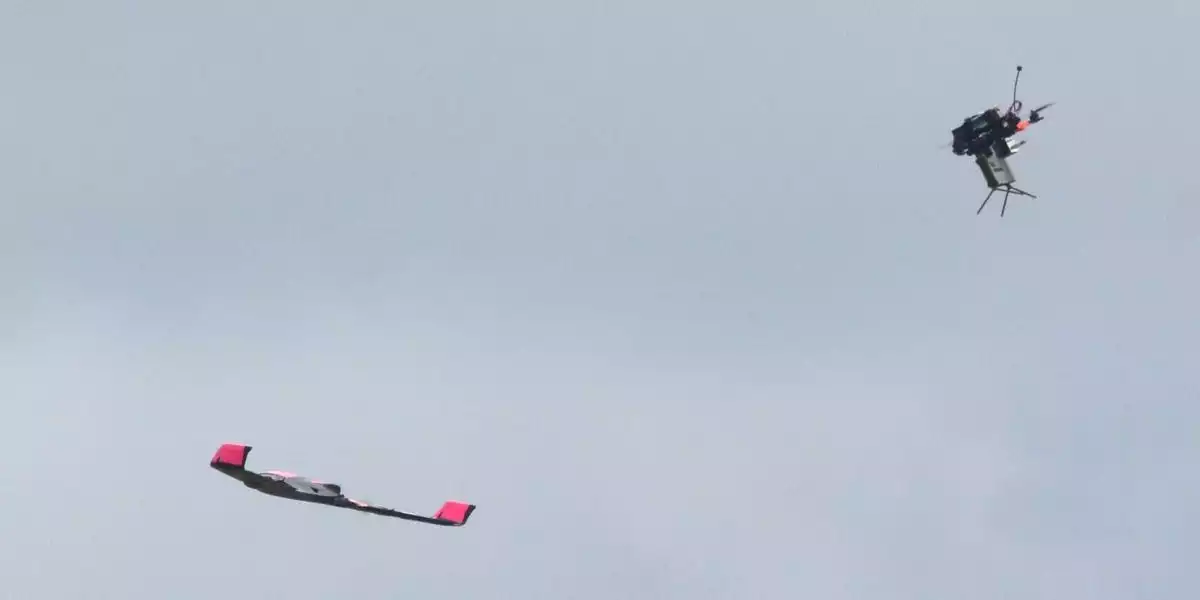
On a rain-slicked field at Fort Rucker, Alabama, two Army warrant officers recently achieved a milestone that may well redefine the modern battlefield: the first confirmed “drone-on-drone” kill by U.S. ground forces. In a six-minute ballet of first-person-view (FPV) piloting, they intercepted and neutralized a hostile quadcopter, leveraging months of intensive training and the kind of improvisational skill once reserved for elite aviators. This event, while dramatic in its own right, is merely the visible crest of a technological and doctrinal wave now sweeping through the U.S. Army—and, by extension, the global defense ecosystem.
From Hobbyist Toys to Battlefield Titans: The Technological Leap
What transpired at Fort Rucker is emblematic of a seismic shift in military technology. FPV drones, once the domain of hobbyists and weekend racers, have crossed the Rubicon into lethal, precision-guided munitions. The economics alone are staggering: $1,000 to $3,000 airframes are now capable of destroying assets that cost orders of magnitude more, upending traditional cost-exchange ratios and placing incumbent defense contractors on notice. The Army’s experience with analog video links—struggling to maintain target visibility in adverse weather—spotlights an urgent transition toward digital architectures, low-latency waveforms, and AI-assisted target recognition. Vendors capable of integrating software-defined radios, mesh networking, and edge AI are poised to capture a rapidly expanding market, not just in defense but across critical infrastructure.
The six-minute sensor-to-shooter cycle at Fort Rucker is not a fluke. It signals a doctrinal acceleration toward “hyper-short” decision loops, compressing the time between detection and action. This trend mirrors the software industry’s DevSecOps revolution, where open architectures and rapid iteration are paramount. Expect to see open data architectures that seamlessly fuse signals, electronic warfare, and kinetic effects—placing unprecedented power in the hands of a single operator.
Economic Ripples: Supply Chains, Investment, and Training
The Army’s roadmap to field organic small-UAS units in every division by 2026 is already reshaping supply chains and capital flows. Congressional scrutiny of Chinese-origin components, especially under NDAA Section 848, is driving a re-localization of critical microelectronics, firmware, and battery manufacturing. North American electronics manufacturing services (EMS) providers are primed for reshoring tailwinds and selective M&A activity, as the demand for secure, domestically sourced components intensifies.
Venture capital, too, has surged into the “defense tech” sector, with investments nearly doubling year-over-year to approximately $8 billion. The Fort Rucker demonstration provides tangible validation for investors backing dual-use autonomy, electronic warfare, anti-drone, and AI/ML startups—many of which are racing to achieve program-of-record status. Meanwhile, the regularization of FPV training is spawning a new market for mixed-reality simulators, digital twins, and e-sports-inspired curricula. EdTech innovators who can certify drone pilots across military, public-safety, and commercial domains are poised to unlock recurring revenue streams reminiscent of the cybersecurity training boom.
Strategic Realignment: Lessons, Deterrence, and Alliance Integration
The U.S. Army’s embrace of drone-on-drone tactics is not occurring in a vacuum. Lessons from Ukraine—where an estimated 10,000 drones are lost each month—have catalyzed a doctrinal rethink across NATO and allied forces. By demonstrating the ability to deny low-altitude airspace without expending scarce air-defense missiles, the U.S. signals a new deterrence paradigm to peer competitors. This pivot toward mass, attritable swarms is mirrored in the Navy’s unmanned fleet ambitions and the Air Force’s Collaborative Combat Aircraft program, collectively reshaping the calculus of military deterrence.
Interoperability is also in sharp focus. The participation of the Pennsylvania National Guard, in concert with State Partnership Programs in Eastern Europe, underscores the necessity of harmonizing tactics, techniques, and procedures (TTPs) for FPV drones. Such alignment will be critical for NATO’s evolving integrated air-and-missile defense strategies.
Beyond the Barracks: Civilian Spillovers and Executive Imperatives
The reverberations of Fort Rucker’s drone engagement extend well beyond the defense sector. Insurance underwriters are now modeling drone-on-drone mitigation as a risk-lowering factor for critical infrastructure, while telcos see a compelling case for 5G/6G private networks on military bases—potentially a harbinger for industrial campuses and smart-port deployments. Even the workforce is evolving: the FPV skills honed by gamers and e-sports athletes are proving directly transferable to both defense and commercial inspection roles, hinting at unconventional talent pipelines.
For technology firms, the imperative is clear: prioritize open, modular payload interfaces and cybersecurity-hardened command and control stacks. Industrial operators should anticipate regulatory mandates for counter-UAS layers, much as fire suppression codes became standard decades ago. Investors and boardrooms would do well to monitor divestitures as legacy primes pivot to autonomy, while policymakers must strike a delicate balance between export controls and alliance interoperability.
The Fort Rucker engagement, then, is not an isolated feat but a harbinger of a software-defined, volume-driven battlespace. Executives who treat small-UAS dynamics as a core planning variable will be best positioned to capture the outsized opportunities—and navigate the risks—as these technologies mainstream across sectors. The future, it seems, belongs to those who can see the battlespace not just as it is, but as it is rapidly becoming.


 By
By

 By
By
 By
By

 By
By
 By
By

 By
By










