

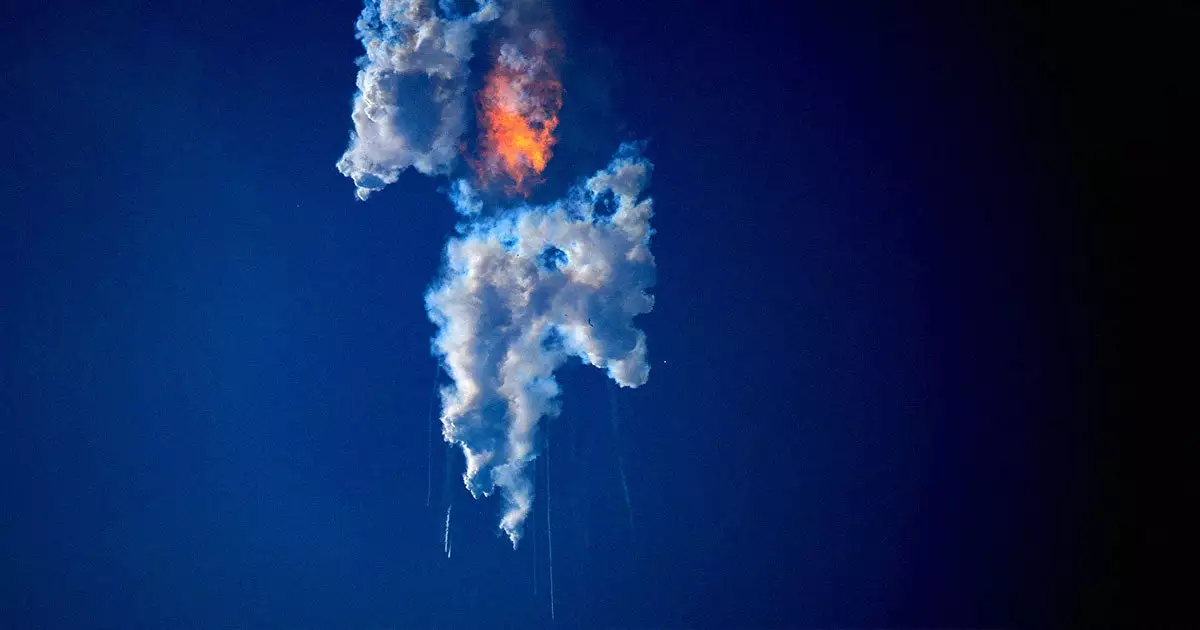

Starship’s High-Stakes Gambit: Engineering Ambition Meets Market Gravity
In the windswept expanse of Boca Chica, Texas, SpaceX’s Starship program is rewriting the rules—and the risks—of twenty-first-century aerospace. Conceived as a fully reusable super-heavy launch vehicle, Starship is the linchpin of NASA’s Artemis III lunar ambitions and the vessel for Elon Musk’s interplanetary vision. Yet, after nearly a dozen full-scale flight attempts, the program remains mired in technical setbacks, each fiery test flight a costly reminder of the chasm between aspiration and execution. The stakes have never been higher: with hundreds of millions of dollars riding on each prototype and a $500 billion valuation hanging in the balance, Starship’s trajectory is shaping not only the future of spaceflight but also the contours of capital markets, industrial policy, and geopolitical strategy.
Engineering at the Edge: Complexity, Cascade, and the Cryogenic Frontier
Starship’s technical architecture is a study in audacity. Designed to loft 150 metric tons to low Earth orbit and over 100 tons to cislunar space, it dwarfs its predecessor, Falcon 9, in both scale and ambition. The integrated system—melding Raptor engines, a stainless-steel airframe, bespoke heat-shield tiles, and the unprecedented requirement for in-orbit cryogenic propellant transfer—creates a tightly coupled engineering matrix. In this environment, failures propagate rapidly, limiting the ability to isolate and resolve issues through modular troubleshooting. The iterative “build-fly-break” cadence that has served SpaceX so well in software-inspired rapid prototyping collides here with the immutable laws of hardware thermodynamics and the practical drag of supply-chain lead times.
Nowhere is the technological audacity more apparent—or more fraught—than in the requirement for orbital refueling. NASA’s lunar landing architecture hinges on the successful autonomous transfer of over 1,000 tons of sub-cooled methane and oxygen in microgravity, a feat with no historical precedent. Each Artemis mission would require a daisy chain of up to ten Starship “tanker” flights, compressing the reliability demands of a mature airline industry into a single, unbroken mission sequence. Theoretical fluid dynamics and boil-off management models are being tested in real time, with the eyes of the world—and the capital markets—watching closely.
Capital, Cash Flow, and the Double-Edged Sword of Scale
The financial architecture underpinning Starship is as complex as its engineering. With cumulative R&D spend approaching that of legacy government programs, Starship’s unit economics are predicated on a flight cadence and reusability curve that remain, for now, theoretical. The current macroeconomic environment—marked by higher interest rates and a more skeptical venture-growth climate—has cooled investor appetite for grand-design promises. SpaceX’s vaunted valuation is inextricably linked to Starlink’s projected subscriber growth and the cost efficiencies Starship is meant to unlock, binding the two franchises into a single, high-stakes risk vector.
This interdependence is sharpened by operational trade-offs. Delays in Starship’s readiness have forced SpaceX to postpone some Falcon 9 Starlink launches, as engineering talent is redeployed to the lunar vehicle. The result is a negative feedback loop: Starlink’s next-generation satellites, too large for Falcon 9, are left in limbo, constraining revenue growth and threatening cash flow. An internal memo referencing “genuine risk of bankruptcy” serves as both a rallying cry and a stark acknowledgment of the razor-thin margins for error in heavy-asset innovation.
Policy, Competition, and the Shifting Sands of Lunar Ambition
The reverberations of Starship’s progress—or lack thereof—extend far beyond SpaceX’s balance sheet. NASA, acutely aware of the execution risk, has injected an additional $4 billion into its government-owned Space Launch System (SLS), signaling a recalibration of public-private risk and a willingness to hedge its lunar bets. This portfolio approach not only shifts negotiating leverage but also underscores the fragility of SpaceX’s first-mover advantage, with competitors such as Blue Origin and China’s Long March 9 waiting in the wings.
At the policy level, Starship’s supply chain and propulsion ecosystem align with the broader U.S. reindustrialization agenda, potentially positioning SpaceX for federal incentives. Yet, the program’s success is now entangled with national prestige: a demonstrated lunar landing before China’s projected 2030 crewed mission would confer not just technical bragging rights but also geopolitical soft power.
For enterprises and investors, the lessons are clear. Dual-track risk management—insulating core revenue streams from transformative moonshots—has never been more vital. Supply-chain optionality, particularly in advanced manufacturing, is likely to draw sustained federal attention. And for those seeking entry into the space infrastructure arena, the coming months may offer a rare window, as liquidity and valuation dynamics shift in response to Starship’s fate.
As the countdown to the next flight test begins, the world waits. In the crucible of Boca Chica, the future of lunar exploration—and the architecture of the next space economy—hangs in the balance.

 By
By
 By
By
 By
By
 By
By
 By
By


 By
By







