
Turbulence at Altitude: Air Canada’s Strike as a Mirror of Aviation’s Fragilities
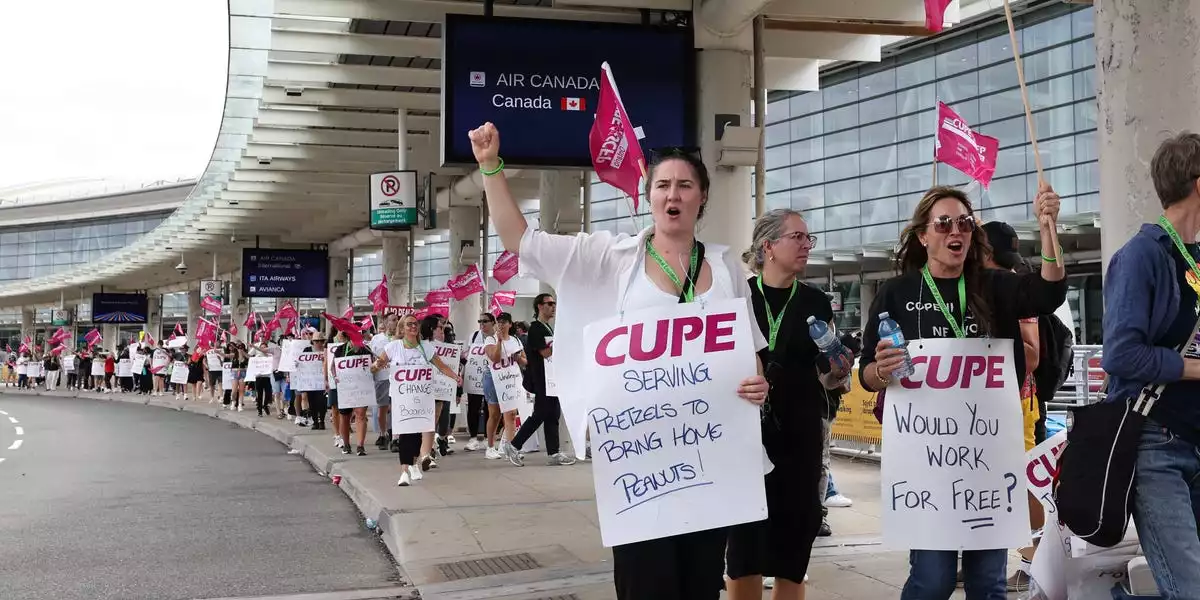
The recent turbulence at Air Canada—a three-day flight-attendant strike that grounded 2,700 flights and left 300,000 travelers stranded—offers a rare, unfiltered glimpse into the fault lines running beneath the polished veneer of global aviation. The numbers are stark: a projected CA $150–$400 million in lost revenue, cascading operational chaos, and a customer trust deficit that could echo for years. Yet, beneath these headlines lies a deeper narrative about the intersection of inflation, labor power, and brittle airline operating models—one that will shape the competitive landscape long after the last delayed bag is claimed.
The Anatomy of Disruption: Immediate and Enduring Impacts
The financial aftershocks of this walk-out are immediate and severe. For Air Canada, the revenue hit represents up to 11 percent of quarterly sales, a blow that threatens not just short-term earnings but also the delicate equilibrium of debt covenants and investor confidence. The operational fallout is equally complex: aircraft and crew are now out of sync, with network recovery expected to drag on for over a week. Each day of dislocation compounds costs, as planes burn extra fuel repositioning and lucrative connecting traffic evaporates.
But the most insidious damage may be to customer loyalty. In an era where the net present value of a frequent flyer’s allegiance can rival the cost of a cancelled flight, three days of chaos risk eroding Air Canada’s share of wallet for years. The true cost of this strike, then, is not just measured in lost bookings, but in the silent churn of high-value customers to competitors.
Inflation, Labor Leverage, and Regulatory Crosswinds
The roots of this disruption stretch deep into the economic soil. Air Canada’s headline wage offer—a 38 percent increase—translates to just 17.2 percent real growth over four years, barely keeping pace with Canada’s inflationary surge. This gap between nominal pay optics and real wage expectations is fueling a broader wave of labor militancy, not just in aviation but across logistics and technology. With unemployment at generational lows and skilled crew attrition rising, unions sense unprecedented leverage, and copycat demands from pilots, ground staff, and even airport security are almost certain to follow.
Government intervention has added another layer of unpredictability. Ottawa’s swift back-to-work order, later deemed illegal, reflects a regulatory regime caught between pro-worker rhetoric and the economic imperative of keeping travel—and by extension, GDP—moving. For airline executives, this ambiguity demands a new playbook: scenario modeling that accounts for political as well as economic variables.
Technology’s Double-Edged Sword: Legacy Systems and the Promise of AI
Perhaps the most telling revelation from this episode is the technological fragility at the heart of airline operations. Decades-old crew-scheduling systems, still common across the industry, simply cannot absorb the shock of mass labor disruptions. The future belongs to AI-driven platforms that can dynamically reconcile union rules, fatigue limits, and real-time aircraft rotations—transforming resilience from a buzzword into a competitive moat.
Yet, technology is not a panacea. The dispute over pay for ground duties highlights the need for transparent, auditable data—something that will force airlines to rethink data governance and open up API-level access to union representatives. Meanwhile, automation in the cabin—robotic galley logistics, biometric boarding—offers a tantalizing path to de-risking labor concentration, but the premium attached to human empathy in the passenger experience means augmentation, not replacement, will be the winning strategy.
Strategic Crossroads: Competitive Fallout and the Path Forward
The ripple effects of Air Canada’s ordeal extend far beyond its own balance sheet. With Canada’s seat supply still 10 percent below pre-pandemic levels, capacity tightening could drive up fares and open the door for rivals—if regulatory barriers can be navigated. Star Alliance partners, reliant on Air Canada for North American feed, now face weakened joint-venture revenue pools and the prospect of alliance drift if operational reliability falters.
For industry decision-makers, this is a clarion call to action:
- Resilience Investment: Prioritize capital for cloud-native, real-time crew management and scenario simulation.
- Regulatory Engagement: Develop policy “war rooms” to anticipate and influence government intervention.
- Labor Analytics: Integrate union sentiment monitoring into enterprise risk dashboards.
- Customer Trust Recovery: Deploy predictive compensation models tailored to customer value, not just inconvenience.
- Financial Hedging: Establish contingent credit lines earmarked for labor disruptions.
Looking ahead, the settlement will set a new benchmark for labor negotiations across the sector, tightening cost curves and accelerating the adoption of AI-enabled, adaptive staffing models. Airlines that move swiftly to monetize operational resilience will command yield premiums, especially in high-value business travel segments. If inflation and labor activism persist, Canada may even revisit its open-skies regime, inviting foreign competition and triggering a wave of industry restructuring.
The Air Canada strike is not an isolated event but a harbinger of systemic stresses—economic, technological, and social—converging on asset-intensive, customer-facing sectors. The winners will be those who convert disruption into a catalyst for operational reinvention and renewed stakeholder trust.


 By
By
 By
By
 By
By
 By
By


 By
By