

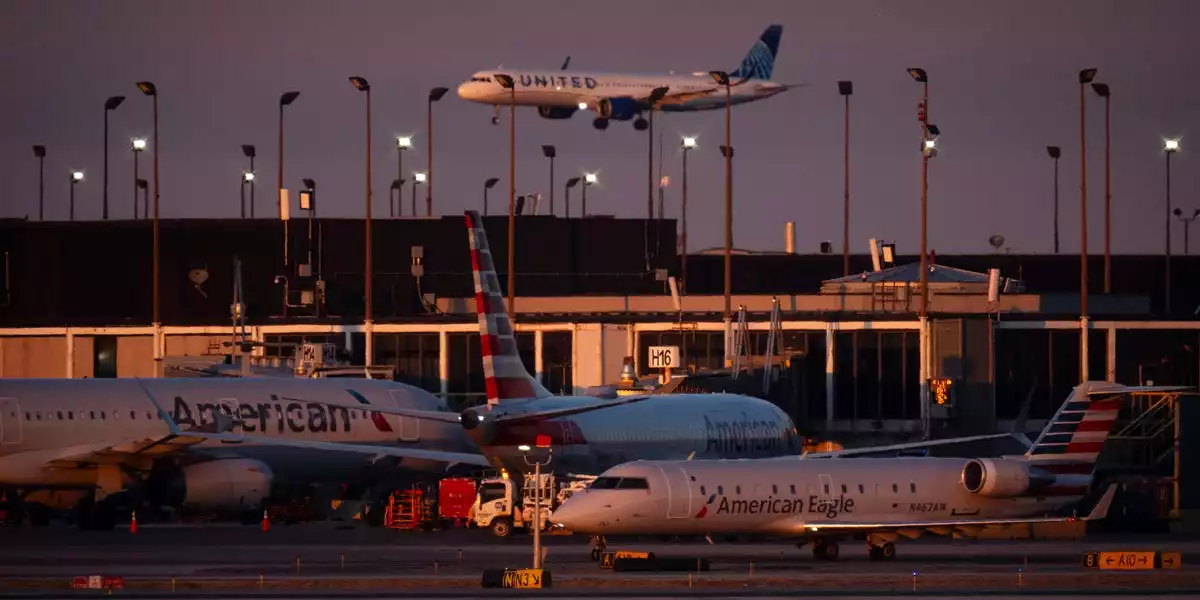

Turbulence at the Crossroads: Chicago’s Storm and the Fragility of Modern Air Networks
On a tempestuous Saturday, the skies above Chicago became an unwelcome laboratory for the vulnerabilities of modern aviation. Severe thunderstorms, sudden and unyielding, forced a dramatic reordering of North American air-traffic flows. O’Hare International—America’s second-busiest air hub—became the epicenter of a cascading disruption: at least 80 flights diverted, nearly 300 canceled, and countless itineraries thrown into disarray. The operational and economic ripples from this single meteorological event offer a stark lens on the mounting challenges facing the industry.
Anatomy of a System Under Strain
The events in Chicago were not merely a weather anomaly—they were a stress test for the entire Great Lakes airspace. As flights diverted to Grand Rapids, Milwaukee, Minneapolis, Detroit, and Indianapolis, regional air-traffic management (ATM) resources were stretched to their limits. The hub-and-spoke model, long the backbone of U.S. aviation, revealed its Achilles’ heel: concentration risk. With O’Hare handling over 40% of connecting traffic for two major carriers, a single point of failure sent shockwaves across the continent.
The financial calculus is sobering. Industry estimates peg the direct cost of each cancellation at $15,000–$20,000 and a diversion at $8,000–$12,000, not counting the secondary costs of crew repositioning and passenger compensation. Saturday’s storm, then, delivered a low-eight-figure blow—significant for airlines already squeezed by tight margins and rising costs. Meanwhile, the environmental toll was quietly mounting: additional holding patterns and reroutes added more than 1,500 metric tons of CO₂, a spike that will complicate emissions reporting and ESG disclosures.
Technology’s Promise—and Its Gaps
If the storm exposed operational fragility, it also illuminated the uneven adoption of next-generation technology. Traditional Doppler radar, with its five- to ten-minute refresh cycles, lagged behind the storm’s rapid evolution. Advanced, AI-driven “micro-casting”—capable of 30-second updates and kilometer-scale granularity—remains a rarity among U.S. carriers, despite FAA pilot programs demonstrating up to 40% better diversion avoidance.
The potential for automation extends beyond forecasting. Space-based ADS-B and AI-assisted trajectory management could have dynamically allocated holding patterns, minimizing fuel burn and passenger disruption. European air navigation service providers are already experimenting with such “dynamic 4-D routing,” while U.S. adoption is slowed by budget inertia and the complexities of ATC modernization.
Technology gaps were equally apparent at the passenger interface. Only 31% of affected flights offered real-time rebooking via mobile apps, leaving most travelers stranded in call-center limbo. By contrast, Asian carriers have embraced conversational AI, with over 70% of disruptions triaged digitally—a stark reminder that passenger experience is becoming a critical differentiator in an industry where operational setbacks are increasingly inevitable.
Economic Reverberations and Strategic Crossroads
The storm’s impact radiated far beyond O’Hare’s runways. As the nation’s fourth-largest air-cargo hub, even a day’s disruption squeezed just-in-time supply chains for high-value sectors such as pharmaceuticals and electronics. This strengthens the case for distributed micro-fulfillment centers and greater modal flexibility—think high-speed rail for sub-500-mile lanes—hedging against the volatility that now shadows every flight schedule.
Insurers and capital markets are taking note. With climate attribution science maturing, episodic weather events are rapidly becoming actuarial data points, driving up premiums for severe-storm coverage by an estimated 8–10% year-over-year. Airlines are responding by exploring parametric policies and direct investment in mitigation technology, a trend likely to accelerate as climate volatility becomes a permanent fixture.
Labor dynamics, too, are shifting. Persistent disruptions fuel duty-time overruns and crew repositioning headaches, emboldening unions to press for climate-resilience commitments at the bargaining table. The intersection of operational resilience, technological modernization, and labor relations is fast becoming a crucible for the industry’s future.
Navigating Toward Resilience in an Era of Climate Uncertainty
The Chicago storm was not a mere operational hiccup, but a microcosm of the converging pressures reshaping commercial aviation: climate volatility, digital inadequacies, and the inherent fragility of hub-centric networks. For carriers, the path forward is clear, if not easy:
- Invest in hyper-local weather intelligence—AI-driven micro-radar and forecasting platforms can pay for themselves in under two years through reduced diversions.
- Adopt dynamic, scenario-based network design—pre-positioning aircraft and crews using digital twins can yield a 3–5% reduction in systemwide delays.
- Prioritize passenger experience—proactive digital re-accommodation and seamless ground-transport integration can transform disruption into brand loyalty.
- Embed real-time carbon accounting—turning storm-related emissions into a sustainability narrative for corporate customers.
- Engage policymakers—to accelerate adoption of space-based ATM and data-sharing frameworks.
As the sector faces a structurally higher baseline of weather-induced volatility, those who treat resilience as a strategic imperative—rather than a cost to be managed—will secure not just margin protection, but also regulatory goodwill and enduring customer trust. The storm over Chicago was a warning shot; the industry’s response will define its trajectory for years to come.

 By
By
 By
By

 By
By
 By
By

 By
By
 By
By







