

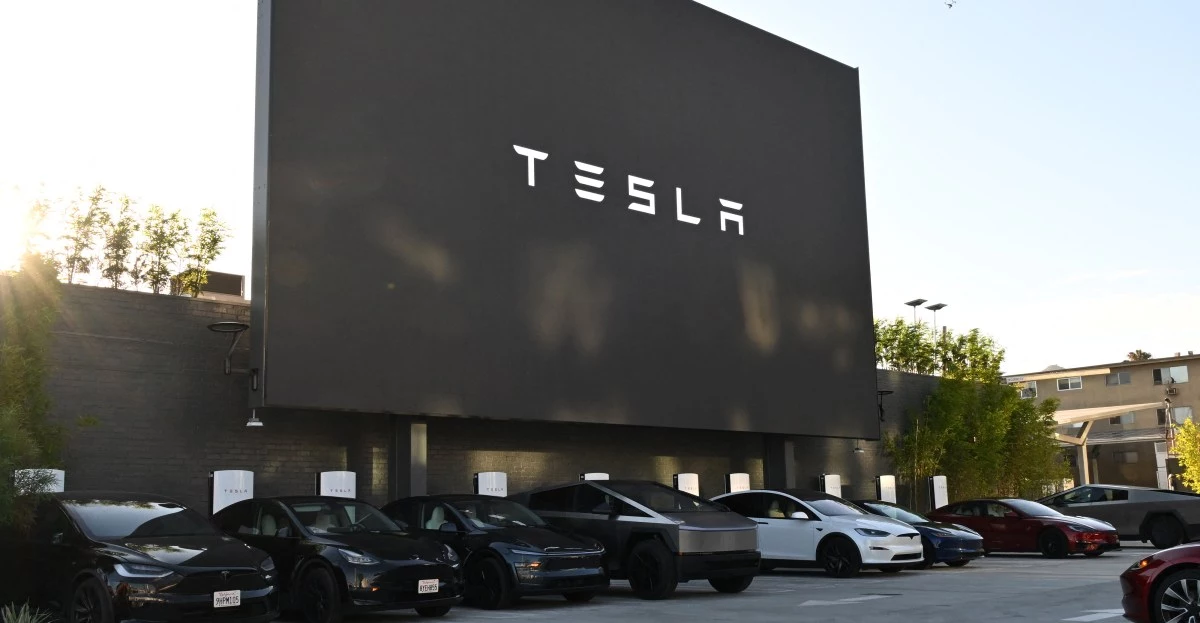

A New Kind of Charging Station: Where Electrons Meet Experience
Tesla’s unveiling of its 1950s-inspired “Diner & Drive-In Supercharger” in Los Angeles is more than a whimsical nod to Americana—it’s a meticulously engineered experiment in the future of mobility, commerce, and consumer engagement. At first glance, the site’s blend of fast-charging stalls, quick-serve dining, outdoor movie screens, and live demonstrations by the Optimus humanoid robot might seem like a spectacle designed to distract from recent headwinds in electric vehicle (EV) demand. Yet, beneath the neon glow and popcorn aroma, Tesla is orchestrating a strategic pivot that could redefine not only how we refuel, but how we spend our time—and money—while doing so.
Monetizing Dwell Time: Turning Idle Minutes Into Revenue
The fundamental challenge of EV charging is dwell time. Even with Level-3 Superchargers, drivers face a 15–25 minute window of enforced idleness. Tesla’s answer is to transform this interval from a necessary inconvenience into a curated, monetizable experience. By layering food, entertainment, and retail atop the charging platform, the company is capturing a greater “share of wallet” during each visit. The integration of restaurant point-of-sale (POS) data with vehicle and location analytics creates a behavioral dataset of rare granularity—fuel for Tesla’s machine-learning ambitions, from demand forecasting to personalized in-car commerce.
- Dwell-Time Monetisation: Charging becomes a platform, not a product.
- Integrated Data Streams: POS, energy, and mobility data converge, enhancing predictive analytics and targeted offers.
- In-Car Media Ecosystem: The drive-in’s movie reels hint at a future where cars double as micro-theatres, opening doors to content licensing, subscription models, and contextually targeted advertising.
This is not simply about selling burgers and shakes. It’s about redefining the economics of charging infrastructure, where the thin margins of quick-service dining are offset by high-margin electrons and proprietary data capture.
Robotics, Real Estate, and the Experience Economy
Tesla’s deployment of the Optimus robot, serving popcorn to diners, is more than a crowd-pleaser. It’s a live, public testbed for robotics in semi-controlled environments, a necessary leap from factory automation to commercial service. Each interaction refines edge perception, safety protocols, and human-robot rapport—critical for the eventual proliferation of automation in hospitality and retail.
The physical footprint of these drive-in sites—requiring just one to two acres—offers a compelling real-estate arbitrage. As legacy dealerships shutter and direct-to-consumer models proliferate, Tesla can secure favorable leases or redevelop underutilized parcels near freeway exits. These locations, less coveted by traditional retail, are suddenly poised to become high-value mobility hubs.
The broader context is equally transformative:
- Experience Economy Resurgence: Post-pandemic consumers crave experiences over goods, and Tesla’s nostalgic-futurist ambiance dovetails with this shift.
- QSR & Mobility Convergence: The lines between quick-service restaurants, charging infrastructure, and mobility platforms are blurring, with competitors from McDonald’s to Mercedes-Benz piloting their own hybrids.
- Grid Innovation: High-density charging plazas, paired with restaurants, justify investments in battery storage and solar PV, potentially turning these sites into virtual power plants.
Strategic Ripples: Implications for Industry and Investors
The Los Angeles diner is a prototype for a new kind of physical-digital convergence. For automakers, it signals that the battleground for customer loyalty is shifting from the vehicle itself to the ecosystem that surrounds it. For quick-service restaurant (QSR) and retail executives, co-locating with high-traffic charging hubs will soon be a core consideration in site selection, with lease premiums following grid capacity rather than foot traffic alone.
- Dynamic Pricing and Cross-Sell: Real-time data enables Tesla to bundle charging rates with meal discounts, shaping demand curves and maximizing utilization.
- Advertising Surfaces: Outdoor screens and in-dash displays form the nucleus of a nascent, hyper-targeted ad network—an untapped opportunity in the mobility sector.
- Labor Model Innovation: If robots like Optimus can perform even a fraction of repetitive QSR tasks, Tesla could pioneer a low-labor, high-automation template, a boon for operators facing rising wages.
For real-estate investors, these mixed-use mobility hubs may soon command cap-rate compression akin to logistics assets, while grid operators will find new anchor loads that justify distributed energy investments.
The Blurring of Mobility, Retail, and Energy
Tesla’s Los Angeles diner is less a retro novelty than a harbinger of the next phase in the electric-mobility economy. It’s a living laboratory for how physical infrastructure, digital data, and experiential commerce can converge to reshape not just the act of charging, but the very nature of mobility itself. For executives and strategists across automotive, hospitality, real estate, and energy, the lesson is clear: the future will belong to those who can orchestrate seamless, monetizable experiences at the intersection of electrons, data, and delight. The drive-in, it turns out, may be the proving ground for the next great wave of business innovation.


 By
By
 By
By
 By
By

 By
By
 By
By







