


The Final Descent: Felix Baumgartner’s Legacy and the Future of Human Flight
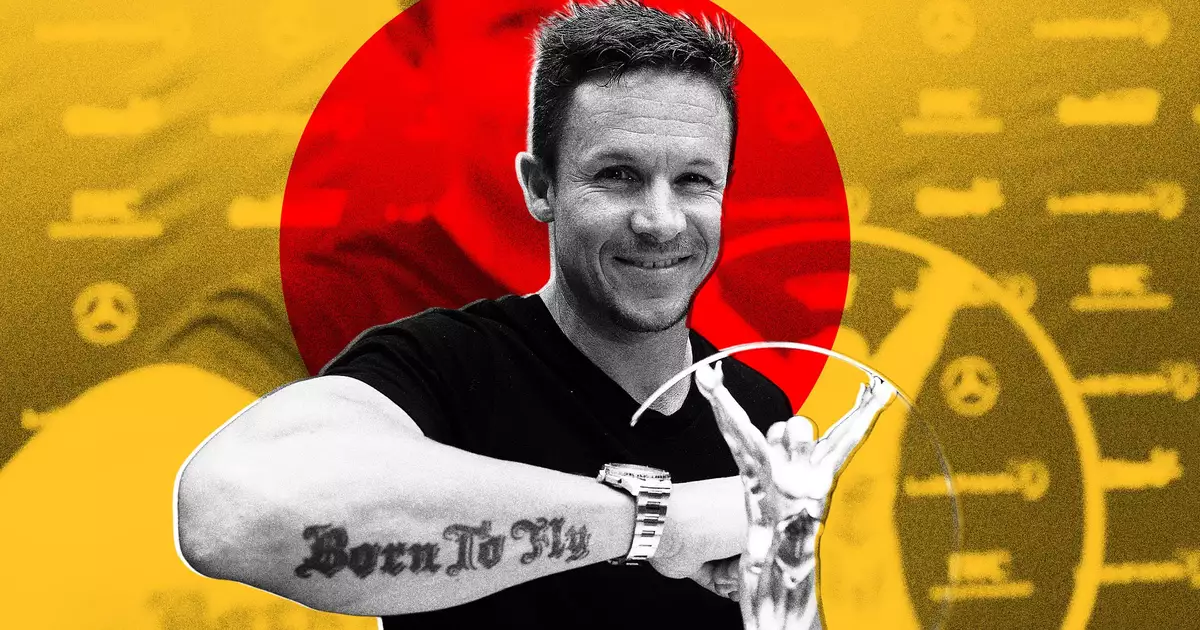
Felix Baumgartner’s name is etched in the annals of human daring—a figure whose 2012 supersonic leap from the stratosphere transformed the boundaries of possibility and spectacle. His untimely death at 56, during what was meant to be a routine motorized-paragliding flight over the Adriatic, reverberates far beyond the world of extreme sports. It is a moment that not only closes an era of record-setting aerial exploits but also casts a sharp light on the evolving interplay between technology, risk, and the business of adventure.
The Unseen Frontier: Biotelemetry, Automation, and the Limits of Human Endurance
Baumgartner’s suspected mid-air cardiac arrest exposes a critical vulnerability in solo adventure disciplines: the absence of continuous, real-time physiological monitoring. Today’s advances in biosensors and edge AI, coupled with satellite IoT, have made it technically feasible to track vital signs in real time—even in remote, high-risk environments. Yet, the adoption of such wearable biotelemetry remains sporadic. Devices, after all, add weight, can distract from the purity of flight, and exist in a regulatory gray zone that is yet to harmonize safety with personal agency.
The tension between safety automation and the ethos of manual control is palpable. Paragliders can now be equipped with auto-stabilization actuators and inertial-measurement feedback loops—technologies reminiscent of the “return-to-home” systems in consumer drones. But for many pilots, these features are anathema, a dilution of the very challenge that defines their sport. Insurers and regulators, however, are pushing for broader adoption of semi-autonomous recovery systems: deployable reserve canopies, AI-driven stall avoidance, and envelope-protection algorithms. The trajectory mirrors the gradual acceptance of advanced driver-assistance systems (ADAS) in automotive safety, suggesting that the future of flight—both recreational and commercial—will be shaped by a negotiation between human agency and machine intervention.
Extreme-sports incidents, tragic as they are, serve as crucibles for technological innovation. The crash data, material failures, and aerodynamic stresses encountered in paragliding and wingsuit flights are now informing the design of lightweight composites, high-energy batteries, and control surfaces for the burgeoning urban air-mobility (UAM) sector. What is learned at the edge of human performance migrates into the envelope-protection systems of eVTOL passenger craft, accelerating the timeline for safer, smarter urban flight.
The Economics of Spectacle: Sponsorship, Insurance, and the Experience Economy
Baumgartner’s career was as much a triumph of media innovation as it was of athletic prowess. His partnership with Red Bull exemplified the economics of “spectacle marketing,” anchoring a multi-billion-dollar branded-content ecosystem. The calculus of risk and reward is now being recalibrated. Social platforms are tightening moderation around dangerous stunts, and insurance premiums for live extreme-sports broadcasts—already on the rise—are poised to spike further in the wake of high-profile fatalities. This may catalyze a shift toward parametric insurance models, pricing coverage dynamically based on real-time biometric data rather than blanket event policies.
Meanwhile, the experience economy is at an inflection point. Audiences are migrating from passive consumption to participatory, often VR-mediated, adventure experiences. The risks laid bare by Baumgartner’s death may accelerate investment in immersive technologies: volumetric-capture rigs, haptic feedback systems, and “first-person” monetization platforms that deliver adrenaline without the specter of mortality. Studios and streamers are poised to capitalize, reducing liability while amplifying engagement.
Regulatory Realignment and the Next Chapter in Human Flight
The regulatory landscape is shifting in response to both technological possibility and public scrutiny. European and American aviation authorities are converging on new frameworks for lightweight sport aircraft, including powered paragliders. Each incident hastens the drive toward unified standards, opening opportunities for avionics vendors and compliance-tech innovators. Yet, as access to high-performance gear democratizes, a gap widens between ease of entry and risk literacy. This is fertile ground for EdTech platforms offering micro-credentials in aero-safety, echoing the rise of retail investing platforms in other sectors.
The proliferation of in-flight biometric data also raises profound questions of data sovereignty. Medical-grade telemetry is subject to stringent privacy regimes—GDPR, HIPAA—demanding privacy-preserving architectures and federated analytics. Here, the intersection of sports performance, telemedicine, and insurance underwriting is ripe for disruption by health-tech firms willing to pilot ruggedized, aviation-grade cardiac monitoring solutions.
Baumgartner’s final flight is a human tragedy and a strategic inflection point. It underscores the imperative for integrated bio-monitoring, automated safety augmentation, and a recalibrated approach to the economics of spectacle. The convergence of aerospace innovation, data governance, and experiential media is poised to redefine how risk is created, monetized, and mitigated. Those who heed these signals will shape the next generation of both safe flight and compelling human narrative.

 By
By
 By
By


 By
By

 By
By
 By
By







