
Capital concentrates as autonomous vehicles shift from promise to platform economics
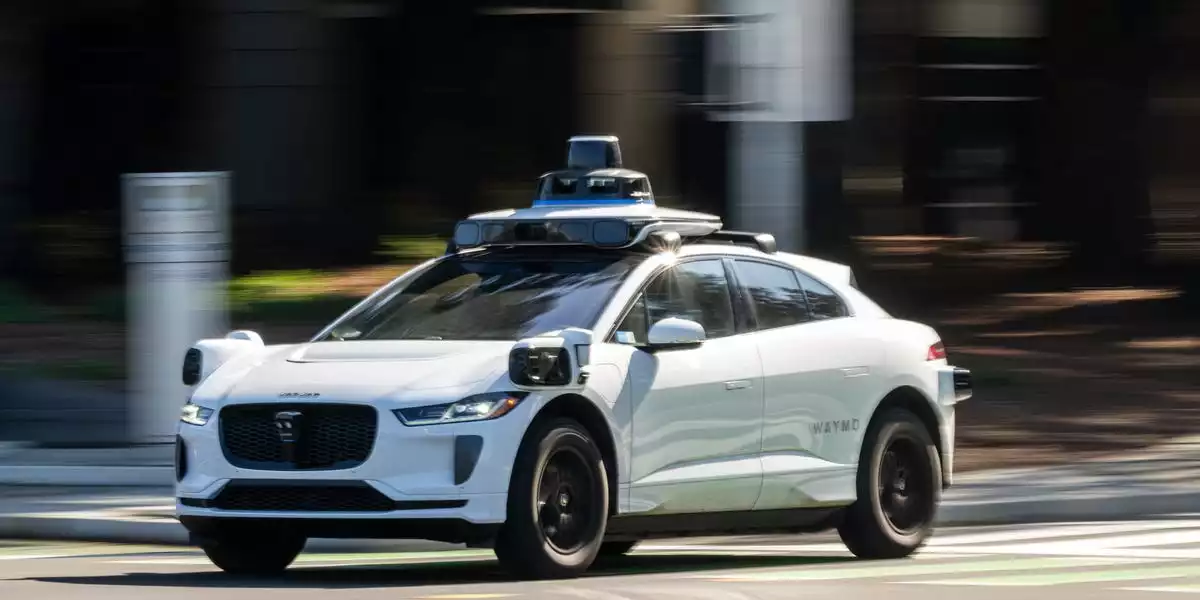
By April 2026, global venture-capital investment in autonomous vehicles (AVs) reached nearly $19 billion, the strongest showing in more than a decade. Yet the headline number tells a more specific story: Alphabet’s Waymo captured roughly $16 billion in a single round, turning what might look like a broad-based renaissance into a clear signal of capital concentration.
This is a marked departure from 2021, when funding was more widely distributed—about $9 billion across 94 deals—reflecting an era when investors could still justify a portfolio approach to autonomy: many teams, many architectures, many go-to-market hypotheses. The 2026 pattern suggests the sector is now being priced less like a speculative R&D frontier and more like a scale business with winner-take-most dynamics, where a handful of firms are seen as capable of absorbing the costs—and liabilities—of real-world deployment.
The simultaneous emergence of large raises for Wayve (about $1.5 billion) and Waabi (about $750 million) reinforces the same theme: investors are increasingly underwriting companies that can credibly bridge the gap between a strong autonomy stack and the operational reality of transportation services. In practical terms, the market is rewarding:
- Demonstrable technical moats (data advantage, model performance, safety validation)
- Commercialization readiness (fleet operations, unit economics, partnerships)
- Regulatory maturity (policy engagement, compliance systems, safety cases)
The result is a funding landscape that resembles other capital-intensive technology transitions—where early fragmentation gives way to consolidation, and where the most valuable work shifts from invention to industrialization.
The new technical battleground: integration, validation, and “second-order” reliability
The scale of Waymo’s round is not just a financial milestone; it is a proxy for the compute, sensor, and validation budgets required to operate autonomy at service-grade reliability. As AV programs mature, the differentiator is less about whether a vehicle can drive autonomously in a demo and more about whether a company can operate a fleet safely, consistently, and economically across geographies and edge cases.
Several technology implications stand out:
- Hardware–software co-design becomes strategic
Large funding rounds enable deeper vertical integration—custom AI accelerators, next-generation LiDAR/radar suites, and tightly optimized inference pipelines. This mirrors patterns seen in smartphones and cloud infrastructure: performance, cost, and reliability increasingly come from system-level design, not isolated components.
- Data-driven validation moves to center stage
Scaling AV deployment requires industrial-grade tooling for simulation, digital twins, scenario generation, and over-the-air (OTA) validation. This is where autonomy becomes as much a cloud and data engineering problem as a robotics one—creating natural alignment with hyperscalers and specialized infrastructure providers seeking to monetize high-throughput data pipelines and edge compute.
- “Second-order” systems become first-order priorities
The investor focus on companies positioned to solve fleet orchestration, predictive maintenance, teleoperations, and compliance reflects a sober recognition: autonomy is not a feature; it is a service reliability stack. This expands the AV opportunity set beyond the core driving model into adjacent categories such as:
– Cybersecurity and sensor integrity monitoring
– Aftermarket calibration and diagnostics
– Fleet management software and uptime optimization
– Safety case tooling and audit-ready reporting
In this framing, autonomy’s hardest problems are increasingly operational—measured in downtime, incident response, regulatory reporting, and customer experience consistency.
Why investors are consolidating: macro pressure, regulatory moats, and the end of “cheap optionality”
The 2016–2022 AV funding cycle produced extraordinary experimentation—and, in many cases, capital inefficiency. Today’s environment is less forgiving. Persistently high interest rates and tighter late-stage financing conditions have shifted investor preference toward companies that can justify scale spending with credible paths to revenue and defensible market position.
This is also why regulatory engagement is becoming a competitive asset rather than a compliance afterthought. Firms that invest early in public-sector testbeds, safety benchmarking, and standardization efforts can create what amounts to a regulatory moat—not by blocking competition, but by building the internal muscle to operate under scrutiny and adapt to evolving rules.
At the same time, governments in North America, Europe, and parts of Asia are expanding EV and AV testing corridors and public-private partnerships. These programs can de-risk infrastructure and accelerate deployment, but they also introduce a new competitive dimension: the ability to navigate jurisdictional differences and avoid getting trapped in fragmented “AV blocs” with incompatible safety and data-privacy regimes.
From an industry-structure perspective, the sector is beginning to resemble a classic consolidation curve:
- Early fragmentation and broad experimentation
- Coalescence around a few perceived leaders
- Expansion into ancillary services, M&A, and platform partnerships that capture value beyond the autonomy stack itself
In other words, the next wave of value may accrue less to the teams that merely “solve driving” and more to those that can package autonomy into scalable transportation economics.
Commercial gravity: fleet aggregators, supply-chain rewiring, and the next monetization layer
As AV leaders move toward service-grade deployment, the market is increasingly focused on distribution and operations—where ride-hailing and logistics platforms can become pivotal. Companies like Uber, Lyft, and Didi are often viewed as potential “fleet-of-fleets” aggregators, offering demand generation, pricing, routing, and customer interfaces that can accelerate utilization once safety and regulatory thresholds are met.
Meanwhile, the AV supply chain is poised for a reset. As developers push toward custom silicon and advanced sensor arrays, traditional Tier 1 suppliers may need to evolve from hardware-centric margin pools toward:
- Software integration and lifecycle services
- AI model certification and compliance tooling
- Data services and continuous validation support
Beyond mobility itself, autonomy’s commercialization intersects with other industries that are now becoming strategically relevant:
- Energy and charging ecosystems: smart-grid integration, rapid-charging hubs, V2I software
- Insurance and risk management: telematics-driven policies, real-time risk scoring, liability frameworks
- Urban planning and logistics real estate: autonomous freight corridors, hub redesign, land-use shifts
The 2026 funding surge is best understood as a market verdict: autonomous vehicles are no longer being financed as a collection of experiments. They are being financed as infrastructure-grade systems—capital intensive, regulation bound, operationally complex, and potentially transformative. The firms that thrive will be those that treat autonomy not as a breakthrough moment, but as a disciplined, multi-year conversion of technology into dependable, auditable, and economically resilient transportation services.


 By
By
 By
By

 By
By

 By
By
 By
By