

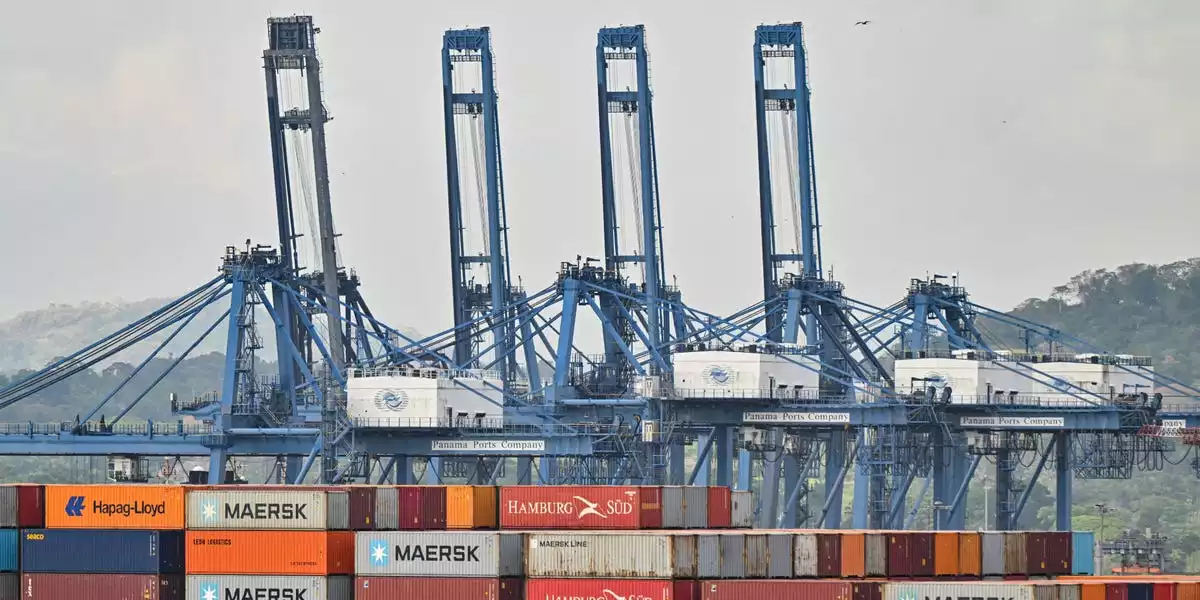

Tariffs as a structural feature of U.S. corporate planning, not a cyclical shock
A notable inflection point is emerging in boardrooms and executive suites: 86% of U.S. executives now treat tariffs as a “permanent planning assumption.” That phrasing matters. It signals that tariffs are no longer modeled as episodic disruptions—akin to a port strike or a temporary commodity spike—but as a durable constraint shaping multi-year decisions on sourcing, pricing, capital investment, and market strategy.
This shift is reinforced by policy continuity across administrations. Despite campaign-era expectations that Trump-era trade measures might be rolled back, the Biden administration has largely retained many existing levies while also adding targeted duties—notably on Chinese electric vehicles and other strategic categories. For corporate leaders, the message is clear: the U.S. tariff regime is increasingly bipartisan in persistence, even if the rhetoric and sectoral emphasis differ.
Looking ahead, the prospect of a second Trump term introduces a different kind of risk: not merely persistence, but expansion and broadening. The scenario described—reimposing duties recently struck down by the Supreme Court and contemplating universal duties in the 10–15% range—would effectively convert tariffs from a targeted tool into a quasi-systemic import tax. Even the consideration of such measures can influence behavior today, because supply chains and factory footprints cannot be rebuilt on election-cycle timelines.
The macroeconomic trade-off: inflation, fragmentation, and industrial policy by other means
Persistent tariffs carry a familiar macroeconomic tension: they can support domestic production goals while raising input costs across the economy. When tariffs apply to intermediate goods—components, subassemblies, industrial materials—companies face a dual squeeze:
- Margin compression when firms absorb costs to protect volume
- Pricing power erosion when customers resist pass-through increases
- Inflationary pressure that complicates central-bank efforts to stabilize prices
At the same time, executives are accelerating supply-chain diversification to reduce exposure to any single tariff corridor. The result is a more regionalized trade map, with Mexico and Southeast Asia frequently positioned as nearshore or “China+1” alternatives. This is not simply a procurement tweak; it is a structural move toward supply-chain fragmentation—a world where resilience and policy alignment increasingly outrank pure unit-cost optimization.
Tariffs are also becoming a more explicit instrument of U.S. industrial strategy, particularly in sectors tied to national competitiveness and security. The combination of tariffs, subsidies, and regulatory preferences is effectively steering investment toward domestic or allied production in areas such as:
- Electric vehicles and battery supply chains
- Semiconductors and advanced electronics
- Clean energy components and grid infrastructure
For businesses, this creates a landscape where competitive advantage is shaped not only by technology and execution, but also by policy fluency—the ability to anticipate how trade rules and industrial incentives will evolve together.
How companies are rebuilding strategy: resilience, portfolio shifts, and tariff-aware finance
The executive sentiment data suggests adaptation is already underway: 90% say their companies are stronger than two years ago, and 64% believe they are proactively adapting rather than reacting. That confidence likely reflects a hard-earned operational reset since the pandemic-era supply shocks—now extended into a tariff- and geopolitics-driven operating model.
A central strategic pivot is the replacement of “lean” with “resilient.” Companies are increasingly willing to pay for:
- Redundancy (backup suppliers and alternate lanes)
- Dual-sourcing across tariff jurisdictions
- Flex capacity that can shift production by region
This resilience-first posture is also reshaping corporate portfolios. Multinationals are reassessing where physical goods distribution into the U.S. remains attractive under higher duty assumptions, while accelerating growth in tariff-immune or tariff-light offerings, including software, digital platforms, and services. It is not that goods are becoming obsolete; rather, firms are balancing exposure by expanding revenue streams that are less sensitive to customs regimes.
Finance and tax functions are being pulled deeper into trade strategy as well. With tariffs embedded in landed cost, CFOs and tax teams are revisiting:
- Transfer pricing models to preserve margin while meeting compliance expectations
- Customs valuation and classification practices that determine duty liability
- Intercompany invoicing structures that can inadvertently amplify tariff burdens
In this environment, “trade compliance” is no longer a back-office function—it is becoming a lever of profitability and risk control.
Technology’s role: from trade-tech stacks to automation and the energy transition
As tariffs become more dynamic and politically contingent, companies are investing in digital supply-chain orchestration to model duty exposure in real time. The emphasis is shifting toward systems that can sense, simulate, and reroute—especially when tariff changes can quickly flip the economics of a lane or supplier. Key tools gaining traction include:
- AI-driven demand sensing and scenario modeling for tariff impact forecasting
- IoT sensor networks for real-time visibility into inventory and shipment status
- Blockchain-based provenance to substantiate origin claims and reduce compliance risk
Meanwhile, higher and more persistent tariffs strengthen the business case for advanced manufacturing and automation. Robotics, additive manufacturing, and flexible production cells reduce reliance on labor arbitrage and can make localized production more viable—even when unit costs appear higher on paper.
The energy transition adds a further layer of complexity. Tariffs on green technologies—solar modules, EV imports, and related components—can simultaneously:
- Raise project costs and slow deployment in the short term
- Create protected demand for domestic clean-tech manufacturing
- Reshape sourcing strategies for developers, utilities, and OEMs
For executives, the strategic question is less “Are tariffs good or bad?” and more: Which parts of the value chain become advantaged, and which become structurally disadvantaged, under a tariff-permanent world?
The companies best positioned for the next phase will treat tariffs as a design constraint—embedded into governance, technology systems, and capital allocation—rather than as a quarterly surprise. In a global economy increasingly organized around strategic competition and regional blocs, tariff mastery is fast becoming a core competency of modern corporate leadership.

 By
By
 By
By
 By
By

 By
By


 By
By







