


The Army’s Digital Pivot: Reimagining Command and Control for the Age of Software
The U.S. Army’s Next Generation Command and Control (NGC2) initiative marks a watershed moment in the evolution of military technology, signaling a deliberate break from the ponderous, requirements-driven procurement cycles of the past. In their place, the Army is embracing an agile, “fail-fast” ethos—one that borrows liberally from the playbooks of Silicon Valley’s most disruptive software ventures. This transformation is not merely about upgrading battlefield gadgets; it is about reengineering the very DNA of defense innovation, compressing decision cycles, and recalibrating the balance between speed and security in an era of relentless technological flux.
From Monolithic Systems to Modular Agility: The Architecture of Modern Command
At the heart of NGC2 lies a radical rethinking of how data flows and decisions are made on the battlefield. The program’s architecture—reminiscent of cloud-native, micro-services environments that power the world’s leading tech firms—aggregates sensor inputs from across domains, fuses them with artificial intelligence and machine learning, and delivers actionable intelligence to soldiers at the edge in near real time.
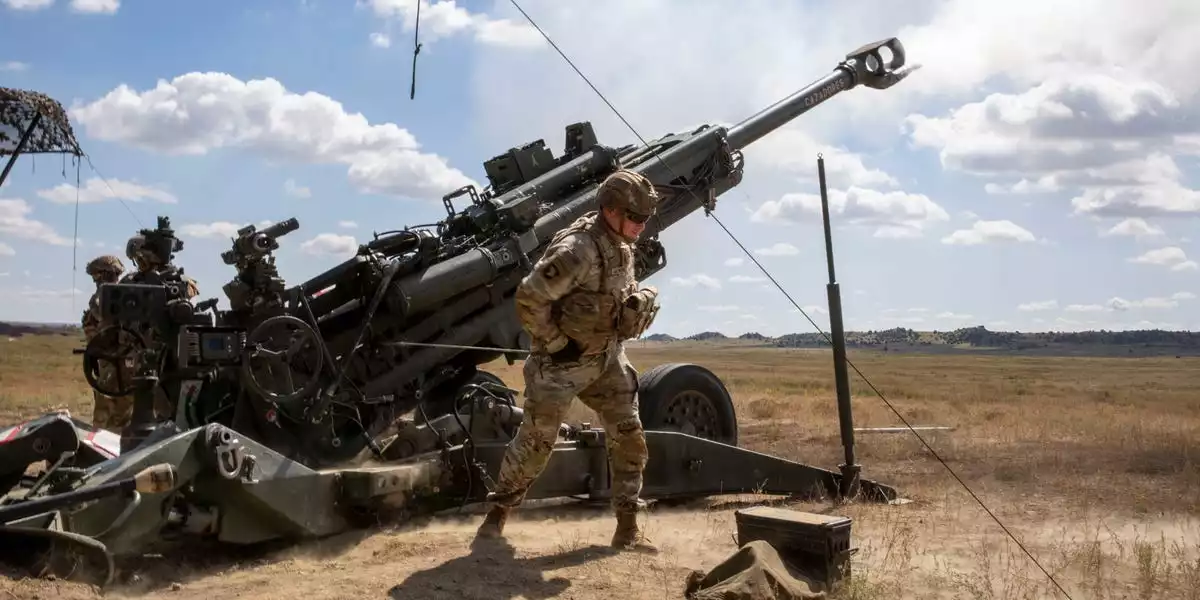
- Sensor-to-shooter timelines that once spanned minutes now collapse to seconds, as illustrated by the M777 Howitzer’s leap in firing solution speed.
- Modular, open architectures enable rapid upgrades and integration of new capabilities without the need for full system recertification, mirroring best practices from commercial software development.
- Continuous Authority to Operate (cATO) and DevSecOps pipelines, championed by the Department of Defense CIO, are replacing the traditional, years-long certification gauntlet with iterative, sprint-based development.
Yet, this newfound velocity is not without its perils. Early cybersecurity assessments have surfaced vulnerabilities that, if left unchecked, could become vectors for adversarial exploitation. The imperative for Zero Trust frameworks—capable of being validated in weeks, not years—has never been more acute. In this environment, cybersecurity is not a compliance afterthought but a frontline operational parameter, demanding the same iterative rigor as feature development itself.
The Economics of Disruption: New Players, New Models
NGC2’s embrace of agile, software-first procurement is reshaping the defense industrial base with seismic consequences. Where once legacy primes dominated, today’s landscape is increasingly populated by venture-backed software upstarts—Anduril, Palantir, and others—whose capital efficiency and rapid prototyping capabilities are rewriting the rules of engagement.
- Venture investment in dual-use defense startups soared past $8 billion in 2023, a testament to the sector’s newfound dynamism.
- Commercial off-the-shelf components are supplanting bespoke hardware, compressing integration timelines but also exerting downward pressure on traditional profit pools.
- Budgetary innovation is evident as Congress grows more receptive to annually re-baselined software modernization line items, even as continuing resolutions complicate agile roadmaps and cash-flow forecasting.
This economic realignment is not without risk. The Army’s reliance on commercial silicon introduces new supply-chain vulnerabilities, particularly given the geopolitical volatility of East Asia’s semiconductor corridor. Legislative responses like the CHIPS Act and the Trusted Capital Marketplace offer partial hedges, but they also threaten to reintroduce compliance friction that could erode the very speed advantage NGC2 seeks to achieve.
Strategic Stakes: Cybersecurity, Deterrence, and the Future of Allied Warfare
The strategic ramifications of NGC2 extend far beyond the U.S. Army. The program’s acceleration of command and control is tightly coupled with the Pentagon’s Replicator initiative, which aims to field thousands of autonomous systems in response to China’s mass-production doctrine. NATO allies, eyeing their own Federated Mission Networking upgrades, are watching closely—both for lessons in interoperability and for the export-control debates that inevitably accompany AI-enabled warfare.
But as the velocity of capability deployment increases, so too does the attack surface. Adversaries are likely to target the weakest links in rapidly iterated software, making a single unpatched micro-service a potential Achilles’ heel. Congress and oversight bodies are already signaling a shift in how program success will be measured—mean time to vulnerability patch and operational cyber-uptime may soon eclipse traditional metrics of readiness and lethality.
For defense and technology executives, the implications are clear:
- Modular, open-architecture subsystems will dominate future procurement, rewarding plug-and-play designs that reduce integration risk.
- Continuous penetration testing and red-teaming must become embedded in every sprint, as “secure by design” shifts from a value-add to a contractual baseline.
- Outcome-based and subscription pricing models will supplant cost-plus contracts, aligning incentives with rapid capability delivery and recurring upgrades.
For investors, the calculus is equally nuanced. Dual-use software startups with commercial traction will command premium valuations, but exit horizons will increasingly hinge on their ability to navigate the labyrinth of classified environments and shifting policy regimes.
The NGC2 program is a crucible—a test of whether the U.S. defense establishment can internalize the iterative, risk-tolerant ethos of the commercial tech world without sacrificing operational integrity. Should it succeed, the diffusion of commercial technology into defense will accelerate, redrawing the boundaries of the industrial base and reshaping the tempo of military innovation for a generation.

 By
By
 By
By
 By
By


 By
By

 By
By


 By
By
 By
By








