

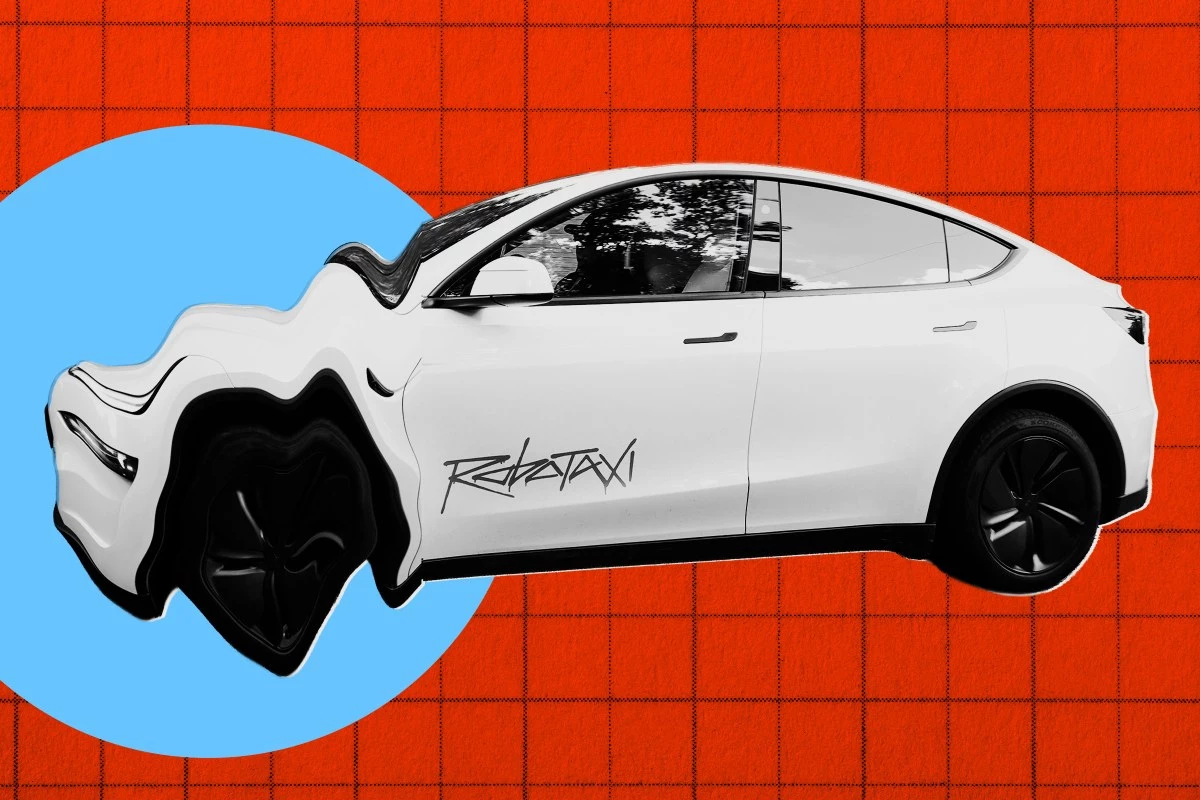

Austin’s Robotaxi trial is becoming a real-world stress test for Tesla’s autonomy narrative
Since the June 2025 launch of Tesla’s Austin Robotaxi service, U.S. safety regulators have logged 14 crashes tied to the program, with five occurring between December 2025 and January 2026, according to NHTSA data. On its face, the number is not extraordinary for a new mobility pilot—until it is normalized by exposure.
By Tesla’s own reporting, the fleet’s crash frequency sits at roughly one accident per 57,000 miles. That compares unfavorably with the U.S. driver average of about one per 229,000 miles, and with Waymo’s one-per-98,000-mile rate across 127+ million driverless miles. The contrast is sharper given Tesla’s operational constraints: fewer than 50 vehicles, operating in a geofenced zone, with a limited operational design domain that should, in theory, reduce risk.
For investors, regulators, and enterprise buyers evaluating autonomous mobility, the emerging signal is less about any single incident and more about what the aggregate suggests: Tesla’s Robotaxi system is encountering repeatable failure modes in relatively structured, low-speed environments, where mature autonomy stacks are expected to be most reliable.
Key comparative indicators now shaping the conversation include:
- Collision rate vs. benchmarks: Tesla’s reported frequency implies a collision rate ~4x higher than human drivers and nearly 2x Waymo’s on a miles-driven basis.
- Scale disadvantage: Tesla’s Robotaxi exposure is estimated near ~800,000 miles, a fraction of the data volume available to leading competitors.
- Operational maturity gap: A small, geofenced fleet should be a controlled learning environment; persistent incidents in that setting raise questions about readiness for broader deployment.
What the crash patterns imply about camera-only autonomy and edge-case handling
The collision profiles described—fixed objects, stationary vehicles, and backing maneuvers—are especially revealing because they are not exotic highway scenarios. They are the kinds of “everyday robotics” problems that test whether an autonomy stack can reliably interpret depth, occlusion, low-contrast objects, and intent prediction in constrained spaces.
From a technology standpoint, these patterns point to two likely pressure points:
- Perception limitations in a vision-first stack: Tesla’s camera-only approach is designed to scale economically, but the reported incident types are consistent with the hardest parts of pure vision: depth inference under ambiguity, object permanence, and rare-but-critical corner cases (e.g., unusual geometry, lighting transitions, partial occlusions).
- Path planning and low-speed decision-making: Backing and close-quarters maneuvers demand conservative trajectory planning, precise localization, and robust “last-meter” reasoning—areas where small errors can translate into contact events even at low speeds.
This is where the industry’s philosophical divide becomes commercially consequential. Waymo and other Level 4 programs have generally favored sensor fusion—often combining cameras with lidar and radar—to reduce uncertainty and provide redundant modalities. Tesla’s bet is that software and data scale can compensate for leaner hardware. The Austin record to date suggests that, at least in this deployment phase, the trade-off may be showing up as higher incident frequency.
For enterprise decision-makers, the takeaway is practical: autonomy performance is not only a function of model sophistication, but of observability—what the system can reliably “see” and verify across conditions. In safety-critical automation, redundancy is not aesthetic; it is an engineering strategy.
Transparency, reporting friction, and why governance is becoming a competitive feature
Beyond the technical debate, Tesla’s Robotaxi program is also colliding with a governance reality: autonomous systems are increasingly regulated as high-risk technologies, and the credibility of safety claims depends on timely, complete, and comparable disclosures.
Tesla has faced scrutiny for delayed and heavily redacted crash reporting, citing confidentiality, and was reportedly compelled to revise a July 2025 accident report to acknowledge hospital-treated injuries. Even if redactions are legally defensible, the optics and downstream effects are material:
- External validation becomes harder: Redacted incident narratives limit independent assessment of causality, contributing factors, and whether mitigations are effective.
- Network effects weaken: The autonomy field benefits when incident learnings propagate—through shared taxonomies, standardized reporting, and cross-industry safety practices. A closed loop can accelerate internal iteration, but it can also increase the risk of overfitting to proprietary data distributions.
- Regulatory posture tightens: NHTSA is intensifying enforcement around timely and transparent crash reporting, while state authorities—Texas included—retain leverage through permitting and operational constraints.
Globally, the direction of travel is clear. Europe’s forthcoming AI Act is expected to impose stricter obligations for risk classification, audit trails, and incident disclosure for high-risk autonomous systems. That raises the strategic bar: autonomy leaders may increasingly compete not just on driving performance, but on compliance readiness and verifiable safety governance.
Strategic ramifications: sensor choices, business model flexibility, and valuation sensitivity
Tesla’s Robotaxi ambitions are intertwined with its broader market narrative—one that assigns significant value to autonomy, robotics, and AI-driven margin expansion. A prolonged safety plateau, or escalating regulatory probes, could therefore affect Tesla in three reinforcing ways:
- Economic exposure per incident: At-fault events can drive uninsured liabilities, insurance costs, operational pauses, and reputational drag—potentially erasing savings from a lightweight sensor suite.
- Competitive positioning vs. Waymo: Waymo’s multi-city footprint and safety monitor-free operations provide a stronger foundation for regulatory goodwill and consumer trust. Tesla’s current “confined zone + safety-driver” posture complicates the promise of rapid, fully driverless scalability.
- Valuation sensitivity: In a higher-rate environment with capital-intensive AI and robotics roadmaps, markets tend to discount narratives that lack near-term proof points. Autonomy is not merely a feature roadmap; it is a multiple-defining thesis.
Several forward paths are now plausible, each with distinct implications for cost structure and credibility:
- Multi-modal sensing pivot: Adding radar and/or lidar—whether through in-house integration or partnerships—could close perception gaps and accelerate reliability, at the expense of hardware simplicity.
- Independent verification regime: A standardized, third-party incident reporting framework—an autonomy analogue to GAAP-like comparability—could reduce regulatory risk and rebuild trust.
- Tiered Robotaxi product design: Tesla could segment service levels (e.g., camera-only in low-speed zones; sensor-augmented in complex urban routes) to balance unit economics with safety thresholds.
The Austin Robotaxi data is still early, but it is already shaping the central question facing the autonomous vehicle sector: whether the next phase of commercialization will be won primarily by software iteration speed, or by the more conservative formula of redundant sensing, transparent governance, and scale-tested safety performance.


 By
By

 By
By
 By
By
 By
By
 By
By
 By
By







