

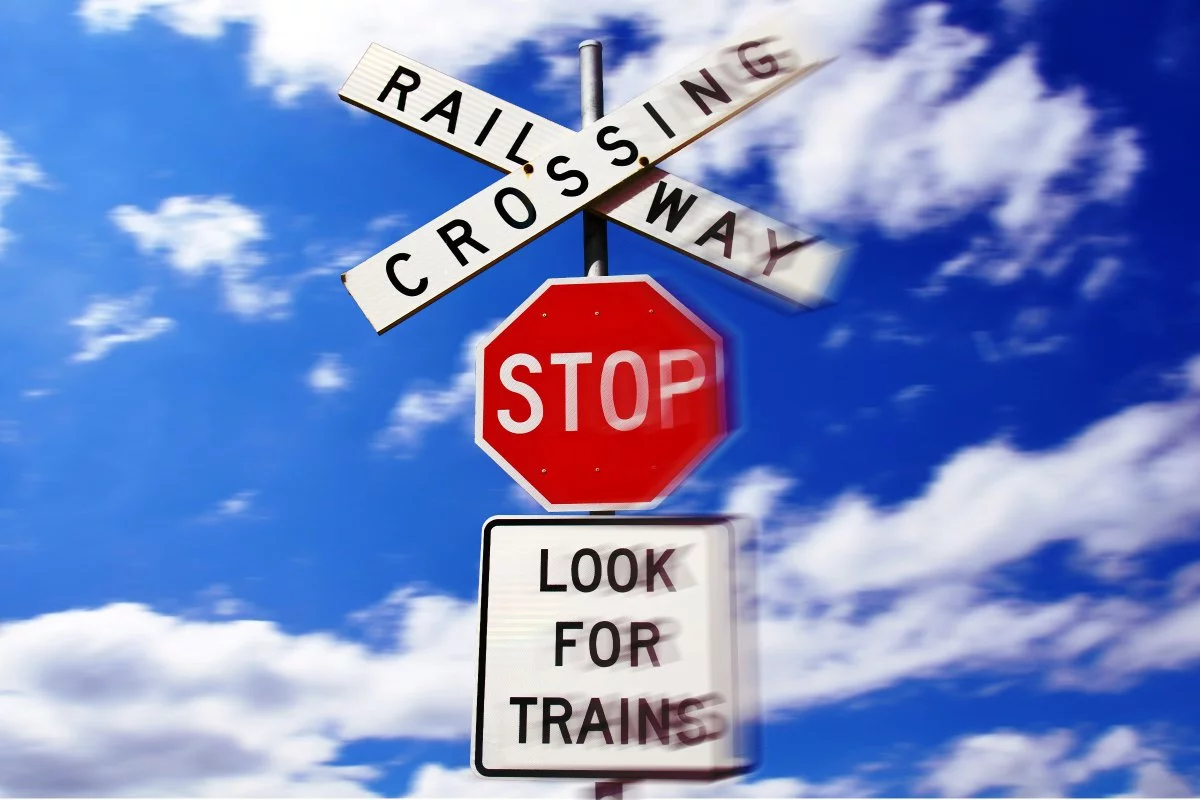

A near-miss at a Texas rail crossing exposes the hard limits of “supervised autonomy”
The reported incident in Plano, Texas—where Tesla driver Joshua Brown says his vehicle unexpectedly engaged Full Self-Driving (FSD) and accelerated through active railroad crossing arms as a train passed—lands with unusual force because it compresses the autonomous-driving debate into a single, visceral moment. Railroad crossings are not merely another roadway feature; they are high-consequence, binary-risk environments. Either the vehicle remains stopped, or the outcome can be catastrophic.
What makes this episode especially instructive is not only the narrow escape, but the way it illustrates the current operating reality of consumer autonomy: the system can behave confidently in situations where confidence is least deserved, while the human driver remains the ultimate safety layer. Brown’s decision not to pursue legal action—paired with his acknowledgement of Tesla’s repeated driver-attention warnings—does not neutralize the event’s significance. Instead, it underscores the industry’s central tension: advanced driver assistance systems are marketed and experienced as transformational, yet they still depend on continuous human supervision to manage rare but deadly edge cases.
The echo of the 2016 Florida fatality involving another driver named Joshua Brown adds a sobering historical rhyme. Nearly a decade of rapid iteration has improved many aspects of automated driving, but the persistence of high-severity failures suggests that progress is uneven—strong in routine conditions, brittle in the margins where safety matters most.
Why railroad crossings remain a “stress test” for perception, prediction, and control
From a technology standpoint, gated rail crossings are a perfect storm for autonomy stacks. They combine unusual geometry, fast-changing signals, occlusions, and a moving hazard that is both massive and sometimes difficult for computer vision to interpret correctly depending on angle, lighting, and background clutter.
Several technical fault lines are implicated by a scenario like this:
- Perception and sensor-fusion ambiguity
– Complex scenes can cause misreads: crossing arms, flashing lights, and the train itself may be detected but not weighted properly in the driving policy.
– If the system’s fused model underestimates the crossing’s “do not proceed” constraint, it may choose acceleration when it should default to immobility.
- Edge-case handling and “rare event” economics
– Machine-learning systems excel where data is abundant and patterns are consistent. Rail crossings are comparatively infrequent, highly variable, and locally idiosyncratic.
– The cost of being wrong is disproportionate: a single misclassification at a crossing is not a minor driving error—it is a potentially fatal decision.
- Human-machine interaction as a design dependency
– Tesla’s FSD, like many consumer systems, is effectively Level 2 supervised automation: the driver is expected to monitor and intervene.
– The safety model therefore depends on human vigilance precisely when automation can induce complacency—an effect long documented in aviation and industrial automation.
This is where the incident becomes more than a one-off. It highlights a structural challenge: the handoff between machine initiative and human responsibility is not a seamless partnership. If the system initiates motion at the wrong time, the driver must recognize the error instantly, override decisively, and do so under extreme time pressure. That is not merely a training issue; it is a product-design and systems-engineering problem.
Business, valuation, and regulatory pressure points converging around FSD safety
For Tesla, autonomy is not just a feature—it is a strategic narrative tied to margin expansion, platform value, and long-term differentiation. Events like this can therefore ripple beyond safety discourse into brand equity, investor expectations, and regulatory posture.
Key business implications include:
- Investor confidence and valuation sensitivity
– Recurrent high-profile safety concerns can pressure the market’s willingness to assign a premium multiple to autonomy-driven growth assumptions.
– The risk is not only litigation; it is regulatory drag, delayed feature rollouts, and reputational friction that slows adoption.
- Insurance and total cost of ownership
– Near-miss telemetry and incident patterns can influence underwriting models, potentially raising premiums for vehicles equipped with advanced automation features.
– Higher insurance costs can dampen consumer uptake, particularly if perceived benefits are offset by perceived risk.
- Regulatory scrutiny and standardization momentum
– Federal and state agencies may accelerate efforts to define standardized safety thresholds, scenario-based testing, and clearer terminology around “self-driving.”
– A shift toward third-party validation would challenge approaches that rely heavily on internal testing and fleet learning without external certification.
- Liability frameworks in motion
– Courts and lawmakers are increasingly attentive to how autonomy is marketed versus how it performs in real-world conditions.
– Over time, liability may migrate toward manufacturers when automated systems initiate unsafe actions, especially if user expectations are shaped by branding that implies autonomy beyond supervised assistance.
Competitive dynamics sharpen the stakes. As other automakers and autonomy programs push forward—whether through tightly geofenced systems or more conservative driver-assist strategies—public safety perception becomes a differentiator. Tesla’s advantage in real-world data remains substantial, but the market will judge whether that data advantage translates into measurable reductions in severe edge-case failures, not just smoother everyday driving.
The strategic path forward: redundancy, validation, and smarter infrastructure alignment
If the Plano incident is read as a signal rather than an anomaly, the practical response for the industry is clear: autonomy must become more conservative in high-risk geometries, more transparent in its limitations, and more verifiable to outsiders.
Several directions stand out:
- Redundant hazard detection and “fail-safe” behavior
– Rail crossings should trigger conservative policies: stronger default stopping logic, enhanced object permanence for trains, and robust “do not proceed” constraints even under uncertainty.
– Geofencing known crossings and layering map priors with real-time perception can reduce reliance on a single interpretation pathway.
- Context-aware driver monitoring and adaptive intervention
– Static alerts and generic “nag” systems are ill-suited to moments that require immediate action.
– Attention monitoring and escalating interventions—up to automatic braking when approaching active crossing signals—better match the risk profile.
- Independent, scenario-based certification
– Third-party stress testing across standardized edge cases (including gated crossings) would improve comparability, transparency, and public trust.
– Certification would also give regulators a clearer basis for oversight without freezing innovation.
- Vehicle-to-infrastructure (V2I) as a safety multiplier
– Smart crossings that communicate gate status and train proximity directly to vehicles could reduce ambiguity.
– Public-private partnerships here are less glamorous than new neural networks, but potentially more impactful in preventing rare, catastrophic failures.
Autonomous driving’s promise has always been statistical: fewer crashes, fewer deaths, fewer human errors. Incidents like this remind the market that the hardest part is not making cars drive well on ordinary days—it is ensuring they behave safely on the worst day, in the worst place, at the worst possible second.

 By
By
 By
By

 By
By
 By
By
 By
By
 By
By
 By
By







