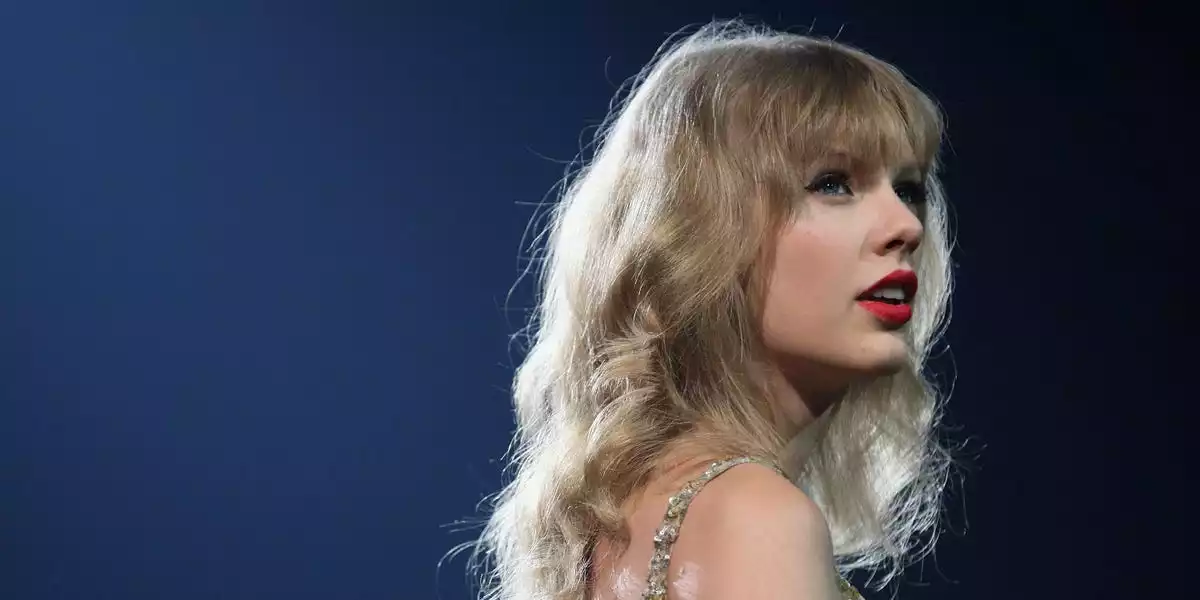

Fame as a High-Volatility Asset Class in the Platform Economy
Taylor Swift’s recent reflections on her early-career anxieties—particularly the fear, at 22, of becoming a “washed-up” teen star—land as more than celebrity candor. They read like a field report from inside a modern attention market where visibility is abundant, but durability is scarce. Her articulation of the Fearless-era “adulation” followed by backlash maps cleanly onto the boom-and-bust dynamics of today’s platform-mediated fame: rapid amplification, swift reclassification, and a constant threat of being deprioritized by culture and code.
In business terms, Swift is describing fame as intangible capital with a uniquely unstable depreciation curve. Unlike traditional brands that can smooth demand through distribution, pricing power, or product line extensions, an artist’s “product” is inseparable from identity—and identity is continuously scored by public sentiment, media narratives, and algorithmic ranking systems. The emotional core of her song “Nothing New,” and the thematic echoes in newer work such as “Clara Bow,” function as both art and analysis: vulnerability becomes a strategic disclosure in an environment that often punishes perceived stasis.
For executives watching the creator economy mature into a major commercial sector, Swift’s story underscores a central reality: platform economies reward momentum, not maturity—unless the creator can convert attention into owned infrastructure.
—
Recommendation Engines, “Love-Bombing,” and the Hidden Mechanics of Relevance
Swift’s “love-bomb and discard” framing resonates because it mirrors how digital distribution frequently behaves. Streaming platforms and social networks are built to optimize engagement, not career longevity. Early algorithmic boosts can feel like destiny—until the system’s incentives shift, audience cohorts rotate, or the content no longer matches the platform’s preferred growth loops.
From a technology and governance perspective, several mechanisms are implicated:
- Algorithmic bias and demographic sorting: Recommendation systems can unintentionally steer audiences toward novelty, youth-coded aesthetics, or trend-aligned narratives—patterns that may disproportionately disadvantage aging female artists or more complex, less “snackable” work.
- Feedback loops that amplify volatility: When engagement drops, visibility drops; when visibility drops, engagement drops further. This can create a “discard phase” that feels personal but is often structural.
- Metric-driven creative pressure: Creators are nudged toward what performs now, not what compounds over time—an incentive misalignment that can flatten experimentation and penalize long arcs of artistic development.
For platform leaders, Swift’s commentary is a reminder that cultural influence is now partially a product decision. If recommendation engines systematically under-serve certain voices—by age, gender, genre, or narrative style—platforms risk both reputational exposure and long-term catalog value erosion. The opportunity is equally clear: systems that intentionally surface diverse, multi-generational, and evolving creative work can expand total addressable audiences rather than recycling the same engagement cohorts.
—
Re-Recordings as IP Reacquisition: A Playbook for Ownership, Data, and Risk
Swift’s re-recording initiative—reissuing her catalog as “Taylor’s Version”—has often been discussed as a moral stance on artist rights. It is also a sophisticated corporate maneuver: IP reacquisition as risk hedging, paired with a reset of distribution leverage and audience relationship.
Strategically, the move accomplishes multiple business objectives at once:
- Neutralizing external claimants: By creating substitute masters that she controls, Swift reduces the economic power of prior rights holders without requiring a traditional buyback.
- Repricing the catalog through narrative: The re-recordings are not mere replicas; they are packaged as events, turning legacy assets into new releases with renewed demand.
- Rebuilding first-party relationships: Each reissue becomes a data-rich touchpoint—driving direct engagement, merchandising, ticketing demand, and community activation in ways that reduce dependence on any single intermediary.
This is where the story becomes broadly instructive for media, software, and IP-heavy industries. Swift’s approach resembles patent reacquisition, strategic refiling, or brand relaunch cycles: when control of core assets is fragmented, the organization becomes vulnerable to margin compression and strategic constraint. Re-aggregation of rights—whether through buybacks, renegotiations, or creative substitution—can restore optionality.
Just as importantly, the re-recording phenomenon highlights a deeper shift in digital markets: ownership is becoming the new growth hack. In an era of privacy constraints and rising customer acquisition costs, first-party data and direct-to-consumer channels are increasingly the difference between a brand that rents attention and one that compounds it.
—
Gendered Obsolescence and the Business Case for Inclusive Amplification
Swift’s critique of systemic double standards—where women in entertainment are celebrated, then rapidly scrutinized and sidelined—connects cultural commentary to organizational design. The “washed-up” anxiety she describes is not merely personal; it reflects an industry logic that treats women’s relevance as time-boxed, while granting men longer runways for reinvention.
For business and technology leaders, the parallel is uncomfortable but actionable. Many workplaces reproduce a similar pattern: early visibility, high expectations, then a subtle narrowing of opportunity as narratives shift. If platforms and institutions want resilience, they need more than aspirational DE&I language—they need metrics-driven accountability embedded into systems that allocate attention and advancement.
Practical implications include:
- Fairness constraints in AI and discovery systems to reduce age and gender skews in recommendation, search, and promotion.
- Lifecycle-based talent strategies that treat creative and professional longevity as an asset, not an exception.
- Community-driven engagement models—loyalty programs, membership ecosystems, and co-creation frameworks—that reduce dependence on algorithmic favor and stabilize demand across generations.
Swift’s evolving body of work—linking her own arc to historical figures like Elizabeth Taylor and projecting forward through concepts such as “The Life of a Showgirl”—signals a broader reframing: relevance is not a gift bestowed by the market; it is engineered through ownership, reinvention, and systems that allow people to age without being erased. In the platform economy, that may be the most commercially valuable form of sustainability there is.

 By
By
 By
By

 By
By
 By
By

 By
By