
Shelbyville’s flashpoint: when digital infrastructure meets civic trust
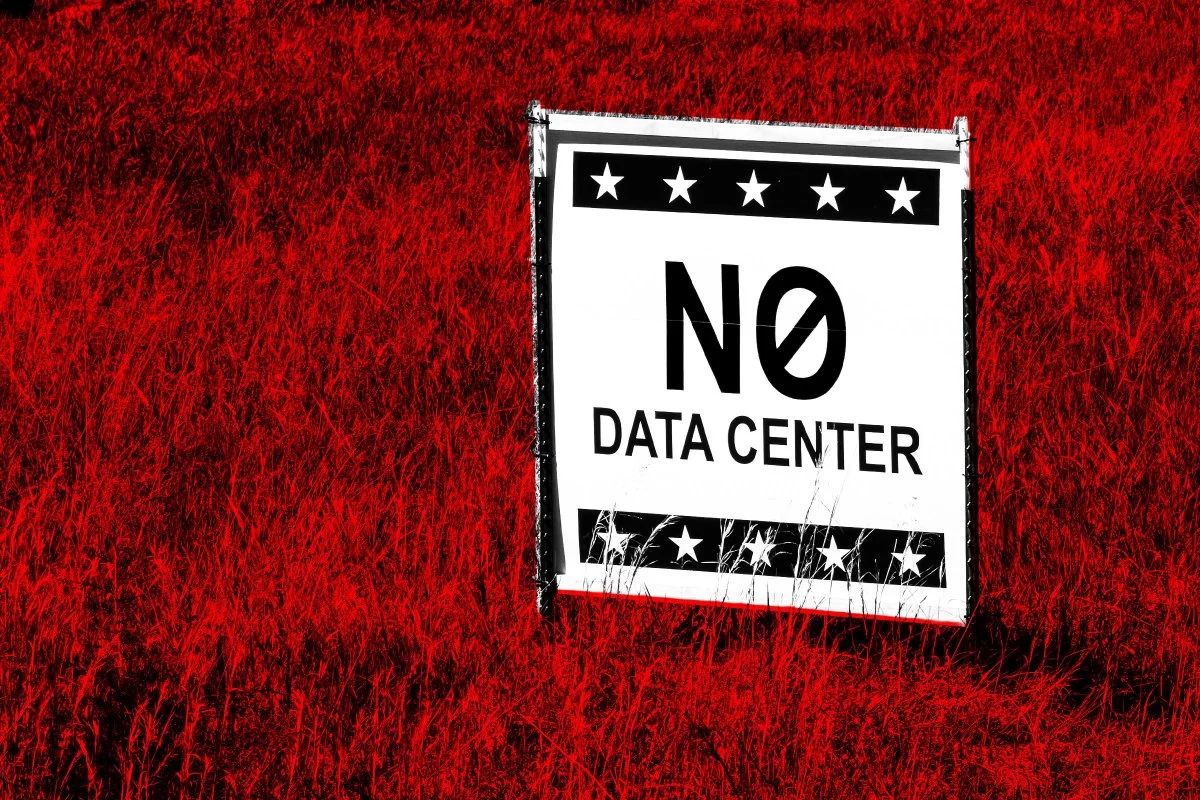
The Shelbyville controversy—sparked by video of Republican mayor Scott Furgeson disparaging residents opposing a proposed data-center buildout—lands at a particularly sensitive moment for the U.S. data-center industry. His remarks, framing “No Data Centers” signs as coming from “sh*tty houses” and implying opponents are marginal renters, did more than offend; they reframed a land-use dispute into a legitimacy crisis. Within days, local backlash escalated, including a petition reportedly drawing more than 2,000 signatures against Prologis’s plan to convert farmland into a large-scale data-center campus.
For developers and public officials alike, the episode illustrates a hardening reality: hyperscale data centers are no longer perceived as neutral “digital plumbing.” They are increasingly treated as resource-intensive industrial facilities whose costs—water, power, land conversion, noise, and traffic—are borne locally, while benefits can feel diffuse or disproportionately captured elsewhere.
From an investor and operator perspective, the most material takeaway is not the mayor’s rhetoric itself, but what it signals about governance readiness. When local leadership appears dismissive, the community’s “social license to operate” can evaporate quickly, turning a permitting process into a prolonged reputational and political contest.
The hyperscale surge in Indiana—and the resource math behind it
Indiana and other Midwestern states have become attractive targets for hyperscale expansion, buoyed by available land, grid connectivity, and aggressive incentive packages. The broader context is unmistakable: cloud growth, AI training workloads, and always-on digital services are pushing operators to diversify beyond traditional hubs.
The scale is no longer abstract. The summary notes that Amazon alone plans roughly 30 new data centers in the state, with an estimated 2.2 GW of annual power demand across that portfolio. At that magnitude, data centers stop behaving like ordinary commercial loads and start functioning like grid-shaping industrial demand centers—with implications for capacity planning, rate design, and local infrastructure upgrades.
Key pressure points are increasingly central to siting debates:
- Electricity demand and peak-load risk
Large, steady loads can be grid-friendly in some configurations, but rapid clustering can strain transmission and distribution. Communities also worry—often with reason—that incremental infrastructure costs can translate into upward pressure on retail rates, especially during peak conditions or when utilities accelerate capital spending.
- Water consumption and cooling intensity
Modern facilities can require substantial cooling, and the cited benchmark—0.5 to 1.5 liters of water per kWh—helps explain why agricultural communities are alarmed. Even when operators emphasize efficiency, the cumulative effect of multiple campuses can be perceived as competing with farming, household use, and long-term watershed resilience.
- Land conversion and local identity
The proposed conversion of farmland into a data-center campus is not merely a zoning change; it can be experienced as a permanent shift in community character and economic base, especially where agriculture anchors local employment, supply chains, and cultural identity.
This is where the Shelbyville dispute becomes emblematic. The data-center industry’s growth logic—optimize for land cost, power availability, and permitting speed—can collide with a community’s logic of stewardship: protect water, preserve farmland, and demand clear, enforceable benefits.
Economic promises vs. lived outcomes: the new scrutiny on “community value”
Municipal leaders frequently promote data centers as engines of modernization: expanded tax base, infrastructure upgrades, and a signal that a region is “open for tech.” Those claims are not inherently wrong, but they are increasingly interrogated through a pragmatic lens: How many durable jobs? How much local procurement? What happens to property taxes, road maintenance, and emergency services?
A recurring challenge is that long-term job creation is often modest relative to the footprint. Construction phases can be employment-rich but temporary; operations can be highly automated. That mismatch can fuel skepticism when communities are asked to accept:
- long-lived land conversion,
- high electricity draw,
- potential water stress, and
- perceived risk of higher household utility costs.
The Shelbyville episode also highlights a reputational dynamic that sophisticated developers now treat as a core project variable: public opposition can delay permitting 12–18 months on average, inflating financing costs, pushing out revenue timelines, and complicating power procurement. In that environment, a single viral moment—especially involving an elected official—can become a multiplier of risk, not a footnote.
For operators and developers like Prologis, the lesson is clear: community engagement cannot be outsourced to local politics alone. When local leadership missteps, the brand and the balance sheet can still absorb the blow.
What “responsible siting” looks like as data centers become contested infrastructure
Shelbyville’s backlash sits within a national arc: rising concern over water scarcity, energy affordability, and the socio-environmental footprint of hyperscale facilities. The industry’s next phase will likely be defined less by raw expansion and more by how convincingly operators can prove net community benefit.
Practical imperatives are emerging across stakeholders:
- For municipal leaders and regulators
– Require transparent environmental-impact assessments before final votes, not after momentum is locked in.
– Use community benefit agreements to earmark operational revenues for tangible needs such as water infrastructure, schools, and broadband access.
– Build governance processes that protect residents from feeling steamrolled—because procedural legitimacy often determines whether a project is seen as partnership or extraction.
- For data-center operators
– Reduce friction with renewable energy PPAs, grid-supportive designs, and credible efficiency targets.
– Prioritize closed-loop cooling, liquid cooling innovations, and—where feasible—pathways toward water-light or water-free approaches.
– Treat engagement as a deliverable: listening tours, local workforce training, and measurable commitments that survive leadership changes.
- For investors and developers
– Elevate “social license” into ESG due diligence with the same seriousness as interconnection studies and tax abatements.
– Price in delay risk and reputational exposure—because the cheapest land and power can become expensive when opposition hardens into litigation, ballot initiatives, or regulatory backlash.
The Shelbyville incident is ultimately a signal flare: the data-center race is accelerating, but the permission structure for that growth is tightening. In the coming years, competitive advantage will increasingly belong to operators and cities that can align digital expansion with resource realism, enforceable community value, and governance that treats residents as stakeholders—not obstacles.

 By
By
 By
By

 By
By
 By
By


 By
By