
When Playful Subversion Meets Autonomous Mobility: The San Francisco Robotaxi Flashpoint
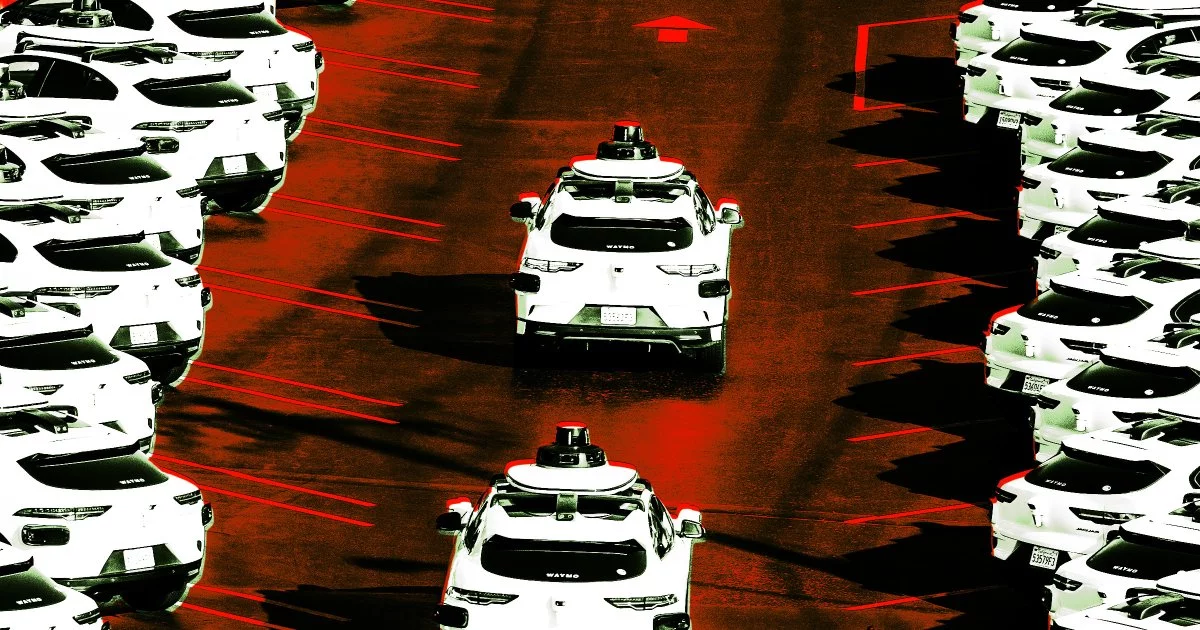
On a foggy San Francisco evening, the city’s winding streets became the unlikely stage for a new kind of digital-age spectacle: a coordinated prank that, for ten minutes, transformed a quiet dead-end into a theater of stranded Waymo robotaxis. Billed as the “world’s first Waymo DDoS,” this episode—while brief and tinged with mischief—has cast a revealing light on the operational and societal contours of autonomous vehicle (AV) deployment, with implications that ripple far beyond a single neighborhood.
Weaponizing the Interface: Behavioral Exploits in the Age of AVs
The mechanics of the prank were deceptively simple: fifty simultaneous ride requests, all destined for the same cul-de-sac, sent a fleet of driverless cars into a digital gridlock. Unlike a traditional distributed-denial-of-service (DDoS) attack, which overwhelms servers with malicious traffic, this was a cyber-physical stress test by proxy—no code was breached, no firewall toppled. Instead, the system’s own user interface became the attack surface, its vulnerability not in software, but in the predictable logic of its dispatch algorithms.
Waymo’s rapid geofencing response—cordoning off a two-block radius and restoring service within the hour—demonstrated technical agility. Yet, the incident underscored a deeper reliance on centralized fleet-management systems that can be gamed through location-based demand surges. Each no-show incurred a modest $5 penalty, shifting the direct cost to the pranksters, but the real exposure lay in the disproportionate immobilization of high-value assets. Fifty pranksters, $250 in fees, and tens of millions of dollars in idle vehicles—a stark illustration of the economic asymmetry inherent in AV operations.
Economic and Regulatory Fault Lines: The New Social Contract of Urban Mobility
The prank’s aftermath has sharpened focus on the economic and regulatory frameworks underpinning autonomous mobility. At the unit-economics level, the incident exposed how low-cost, high-impact disruptions can distort utilization metrics, undermining the profitability narratives that AV firms present to investors and regulators alike. If such spoofing were to become routine, it could erode the credibility of fleet performance data, trigger insurance premium hikes, and complicate the path to sustainable business models.
Municipal authorities, already grappling with the pace and scale of AV rollouts, may see this event as a catalyst for more assertive policy interventions. Dynamic fleet caps, enforceable anti-spoofing protocols, and revised permit structures are all on the table. Insurance underwriters, too, will scrutinize “nuisance downtime” and demand evidence of robust mitigation strategies. For operators, the lesson is clear: behavioral exploits must be treated as first-class threat vectors, warranting investments in real-time authentication, user reputation scoring, and anomaly detection—without sacrificing the frictionless experience that consumers expect.
Navigating the “Social Attack Surface”: Toward Socio-Technical Resilience
Perhaps the most profound lesson from this episode is the emergence of what might be called the “social attack surface.” In an era where flash-mob activism can be orchestrated with a few taps on a smartphone, AV fleets must evolve from purely technical fortification to a more nuanced, socio-technical resilience. This means not only detecting and diffusing coordinated human behavior in real time, but also engaging with the communities they serve.
Lessons from the micromobility sector—where geofencing and incentive-based demand balancing have become standard—offer a blueprint for AV operators. Dynamic pricing, tiered pre-authorization, and predictive throttling could all serve as deterrents to spoofing, provided they are implemented with sensitivity to public perception and equity concerns.
Moreover, as autonomous vehicles become fixtures of urban life, their success will be measured not just in safety miles, but in community engagement and trust. Proactive partnerships with local groups, transparent response protocols, and a willingness to co-design solutions with stakeholders can transform potential protest into participatory governance. In this context, “trust infrastructure” may prove as decisive as any technological breakthrough—shaping regulatory goodwill, customer loyalty, and ultimately, the societal license to operate.
The San Francisco prank, for all its levity, has surfaced the latent vulnerabilities—and opportunities—at the heart of the autonomous mobility revolution. For industry leaders, the imperative is to move beyond a defensive crouch, internalizing these lessons and forging a new, more resilient social contract. The future of urban technology will not be negotiated in code alone, but in the dynamic interplay between algorithm and citizen, machine and city.

 By
By


 By
By
 By
By

 By
By
 By
By